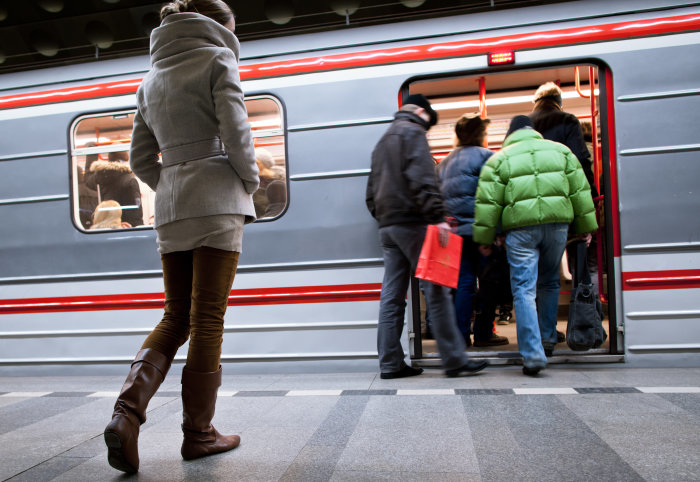
Picture this: a woman steps onto a bus at dusk, her keys clenched between her knuckles like a makeshift weapon. The fluorescent lights flicker overhead, casting long shadows that stretch like accusing fingers. She scans the carriage—empty seats, but no escape from the suffocating silence. Every creak of the brakes, every muffled cough from the backseat, feels like a threat. This isn’t a scene from a dystopian novel. It’s the unspoken reality of public transit for millions of women worldwide. The bus, the train, the subway—these are not neutral spaces. They are battlegrounds where safety is a privilege, not a guarantee.
The Illusion of Neutrality: Why Transit Systems Were Never Designed for Women
Public transit is often sold as the great equalizer—a democratic artery pumping life through the city’s veins. But this narrative is a lie. The modern transit system emerged from an era when cities were built by men, for men, with the assumption that women’s movements would be secondary, contained, or chaperoned. The bench seating in buses, the lack of lighting in subway tunnels, the absence of emergency buttons within arm’s reach—these are not oversights. They are design choices that prioritize efficiency over equity.
Consider the humble bus stop. A place of transit, yes, but also a place of vulnerability. The lack of shelters, the poor lighting, the isolation—these are not accidental. They reflect a world where women’s presence is an afterthought. The same logic extends to train platforms, where the distance between the edge of the platform and the tracks is calculated for speed, not safety. Women are expected to navigate these spaces with the same ease as men, despite the fact that their bodies are often smaller, their reflexes slower, and their fear a constant companion.
The Specter of Harassment: When Every Ride Is a Gamble
Harassment on public transit isn’t an anomaly—it’s an epidemic. A 2019 survey in New York City found that 65% of women had experienced sexual harassment on the subway. In Tokyo, the phenomenon is so normalized that women-only train cars exist as a desperate workaround. The numbers are staggering, but the stories are worse. A woman in London recounts how a man followed her onto a nearly empty train, sitting just close enough to make her skin crawl. In Mexico City, another woman describes how a crowded bus became a moving cage, her body pressed against strangers who used the chaos as cover for groping. These aren’t isolated incidents. They are the logical conclusion of a system that treats women’s bodies as public property.
The psychological toll is immeasurable. Women don’t just fear the worst—they anticipate it. They plan escape routes in their heads. They clutch their bags tighter. They avoid certain lines, certain times, certain neighborhoods. The mental gymnastics required to navigate a city without becoming a target are exhausting. And yet, we’re told to “just take the bus.” As if safety is a personal failing, not a systemic one.
The Architecture of Fear: How Design Perpetuates Danger
Architecture is never neutral. It shapes behavior, reinforces power dynamics, and either invites or deters violence. Transit systems, in particular, are rife with design choices that prioritize control over comfort. Take the placement of security cameras—often too high to capture faces, too few to cover blind spots. Or the emergency buttons, which are frequently out of reach or ignored by drivers. Even the color of the walls matters. Studies show that women feel safer in spaces with warm, earthy tones than in sterile, institutional whites. Yet transit systems continue to favor the latter, as if cleanliness is more important than comfort.
The problem extends to the physical layout of stations. Escalators that force riders into close proximity with strangers. Stairwells that are dimly lit and poorly ventilated. Platforms that are too narrow, leaving no buffer between passengers and the tracks. These are not design flaws. They are design choices that reflect a world where women’s safety is an afterthought. The result? A built environment that actively discourages women from using transit, pushing them toward cars, ride-shares, or isolation.

The Cultural Alibi: Why We Blame Women for Their Own Insecurity
When a woman is harassed on transit, the first question isn’t “Why did this happen?” It’s “What was she wearing?” or “Why was she alone?” This reflexive victim-blaming is a cultural alibi—a way to avoid confronting the real issue. The problem isn’t that women are “too vulnerable.” The problem is that society treats their vulnerability as inevitable, and their safety as a luxury.
This mindset is reinforced by media narratives that frame harassment as a “minor inconvenience” rather than a violation. Headlines about “unruly passengers” or “crowded conditions” downplay the severity of the issue. Even well-meaning campaigns often fall into the trap of advising women to “stay alert” or “avoid eye contact,” as if the burden of prevention rests solely on their shoulders. This is gaslighting on a societal scale. It tells women that their fear is irrational, their precautions insufficient, and their presence in public spaces a provocation.
The truth is far simpler: Harassment is not a fact of life. It’s a choice. And the systems we’ve built make it far too easy for predators to exploit the cracks in our infrastructure.
Breaking the Cycle: How to Redesign Transit for Everyone
The good news? Change is possible. Cities around the world are proving that transit can be reimagined to prioritize safety without sacrificing efficiency. The key lies in three pillars: visibility, accountability, and design.
Visibility: Lighting is the first line of defense. Well-lit stations, clear signage, and unobstructed sightlines deter predators and reassure passengers. Cities like Vienna and Tokyo have transformed their transit systems by flooding them with natural light and eliminating dark corners. The result? A measurable drop in harassment incidents.
Accountability: Transit systems must treat harassment as a serious offense, not a minor nuisance. This means installing more cameras, training staff to intervene, and enforcing zero-tolerance policies. In London, the “Report It to Stop It” campaign led to a 20% increase in reported incidents—not because harassment increased, but because victims felt empowered to speak up. Accountability isn’t about punishment. It’s about sending a message: your safety matters.
Design: The most radical change will come from rethinking how transit spaces are built. Wider aisles, better lighting, and gender-neutral restrooms are just the beginning. Cities like Barcelona and Copenhagen have experimented with “tactile paving” on platforms, providing a subtle but effective way for blind passengers to navigate. Why not extend this logic to safety? Imagine platforms with tactile warnings for approaching trains, or seats designed to prevent standing too close to doors. These aren’t futuristic fantasies. They’re practical solutions that put people first.

The Future of Transit: A World Where Women Don’t Have to Brace Themselves
The fight for safe transit isn’t just about buses and trains. It’s about reimagining the very idea of public space. It’s about demanding a world where a woman can ride the subway at midnight without calculating the risks, where a mother can push a stroller onto a bus without fearing a brush against her body, where no one has to clutch their keys like a weapon.
This future is within reach. But it requires more than policy changes. It requires a cultural shift—a recognition that safety is not a privilege, but a right. It requires men to listen, to challenge their peers, to stop treating women’s fear as an inconvenience. It requires cities to stop designing for the mythical “average user” and start designing for the most vulnerable among us.
The next time you step onto a bus or into a subway car, ask yourself: Who is this space really built for? And what would it take to make it safe for everyone?











Leave a Comment