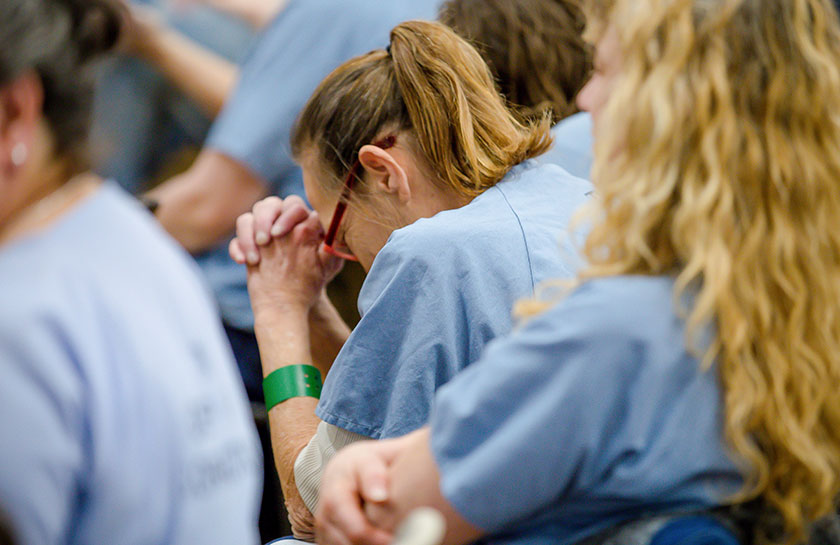
The prison system is not just a cage—it is a factory. A factory that churns out suffering, that mass-produces broken families, and that meticulously dismantles the very fabric of motherhood. While the public’s gaze lingers on the spectacle of bars and uniforms, the true machinery of oppression operates in the shadows, where women—especially mothers—are ground into dust beneath the weight of a system that was never designed to protect them. This is not merely a critique of incarceration. It is a dissection of institutional misogyny, a reckoning with the fact that the prison-industrial complex is, at its core, a war on women’s bodies, their roles, and their futures.
The Alchemy of Absence: How Prison Transmutes Mothers into Ghosts
Consider the chemistry of separation. A mother is not just a person behind bars—she is a constellation of roles violently severed from their gravitational center. Her presence, once a gravitational pull that anchored her children’s lives, is replaced by an absence so profound it warps time itself. Children do not merely lose a mother; they lose a rhythm, a voice, a touch. The prison system does not just incarcerate bodies—it erases identities, reducing women to case numbers and mothers to “inmates with dependents,” a bureaucratic euphemism that drips with the cold detachment of a system that views human connection as an inconvenience.
Imagine a child’s bedtime story, suddenly silenced. The lullaby that once wove dreams now echoes in an empty room. The school pickup that was a ritual becomes a question: “When is Mommy coming home?” The answer is never simple. It is a labyrinth of court dates, prison visiting hours, and the crushing weight of a system that measures “rehabilitation” in months and years, not in the irreparable fractures left in a child’s psyche. The prison system does not just punish women—it weaponizes their love, turning it into a liability, a distraction from the “order” of captivity.

The Matriarchal Deficit: How Mass Incarceration Starves the Future
The prison system is a voracious consumer of matriarchal energy. It devours the time, labor, and emotional labor of women who, in another world, would be the architects of their communities. Instead, they are confined to cells, their potential redirected into the sterile routines of captivity. This is not an accident—it is a feature. A society that incarcerates women at alarming rates is one that has decided, consciously or not, that their roles as caregivers, nurturers, and emotional anchors are expendable. The result? A matriarchal deficit, a void where wisdom, stability, and intergenerational knowledge should thrive.
Think of the ripple effects. A mother in prison means a child in foster care, a grandmother stretched thin, a community deprived of its moral compass. The prison system does not operate in isolation—it is a black hole, warping the social fabric around it. The women who emerge from its grasp are often traumatized, institutionalized, and ill-equipped to reclaim their roles as mothers, partners, or leaders. The system does not rehabilitate. It recycles trauma, ensuring that the cycle of incarceration continues unabated, generation after generation.
The Illusion of Justice: When Punishment Masquerades as Care
There is a cruel irony at the heart of the prison system’s treatment of mothers. The same institutions that claim to “protect” society are the ones that systematically dismantle the very bonds they purport to value. Programs marketed as “family reunification” are often thinly veiled extensions of control, where mothers must prove their worthiness to their children through compliance with arbitrary rules. The language of “correction” is a smokescreen for punishment, and the idea that prison can “fix” a woman is a lie sold to a public desperate for easy answers to complex social problems.
Consider the conditions: overcrowded facilities, inadequate healthcare, and the constant threat of violence. These are not aberrations—they are the norm. The prison system is not a place of healing. It is a place of dehumanization, where women are stripped of agency, reduced to their lowest common denominator, and then expected to emerge as “productive citizens.” The reality? Many leave more broken than when they entered, their relationships with their children irreparably damaged by the gulf of incarceration.

The Economics of Exploitation: How Prison Profits from Motherhood
Follow the money. The prison-industrial complex is not just a moral failure—it is a financial juggernaut, and women are its most lucrative commodity. Private prisons, phone companies, and commissary vendors all profit from the incarceration of mothers. The cost of a 15-minute phone call to a child can exceed $10. The price of a basic hygiene product inside a facility can be triple its retail value. This is not capitalism—it is extortion, a predatory system that preys on the most vulnerable, turning their love for their children into a revenue stream.
The prison system is not designed to rehabilitate. It is designed to extract. It is designed to ensure that the cycle of poverty and incarceration continues, that the daughters of incarcerated women grow up to be the next generation of “clients” for the system. The war on women is not just ideological—it is economic. It is a war waged by those who benefit from suffering, who see motherhood not as a sacred duty but as a transactional liability.
The Resistance in the Cracks: How Women Fight Back
Yet, even in the darkest corners of the prison system, resistance flickers. Women organize. They share resources. They find ways to smuggle letters, to whisper words of love through glass, to ensure that their children know they are not forgotten. Grassroots organizations, often led by formerly incarcerated women, are dismantling the myths of the system, exposing its cruelty, and demanding change. They are the architects of a new narrative, one where motherhood is not a crime, where love is not a liability, and where justice is not a euphemism for punishment.
The fight is far from over. The prison system’s war on women is relentless, its tentacles reaching into every corner of society. But the cracks are widening. The voices of incarcerated mothers are growing louder. The demand for abolition is gaining traction. The question is no longer whether the system can be reformed—it is whether we have the collective will to dismantle it entirely and build something that values life, love, and connection above all else.










Leave a Comment