
So, when did this whole “feminism” thing really kick off? Was it Eve, surreptitiously offering that fateful apple, whispering a revolutionary “know thyself” to a world steeped in patriarchal darkness? Or perhaps it was much, much later, shrouded in the clamor of societal upheaval? Answering this question is like trying to pinpoint the precise moment a river begins. Is it at the first trickle of melting snow, or when that trickle joins another, forming a recognizable stream? Feminism, much like that river, has a complex and multifaceted genesis, defying any singular, easily digestible origin story.
The inherent challenge lies in the very definition of feminism itself. Are we talking about the formal articulation of feminist theory, with its manifestos and treatises, or the more amorphous, yet equally potent, acts of resistance against patriarchal norms that have punctuated human history? To confine feminism solely to codified movements risks erasing the myriad acts of defiance, both large and small, that predate these formalized structures. It’s a matter of perspective, really. Are we looking for the first meticulously crafted blueprint, or the initial cracks in the foundation?
Let’s delve into this, shall we? Prepare for a historical excavation that promises to be as frustrating as it is illuminating.
I. Proto-Feminist Stirrings: Echoes in Antiquity
Before the term “feminism” even existed, there were whispers of dissent, acts of rebellion against the constraints imposed upon women. These were not organized movements in the modern sense, but rather isolated sparks of resistance that hinted at the nascent desire for autonomy and recognition.
A. Voices from the Ancient World: A Tapestry of Defiance
Consider Sappho of Lesbos, that archaic poetess whose verses celebrated female desire and same-sex love, daring to defy the heteronormative constraints of her time. Was she a feminist? Perhaps not in the way we understand the term today, but her work undeniably challenged conventional notions of femininity and sexuality. Think of Aspasia of Miletus, a woman who exerted significant influence in Athenian politics through her intellectual prowess and rhetorical skills. She defied the expectation that women remain confined to the domestic sphere. These figures, along with others like Hypatia of Alexandria, a philosopher and mathematician brutally murdered for her intellectual independence, represent embryonic forms of feminist consciousness, glimpses of a world where women occupied a more prominent and respected position.
B. Religious and Philosophical Dissidence: Seeds of Subversion
Religious and philosophical traditions, often seen as instruments of patriarchal control, also contained within them the seeds of subversion. Certain Gnostic sects, for example, accorded women a greater degree of spiritual authority than mainstream Christianity. Medieval mystics like Hildegard of Bingen, with her visionary writings and musical compositions, carved out spaces for female expression within the confines of religious life. These instances, while not explicitly advocating for gender equality in the modern sense, challenged the notion that women were inherently inferior or excluded from intellectual and spiritual pursuits. They represent a quiet but persistent undercurrent of resistance against the prevailing patriarchal order.
II. The Enlightenment and the Rise of Proto-Feminist Thought: A Budding Consciousness
The Enlightenment, with its emphasis on reason, individual rights, and the critique of traditional authority, provided fertile ground for the development of proto-feminist thought. While many Enlightenment thinkers remained deeply entrenched in patriarchal assumptions, their emphasis on universal human rights inadvertently laid the groundwork for later feminist arguments.
A. Mary Wollstonecraft and the Vindication of Rights: A Watershed Moment
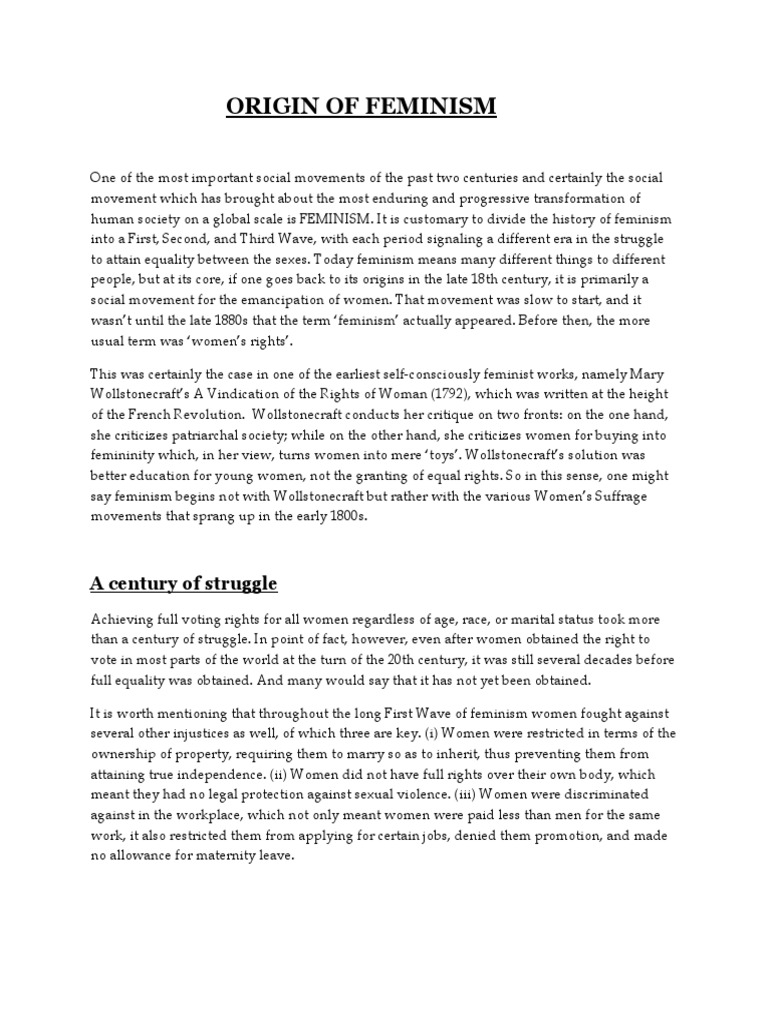
Mary Wollstonecraft’s “A Vindication of the Rights of Woman” (1792) is often considered a foundational text of modern feminism. Wollstonecraft argued that women, like men, were rational beings capable of intellectual and moral development. She vehemently criticized the prevailing system of female education, which she believed was designed to keep women subservient and dependent on men. Wollstonecraft’s work, while controversial in its time, provided a powerful critique of gender inequality and laid the groundwork for future feminist arguments about education, political representation, and economic independence. It was a clarion call, reverberating across the societal landscape, demanding a fundamental reassessment of women’s place in the world.
B. Olympe de Gouges and the Rights of the Female Citizen: A Revolutionary Declaration
Olympe de Gouges, a French playwright and political activist, penned the “Declaration of the Rights of Woman and the Female Citizen” (1791) in direct response to the French Revolution’s “Declaration of the Rights of Man and of the Citizen.” De Gouges argued that the revolutionary ideals of liberty, equality, and fraternity should apply equally to women. Her declaration called for women’s right to vote, own property, and participate fully in political life. De Gouges’s radicalism ultimately led to her execution during the Reign of Terror, but her work remains a powerful testament to the feminist potential of revolutionary movements. It was a defiant roar in the face of injustice, a bold assertion of female citizenship in a world that denied it.
III. The First Wave: Suffrage and Beyond
The 19th and early 20th centuries witnessed the emergence of the first organized feminist movements, often referred to as the “first wave.” This wave was primarily focused on securing women’s suffrage, or the right to vote, but also addressed other issues such as property rights, education, and access to employment.
A. The Suffrage Movement: A Battle for Political Voice
The suffrage movement was a global phenomenon, with women in various countries organizing to demand the right to vote. Suffragists employed a variety of tactics, from peaceful protests and lobbying to more militant actions such as civil disobedience and property damage. Figures like Susan B. Anthony, Elizabeth Cady Stanton, and Emmeline Pankhurst became iconic leaders of the movement, inspiring generations of women to fight for their political rights. The struggle for suffrage was long and arduous, but ultimately successful, with women gaining the right to vote in many countries during the late 19th and early 20th centuries. The victory was not merely a matter of political enfranchisement; it was a symbolic triumph, a recognition of women’s agency and their right to participate in the shaping of their own destinies.
B. Beyond Suffrage: Expanding the Feminist Agenda
While suffrage was the primary focus of the first wave, feminists also addressed other issues that affected women’s lives. They campaigned for improved access to education, the right to own property, and equal opportunities in the workplace. They challenged discriminatory laws and customs that relegated women to a subordinate status. The first wave laid the groundwork for future feminist movements by expanding the scope of feminist concerns and challenging the traditional division between the public and private spheres.
IV. The Second Wave: Challenging the Personal is Political
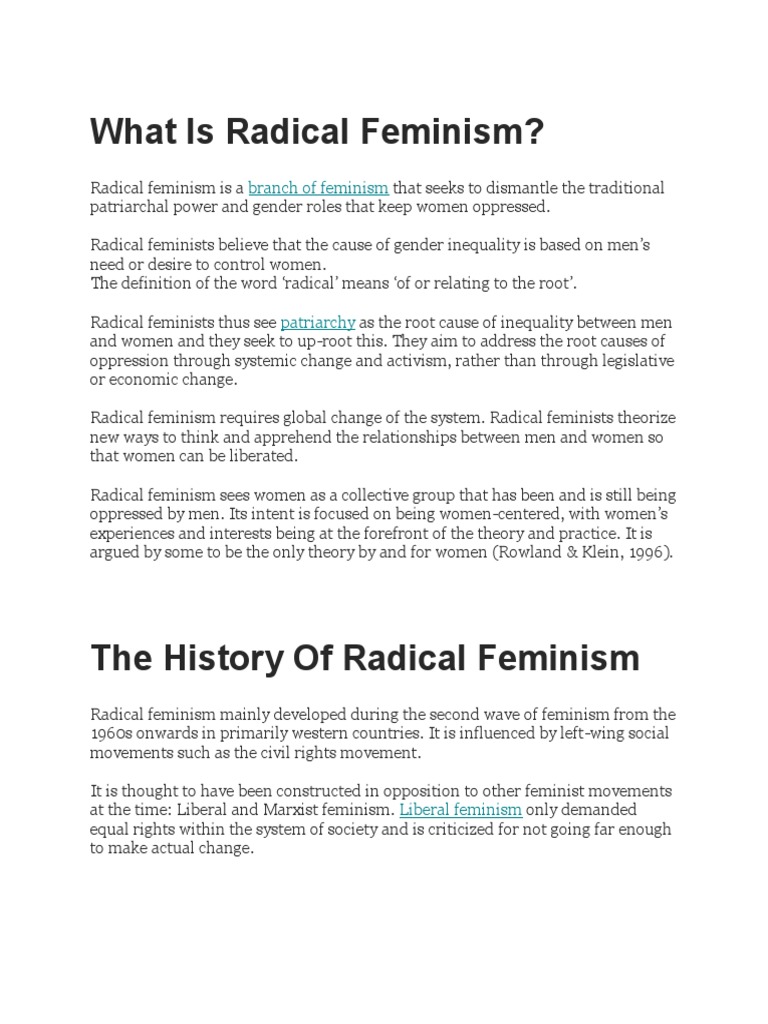
The second wave of feminism, which emerged in the 1960s and 1970s, broadened the feminist agenda to include issues such as reproductive rights, sexuality, domestic violence, and the role of women in the family. This wave challenged the notion that the personal was separate from the political, arguing that seemingly private issues such as sexuality and domestic labor were deeply intertwined with power structures and social inequalities.
A. The Personal is Political: Redefining the Scope of Feminism
Second-wave feminists argued that the personal experiences of women were shaped by political and social forces. They challenged the traditional division between the public and private spheres, arguing that issues such as domestic violence, reproductive rights, and the division of labor in the home were inherently political. This emphasis on the “personal is political” expanded the scope of feminist analysis and led to the development of new concepts such as intersectionality, which recognizes the interconnectedness of various forms of oppression. This was a paradigm shift, a recognition that the battlefield was not just in the halls of power, but also in the bedrooms and kitchens of everyday life.
B. Key Issues and Movements: Reproductive Rights, Equal Pay, and Beyond
Second-wave feminists campaigned for a wide range of reforms, including reproductive rights, equal pay, access to childcare, and an end to discrimination in education and employment. They organized consciousness-raising groups, where women could share their experiences and develop a collective understanding of their oppression. They established feminist organizations such as the National Organization for Women (NOW) and the Women’s Liberation Movement. The second wave achieved significant victories, including the legalization of abortion in the United States (Roe v. Wade, 1973) and the passage of equal pay legislation in many countries. However, many of the goals of the second wave remain unfulfilled, and debates about issues such as reproductive rights and gender equality continue to be highly contentious.
V. The Third Wave and Beyond: Intersectionality and the Ongoing Struggle
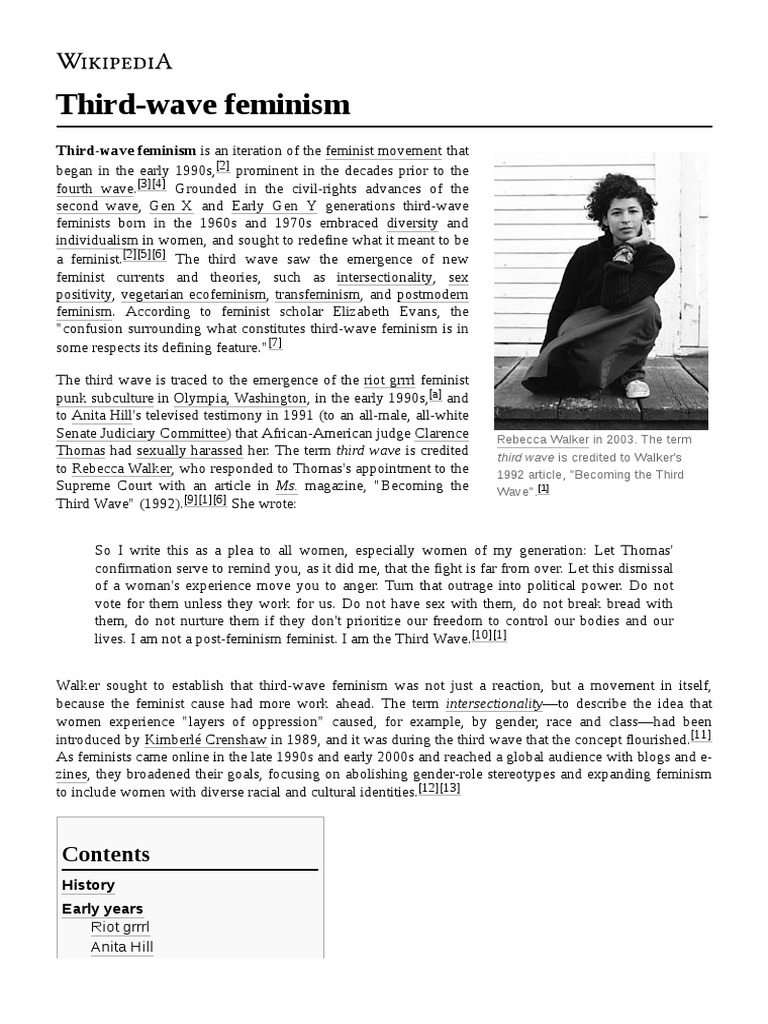
The third wave of feminism, which emerged in the 1990s, built upon the achievements of the second wave while also addressing its limitations. Third-wave feminists emphasized intersectionality, recognizing that women’s experiences are shaped by a complex interplay of factors such as race, class, sexuality, and nationality. They challenged essentialist notions of womanhood and celebrated diversity and individual expression.
A. Intersectionality: Recognizing the Complexity of Oppression
Intersectionality, a term coined by Kimberlé Crenshaw, is a key concept in third-wave feminism. It recognizes that women’s experiences are shaped by a complex interplay of various forms of oppression, such as racism, classism, sexism, and heterosexism. Third-wave feminists argue that feminism must be inclusive of all women, regardless of their race, class, sexuality, or other identities. They challenge the tendency to prioritize the experiences of white, middle-class, heterosexual women and advocate for a more nuanced and intersectional understanding of gender inequality. This represents a crucial evolution in feminist thought, a recognition that the fight for equality must be waged on multiple fronts, acknowledging the interconnectedness of various forms of oppression.
B. Contemporary Issues and Challenges: A Continued Fight
Contemporary feminism faces a wide range of challenges, including persistent gender inequality in the workplace, the prevalence of sexual harassment and violence, the underrepresentation of women in politics and leadership positions, and the rise of online misogyny and hate speech. Feminists are also grappling with complex issues such as transgender rights, reproductive justice, and the impact of globalization on women’s lives. The struggle for gender equality is far from over, and contemporary feminism continues to evolve and adapt to meet the challenges of the 21st century. It’s an ongoing evolution, a continuous process of reevaluation, adaptation, and resistance in the face of persistent inequalities.
So, to return to our initial question: when did the feminist movement begin? The answer, as we have seen, is far from simple. It wasn’t a single moment, but rather a gradual and multifaceted process, marked by countless acts of resistance, intellectual breakthroughs, and organized movements. It’s a story that stretches back to antiquity and continues to unfold in the present, a testament to the enduring human desire for equality and justice. The river flows on, carving new paths, shaping the landscape, and demanding that we pay attention.





Leave a Comment