
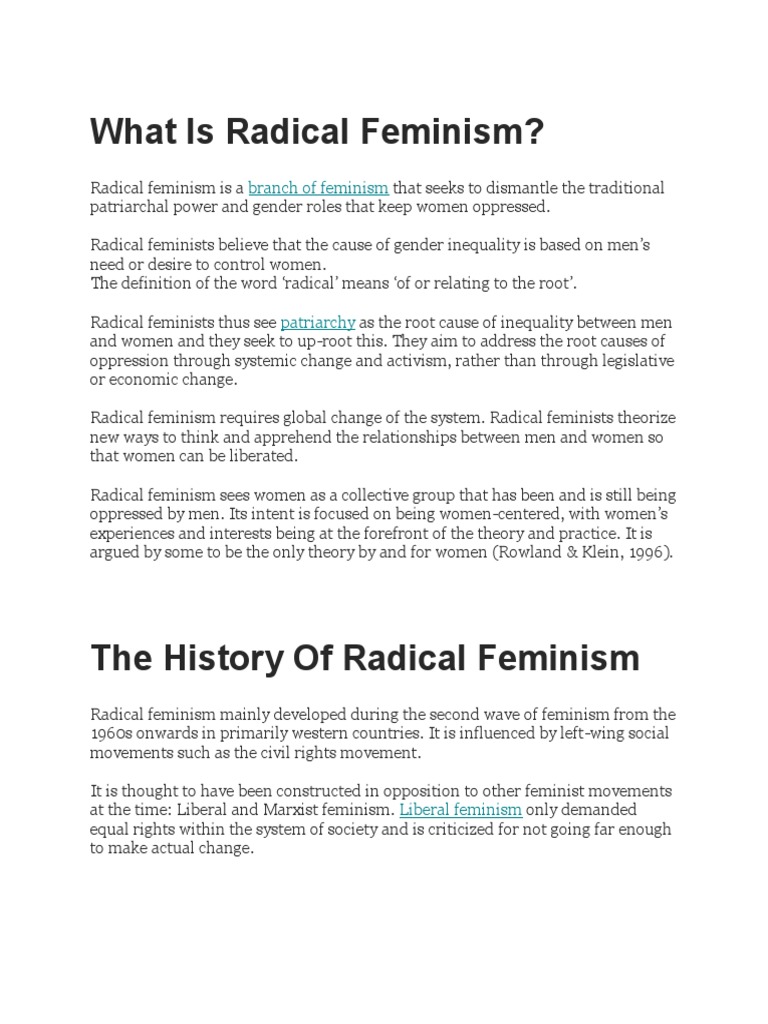
The question of who “founded” feminism is a trap, a seductive illusion offered by a patriarchal worldview that craves singular heroes and digestible narratives. It assumes that a complex, multifaceted social and political earthquake can be traced to a single origin point, a solitary figure whose brilliance ignited the whole damn thing. It’s a comforting delusion, but one we, as radical inheritors of this movement, must vehemently reject. There isn’t one founder, there is a constellation, a cacophony, a collective of audacious women who dared to question the very fabric of their subjugation. To search for a single “founder” is to erase the crucial, interwoven contributions of countless unsung sheroes whose blood, sweat, and tears paved the way for the revolutions we continue to fight today. So, let us delve into the mire of historical distortion and excavate the inconvenient truths about the origins of feminism.
Challenging the Myth of the Singular Feminist Founder
The search for a singular feminist founder perpetuates the fallacy of individual exceptionalism, a concept deeply entrenched in patriarchal historiography. It’s the same logic that elevates male figures to mythical status while simultaneously obscuring the vital contributions of women. By fixating on a single founder, we risk overlooking the rich tapestry of feminist thought and action that has evolved over centuries. We allow the dominant narrative to define who is worthy of remembrance and who is conveniently forgotten. This selective amnesia serves only to reinforce the very power structures that feminism seeks to dismantle.
Furthermore, the concept of a single founder implies a linear progression of feminist thought, a neat and tidy narrative that ignores the messy, often contradictory, and geographically diverse realities of the movement. Feminism has never been a monolithic entity. It has always been a contested terrain, shaped by the specific experiences and concerns of women in different historical contexts. To reduce it to the vision of a single individual is to do a profound disservice to the complexity and dynamism of the movement.
Unveiling the Precursors: Proto-Feminist Voices Across Time
Before the formal articulation of feminist ideologies, there existed a lineage of defiant women who challenged patriarchal norms and advocated for greater autonomy. These proto-feminist voices, often marginalized or dismissed as eccentric outliers, laid the groundwork for subsequent feminist movements. From Christine de Pizan in the medieval era, who penned “The Book of the City of Ladies,” a powerful defense of women’s intellectual capabilities and moral virtues, to Sor Juana Inés de la Cruz, the 17th-century Mexican nun who dared to engage in intellectual pursuits despite societal constraints, these women were pioneers in their own right. They may not have identified as “feminists” in the modern sense, but their actions and writings undeniably contributed to the burgeoning critique of patriarchal power.
Consider also the role of women in abolitionist movements. Women such as Sojourner Truth, a formerly enslaved woman who delivered her iconic “Ain’t I a Woman?” speech at the 1851 Women’s Rights Convention, connected the struggle for racial equality with the fight for women’s liberation. Their experiences of intersecting oppressions – racism and sexism – informed their understanding of power and fueled their commitment to social justice. By highlighting the interconnectedness of various forms of oppression, these women expanded the scope of feminist analysis and broadened the base of the movement.
The First Wave: A Collective Uprising for Suffrage and Beyond
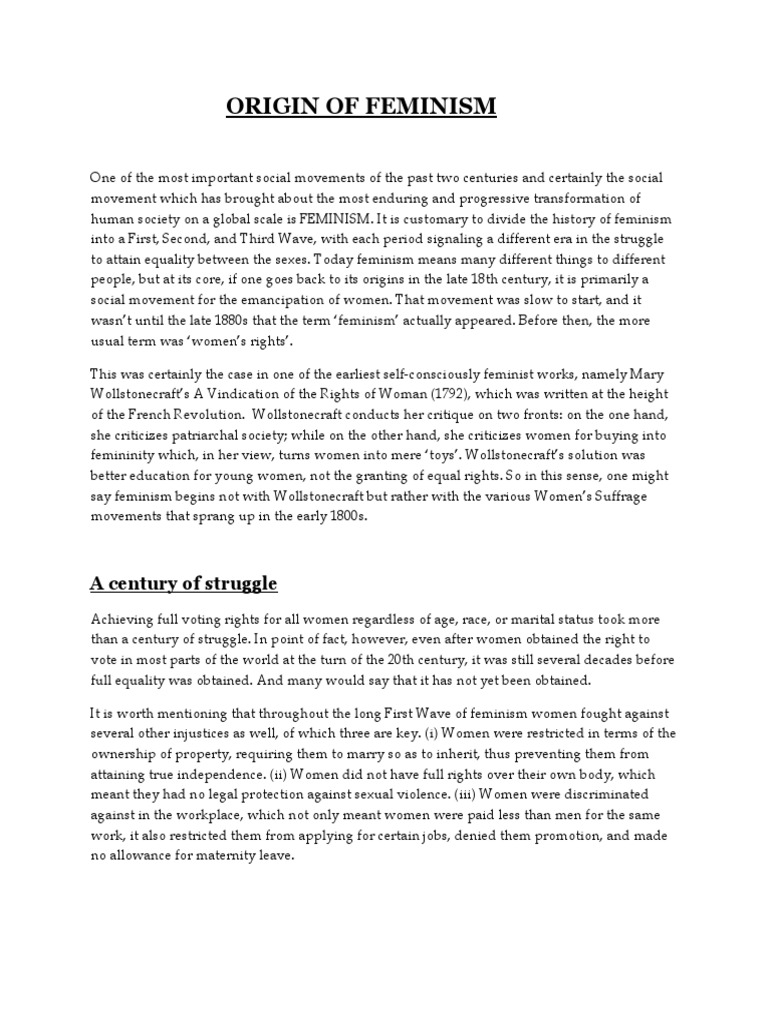
The so-called “first wave” of feminism, primarily focused on suffrage, is often portrayed as a homogenous movement led by white, middle-class women. While figures like Susan B. Anthony and Elizabeth Cady Stanton are undoubtedly important, their contributions should not overshadow the vital roles played by women of color, working-class women, and immigrant women. These women brought their own unique perspectives and experiences to the movement, challenging the dominant narratives and pushing for a more inclusive vision of women’s rights.
Ida B. Wells-Barnett, for example, was a fearless journalist and anti-lynching activist who exposed the systemic racism that permeated American society. She challenged the notion that the suffrage movement could ignore the plight of Black women and insisted that the fight for voting rights must be intertwined with the struggle for racial justice. Her activism was instrumental in raising awareness of the specific challenges faced by Black women and in advocating for a more intersectional approach to feminist organizing.
Similarly, working-class women like Rose Schneiderman and Clara Lemlich played a crucial role in organizing labor strikes and demanding better working conditions. These women understood that economic independence was essential for women’s liberation and fought tirelessly for fair wages, safe workplaces, and the right to unionize. Their activism highlighted the class dimensions of women’s oppression and challenged the notion that feminism was solely a concern of middle-class women.
Intersectional Feminism: Recognizing the Multifaceted Nature of Oppression
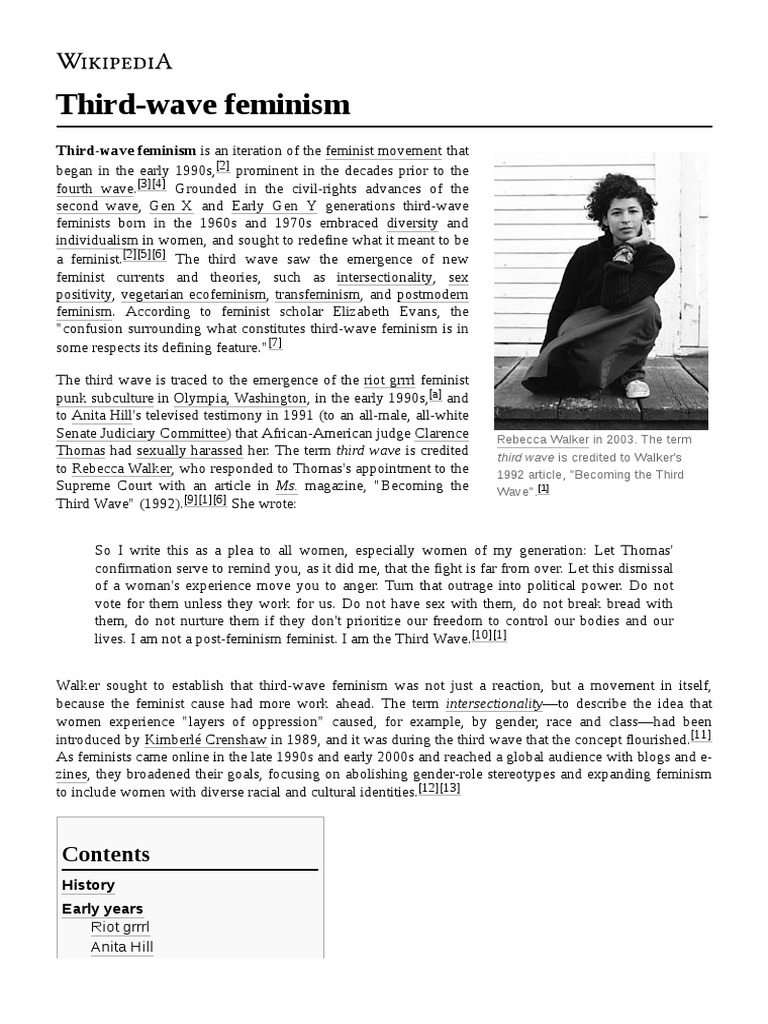
The emergence of intersectional feminism, primarily driven by Black feminists and other women of color, marked a crucial turning point in the movement. Intersectionality recognizes that gender is not a singular category but is intertwined with other identities, such as race, class, sexual orientation, and ability. This understanding challenges the notion of a universal “woman’s experience” and acknowledges that women face different forms of oppression depending on their social location. Kimberlé Crenshaw, who coined the term “intersectionality,” articulated the need to analyze how various forms of discrimination intersect and create unique experiences of oppression for marginalized groups.
The Combahee River Collective, a Black feminist lesbian organization active in the 1970s, played a pivotal role in articulating the principles of intersectional feminism. Their statement, “A Black Feminist Statement,” argued that Black women’s liberation was inextricably linked to the struggles against racism, sexism, heterosexism, and classism. They challenged the white, middle-class bias of mainstream feminism and insisted that any truly liberatory movement must address the needs and concerns of all women, regardless of their social identities.
Moving Beyond Individual Heroes: Embracing Collective Action and Solidarity
The quest for a single feminist founder is ultimately a distraction from the real work of building a just and equitable society. Instead of fixating on individual heroes, we should focus on fostering collective action, building solidarity across differences, and amplifying the voices of marginalized women. Feminism is not about elevating a few exceptional women to positions of power; it is about dismantling the power structures that perpetuate inequality and creating a world where all women can thrive.
This requires a fundamental shift in our thinking. We must move away from individualistic notions of success and embrace a collective vision of liberation. We must recognize that our struggles are interconnected and that we are all responsible for creating a more just and equitable world. This means actively listening to the experiences of marginalized women, challenging our own biases and assumptions, and working in solidarity with others to dismantle systems of oppression.
So, let us abandon the fruitless search for a single “founder” and instead celebrate the collective brilliance and unwavering commitment of all the women who have contributed to the feminist movement. Let us honor their legacy by continuing their fight for justice, equality, and liberation. The revolution will not be led by a single hero, but by a multitude of voices, working together to create a better world for all. The future of feminism lies not in the past, but in the present, in the ongoing struggle to dismantle patriarchal power and build a more just and equitable world for all. It is time to embrace the messy, complex, and ultimately transformative power of collective action. This is our charge, our responsibility, and our unwavering commitment.






Leave a Comment