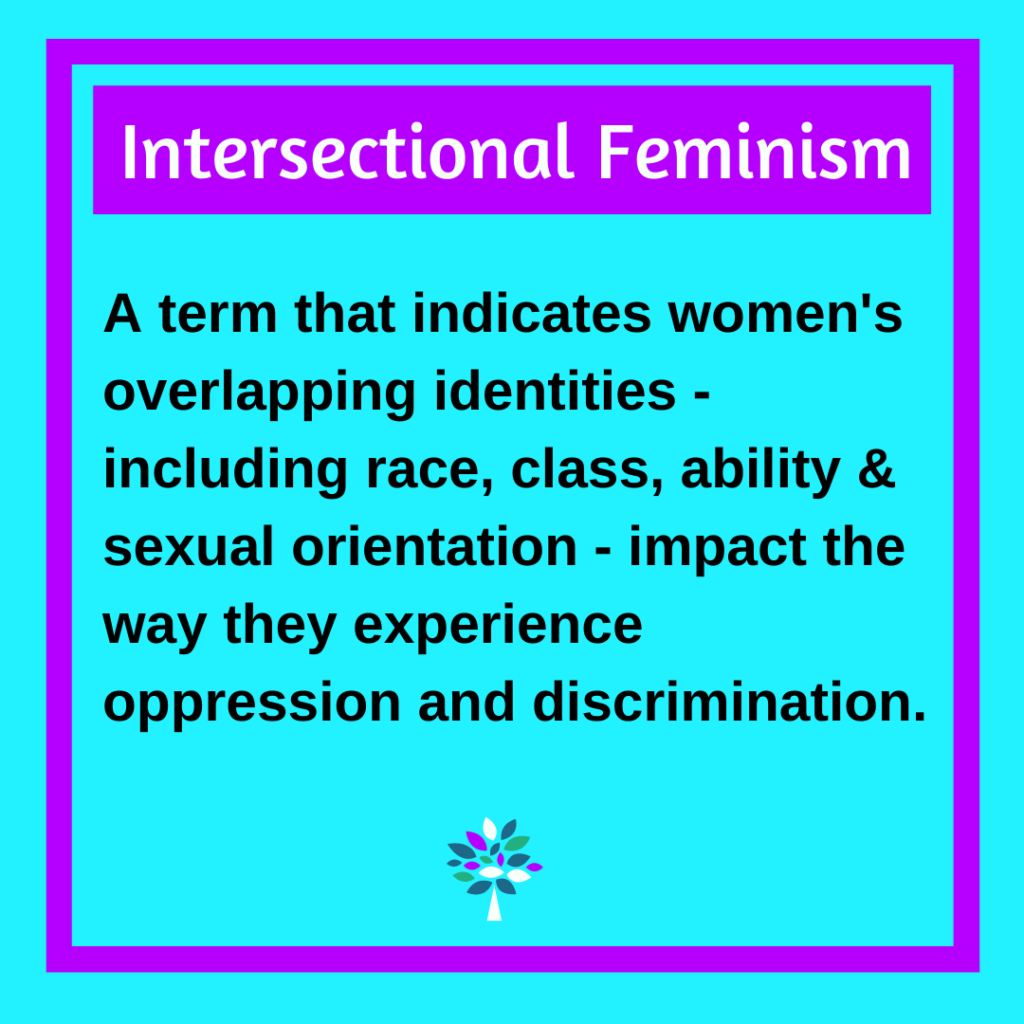
So, you’ve heard the buzzword: “Intersectional Feminism.” But what *is* it, really? Is it just another academic fad, a fleeting trend on social media? Darling, it’s so much more. It’s the damn lodestar guiding us through the murky waters of systemic oppression. It’s the analytical scalpel, dissecting the power structures that bind us all, albeit in profoundly different ways.
Think of it as a prism. White feminism, in its myopic focus, only sees the refracted light of *one* angle, *one* experience – that of the privileged white woman. Intersectional feminism, on the other hand, acknowledges the full spectrum, the multifaceted reality where race, class, sexuality, disability, and a whole host of other identities converge and collide. It’s not about ranking oppressions, mind you, but understanding their intricate entanglement.
Let’s unravel this, shall we?
I. The White Feminist Fallacy: A Singular Story
For far too long, feminism has been defined by the experiences of a select few. The narrative of the striving white woman, battling the glass ceiling in corporate boardrooms, is compelling, sure. But it’s a remarkably limited scope. It’s like trying to understand the ocean by only examining the surface waves, ignoring the churning currents below, the vibrant ecosystems thriving in the abyssal depths. It’s a dangerous elision, one that actively marginalizes those who don’t fit the prescribed mold.
Consider this: when the focus is solely on equal pay, who benefits most? Likely, the already privileged women in high-paying professions. What about the undocumented immigrant woman toiling in a sweatshop for sub-minimum wage, vulnerable to exploitation and abuse? Her fight for economic justice looks drastically different, doesn’t it?
This isn’t about denying the very real challenges faced by white women. It’s about acknowledging that those challenges exist within a broader, more complex web of power dynamics. It’s about recognizing that liberation is not a zero-sum game. Uplifting marginalized voices doesn’t diminish the struggles of others; it strengthens the entire damn movement.
II. The Interlocking Systems of Oppression: A Matrix of Power
Enter Kimberlé Crenshaw, the legal scholar who coined the term “intersectionality.” She conceived of it to describe the unique experiences of Black women who face both sexism and racism simultaneously, experiences that cannot be adequately understood by addressing sexism and racism as separate entities. It’s not additive, it’s multiplicative.
Imagine a traffic intersection. Cars are moving in different directions. When a vehicle is struck, it can be hit by traffic coming from multiple directions, not just one. Similarly, oppression can come from multiple sources simultaneously, creating a compounded disadvantage. A Black woman, for example, may face discrimination in the workplace not only because she is a woman (sexism) but also because she is Black (racism). These two forms of discrimination intersect to create a unique set of challenges that are different from the challenges faced by white women or Black men.
Think of it like this: sexism is a gatekeeper, barring women from certain opportunities. Racism is another gatekeeper, barring people of color. But for a woman of color, these two gatekeepers don’t operate independently; they form a reinforced barrier, making it exponentially harder to pass through.
The concept of intersectionality extends far beyond race and gender. It encompasses a whole damn constellation of identities: sexual orientation, gender identity, disability, class, religion, immigration status, and so much more. Each of these identities can intersect with others to create unique experiences of privilege and oppression. A queer, disabled, Latina immigrant woman faces a vastly different set of challenges than a cisgender, heterosexual, able-bodied, white man. Understanding these differences is crucial to building a truly inclusive and equitable society.
III. Beyond Tokenism: Meaningful Inclusion and Solidarity
So, how do we put intersectional feminism into practice? It’s not just about throwing a token Black woman or LGBTQ+ person into the mix and patting ourselves on the back for being “diverse.” It’s about fundamentally shifting the power dynamics within our movements and our society. It’s about centering the voices and experiences of those who have been historically marginalized. It demands a profound re-evaluation of the very foundations upon which our society is built.
First, we must actively listen. Really listen. Not just waiting for our turn to speak, but genuinely trying to understand the perspectives of others. This requires humility, empathy, and a willingness to confront our own biases and blind spots. It’s uncomfortable, yes, but growth rarely happens in comfort zones.
Second, we need to amplify marginalized voices. Create platforms for them to share their stories, their knowledge, their perspectives. Support their work, their activism, their leadership. Don’t speak *for* them; help them speak *for themselves*. Too often, the narratives of marginalized communities are filtered through the lens of dominant groups, distorted and misrepresented. Let’s change that. Let’s hand over the microphone.
Third, we must challenge systems of power. Recognize that oppression is not just the result of individual prejudice; it’s embedded in the very fabric of our institutions, our laws, our policies. We need to dismantle these systems and rebuild them in a way that is equitable and just for all. This requires systemic change, not just individual acts of kindness. It demands political action, advocacy, and a unwavering commitment to justice.
Fourth, we must practice solidarity. Recognize that our struggles are interconnected. What affects one of us affects all of us. We need to build coalitions across different identities and movements, working together to achieve common goals. This requires compromise, collaboration, and a willingness to set aside our differences in pursuit of a greater good.
IV. The Uncomfortable Truths: Confronting Privilege and Complicity
Intersectional feminism also forces us to confront uncomfortable truths about our own privilege and complicity. If you benefit from systems of oppression, even unintentionally, you have a responsibility to dismantle them. This doesn’t mean feeling guilty or ashamed of your privilege; it means using it to create change. It means being an ally, an accomplice, a co-conspirator in the fight for liberation.
White women, for example, need to acknowledge their role in perpetuating racism within the feminist movement. They need to challenge their own biases, amplify the voices of women of color, and advocate for policies that address racial inequality. They need to understand that feminism is not just about achieving equality with men; it’s about dismantling the entire patriarchal system that oppresses everyone. It’s about recognizing that their liberation is inextricably linked to the liberation of all women, regardless of race, class, or sexual orientation.
Similarly, straight people need to acknowledge their privilege and advocate for LGBTQ+ rights. Able-bodied people need to advocate for disability justice. Cisgender people need to advocate for transgender rights. And so on. This is not about asking people to feel guilty for who they are; it’s about asking them to use their power to create a more just and equitable world.
V. The Future is Intersectional: A Call to Action
Intersectional feminism is not just a theory; it’s a practice. It’s a way of seeing the world, of understanding power, and of organizing for change. It’s a messy, complicated, and often uncomfortable process. But it’s also the only way to build a truly just and equitable society.
So, I implore you: embrace the intersection. Embrace the complexity. Embrace the challenge. Dive deep into the interconnectedness of oppression and liberation. Listen to the voices that have been silenced for too long. Question the narratives you’ve been told. Challenge the systems of power that perpetuate inequality. And most importantly, act. Because the future of feminism – the future of our world – depends on it.
The fight for liberation is not a sprint; it’s a marathon. And it’s a marathon we must run together, hand in hand, shoulder to shoulder, until every single one of us is free. Because until we are all free, none of us are truly free.




Leave a Comment