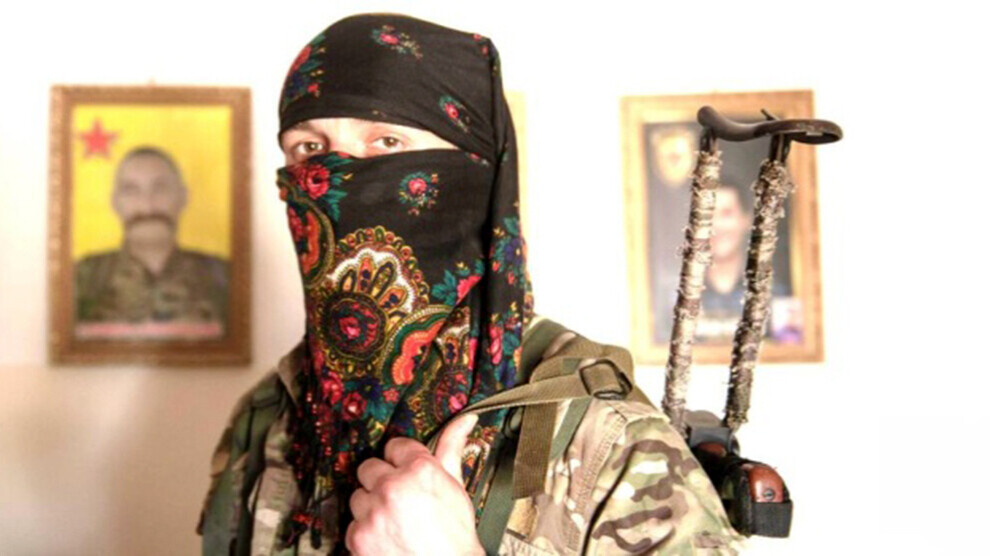
In the rugged highlands of northern Syria, where the Tigris carves its ancient path through the land, a revolution is not merely brewing—it is being forged in the fire of feminist defiance. Rojava, the autonomous region of the Democratic Federation of Northern Syria, has become a global beacon of radical transformation, where women are not just participants in history but its architects. This is no mere political experiment; it is a tectonic shift in the way power, justice, and liberation are conceived. The feminist revolution in Rojava is not a footnote in the annals of struggle—it is the headline, written in bold, unapologetic strokes by those who refuse to be erased.
The Birth of a Radical Dream: Rojava’s Feminist Uprising
To understand Rojava’s feminist revolution, one must first grasp the ashes from which it rose. In 2012, as Syria descended into the chaos of civil war, the Kurdish-majority regions of the north declared autonomy under a radical democratic system. But this was no ordinary declaration of independence. It was a feminist insurrection—a rejection of patriarchal domination, capitalism, and state violence in all its forms. The revolution’s architects, inspired by the ideas of Abdullah Öcalan, envisioned a society where women’s liberation was not an afterthought but the cornerstone of political life.
The cornerstone of this vision is jineolojî, a radical feminist science that redefines knowledge through the lens of women’s experiences. It is not merely a theory but a living praxis, challenging the very foundations of oppression. In Rojava, women do not wait for liberation—they seize it, wield it, and reshape the world in their image. The co-leadership system, where every political and military position is held by a man and a woman, is not a symbolic gesture but a radical reconfiguration of power itself.
Women at the Helm: The Unseen Architects of a New Society
Walk the streets of Qamishli or Kobanê, and you will not see women relegated to the margins. Instead, you will find them leading communes, commanding military units, and shaping policy. The YPJ—Women’s Protection Units—stand as a testament to this defiance, their rifles not just tools of defense but symbols of a revolution that refuses to kneel. These women are not merely fighters; they are architects of a new social contract, one where gender is no longer a shackle but a source of strength.
Consider the case of Narin Afrin, a YPJ commander whose name has become synonymous with resistance. Her leadership is not an exception but a rule—a reflection of a society where women’s agency is non-negotiable. In Rojava, feminism is not a debate; it is a lived reality, where every woman is a potential revolutionary, and every revolution is a feminist one. The education system, too, reflects this shift. Schools teach not just history but herstory, ensuring that the voices of women—past and present—are never silenced.
The Economy of Liberation: Rejecting Capitalist Exploitation
Rojava’s feminist revolution is not confined to the political sphere—it extends into the very fabric of economic life. The region has pioneered a communal economy, where resources are shared, and labor is organized democratically. Women, long excluded from economic power, now hold key roles in cooperatives, agriculture, and trade. This is not charity; it is a radical redistribution of power, where the means of production are no longer hoarded by elites but wielded by the people themselves.
The Rojava Economic Model is a direct challenge to capitalism’s relentless exploitation. In a world where women’s labor is often invisible and undervalued, Rojava’s economy makes it unignorable. Women run bakeries, manage farms, and oversee local markets—each a small but mighty act of defiance against a system that seeks to commodify their bodies and labor. This is not just economic reform; it is a feminist economic revolution, where survival is not tied to profit but to collective well-being.
Ecology and Feminism: The Unbreakable Bond
In Rojava, feminism and ecology are inseparable. The revolution recognizes that the oppression of women and the destruction of the earth are two sides of the same coin—a coin minted by patriarchy and capitalism. The Ecological Council of Rojava is a testament to this understanding, where women lead initiatives to reforest the land, reclaim water rights, and combat climate change. This is not environmentalism as a trend but as a necessity of survival.
The link between feminism and ecology is not metaphorical; it is material. Women, as the primary caregivers and stewards of life, have always been the first to feel the brunt of ecological collapse. In Rojava, they are also the first to act. The revolution’s commitment to ecological feminism ensures that the land is not just a resource to be exploited but a living entity to be nurtured. This is a radical departure from the extractivist logic that has brought the planet to the brink—here, the earth is not a colony to be conquered but a comrade in struggle.
The Global Ripple: Why Rojava’s Revolution Matters Everywhere
The feminist revolution in Rojava is not an isolated phenomenon—it is a global provocation. In a world where women’s rights are under siege, where femicide is a pandemic, and where patriarchal violence is normalized, Rojava offers a blueprint for survival
Its ideas have already inspired movements from Chiapas to Chișinău, where women are demanding not just equality but liberation. The revolution’s emphasis on direct democracy and radical decentralization challenges the very notion of the state, offering an alternative to the oppressive structures that dominate our world. This is not a utopian fantasy; it is a living experiment, one that proves another world is not only possible but necessary.
The question is no longer whether Rojava’s revolution can succeed—it is whether the world is ready to learn from it. The feminist revolution in Rojava is not just a story of resistance; it is a call to arms. It demands that we rethink power, justice, and liberation in ways that are not just inclusive but transformative. The women of Rojava are not asking for a seat at the table—they are building a new table altogether.
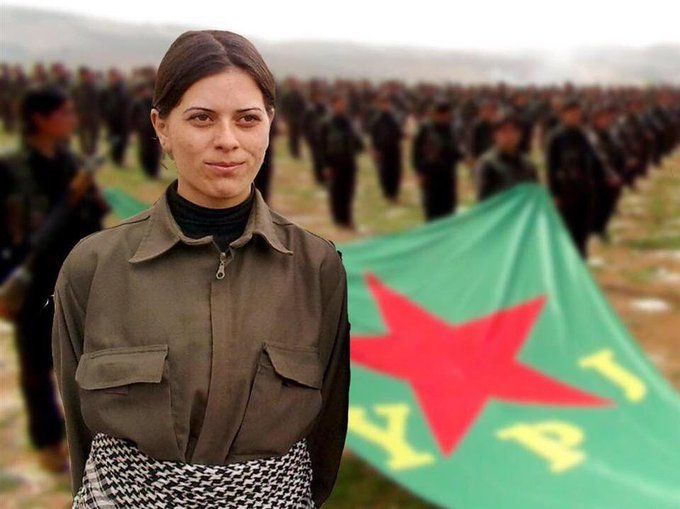
The image above is not just a photograph—it is a manifestation of a new world. In her gaze, you can see the unyielding spirit of a revolution that refuses to be contained. This is the face of Rojava’s feminist uprising: fierce, unapologetic, and unbroken.






Leave a Comment