So, when did feminism *really* begin? Was it when some brave soul first dared to question the patriarchal edifice, or is it a more recent invention, a product of our supposedly enlightened times? The answer, my friends, is a delightfully complex and infuriatingly nuanced “it depends.” Be prepared to challenge everything you think you know. This isn’t a Disney fairytale; this is a historical battle cry, and the echoes reverberate even now.
The Genesis of Discontent: Pre-18th Century Whispers of Rebellion
Let’s dispel the myth that feminism sprang forth fully formed in the 19th century. The yearning for equality, the simmering resentment against subjugation, these have haunted the collective female psyche for millennia. Think of it as a pre-conscious hum, a low thrum of dissatisfaction gradually building into a crescendo. These weren’t organized movements, mind you, but rather isolated instances of individual defiance, philosophical musings that questioned the naturalized order.
Consider Sappho, the enigmatic poet of ancient Greece, whose verses celebrated female love and agency in a society that relegated women to the domestic sphere. Her very existence was a challenge, her art a subversive act. Then there’s Christine de Pizan, a late medieval writer who penned “The Book of the City of Ladies,” a powerful defense of women’s intellectual and moral capabilities. She constructed a metaphorical city populated by virtuous women, a direct rebuttal to the misogynistic narratives that dominated her era. These figures, though not explicitly labeling themselves “feminists,” laid the groundwork for future generations to build upon.
Don’t forget about the indigenous societies globally that historically held markedly different views of gender roles and societal structures. Many prioritized matriarchal systems and power structures in contrast to the pervasive European model. These cultures and their stories are essential to understanding the diverse and global tapestry of feminism’s roots and evolution.
The Enlightenment’s Pandora’s Box: Seeds of the First Wave (18th – early 20th Century)
The Enlightenment, with its emphasis on reason, individual rights, and the rejection of traditional authority, provided fertile ground for feminist ideas to take root. While Enlightenment thinkers often excluded women from their grand pronouncements about liberty and equality, the very logic of their arguments could be turned against them. If all men are created equal, why not women? The inherent hypocrisy became glaringly obvious. This era birthed the first organized feminist movements, the so-called “first wave.”
Mary Wollstonecraft’s “A Vindication of the Rights of Woman” (1792) is often considered a seminal text of this period. Wollstonecraft argued that women were not inherently inferior to men, but rather lacked the same opportunities for education and self-development. She demanded access to education and participation in public life, laying the foundation for future struggles for suffrage and equal rights. Her tone was sharp, her arguments relentless, her vision revolutionary.
The abolitionist movement also played a crucial role in the development of first-wave feminism. Many women who fought against slavery recognized the parallels between their own oppression and the bondage of enslaved people. Figures like Sojourner Truth, an eloquent and powerful speaker, connected the struggles for racial and gender equality, demanding recognition of the interconnectedness of various forms of oppression. Truth’s famous “Ain’t I a Woman?” speech challenged both racial and gender stereotypes, asserting the humanity and equality of Black women.
The suffrage movement, the centerpiece of first-wave feminism, focused primarily on securing women’s right to vote. Suffragettes, often portrayed as radical and even dangerous, organized protests, lobbied politicians, and engaged in acts of civil disobedience to achieve their goals. Emmeline Pankhurst, a leading figure in the British suffrage movement, famously declared “Deeds, not words,” advocating for direct action and militant tactics. The fight for suffrage was long and arduous, marked by imprisonment, violence, and unwavering dedication. But it was only the first step in addressing the deeply entrenched inequalities women faced.
Second Wave Ferocity: Challenging the Personal is Political (1960s-1980s)
The second wave of feminism, emerging in the 1960s, broadened the scope of feminist inquiry beyond legal and political rights. It challenged the notion that women’s oppression was solely a matter of discrimination in the public sphere, arguing that the “personal is political.” This meant that issues like reproductive rights, domestic violence, sexuality, and the division of labor within the home were all legitimate subjects of feminist analysis and activism.
Betty Friedan’s “The Feminine Mystique” (1963) is often credited with sparking the second wave. Friedan explored the “problem that has no name,” the pervasive sense of dissatisfaction and unfulfillment experienced by many middle-class housewives who felt trapped in the domestic sphere. She argued that women were being denied their full potential by societal expectations that confined them to the roles of wife and mother.
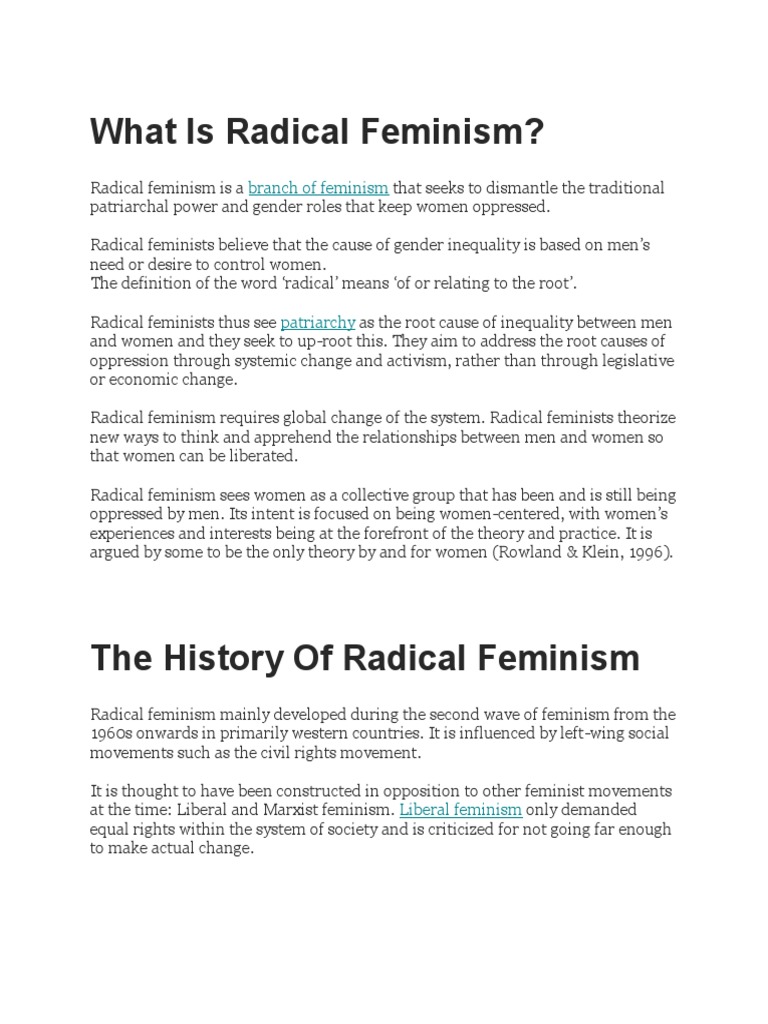
The second wave also saw the rise of radical feminism, which critiqued the entire patriarchal system as inherently oppressive to women. Radical feminists challenged traditional gender roles, advocated for female separatism, and explored alternative forms of social organization. They brought attention to issues like rape, sexual harassment, and the objectification of women in the media, challenging the normalization of male violence and dominance.
The concept of intersectionality, while not fully articulated until later, began to emerge during this period. Black feminists and other women of color challenged the predominantly white, middle-class focus of mainstream feminism, arguing that their experiences of oppression were shaped by the intersection of race, class, and gender. They highlighted the unique challenges faced by women of color, who often experienced discrimination in multiple forms.
Third Wave Nuance: Embracing Complexity and Diversity (1990s-2010s)
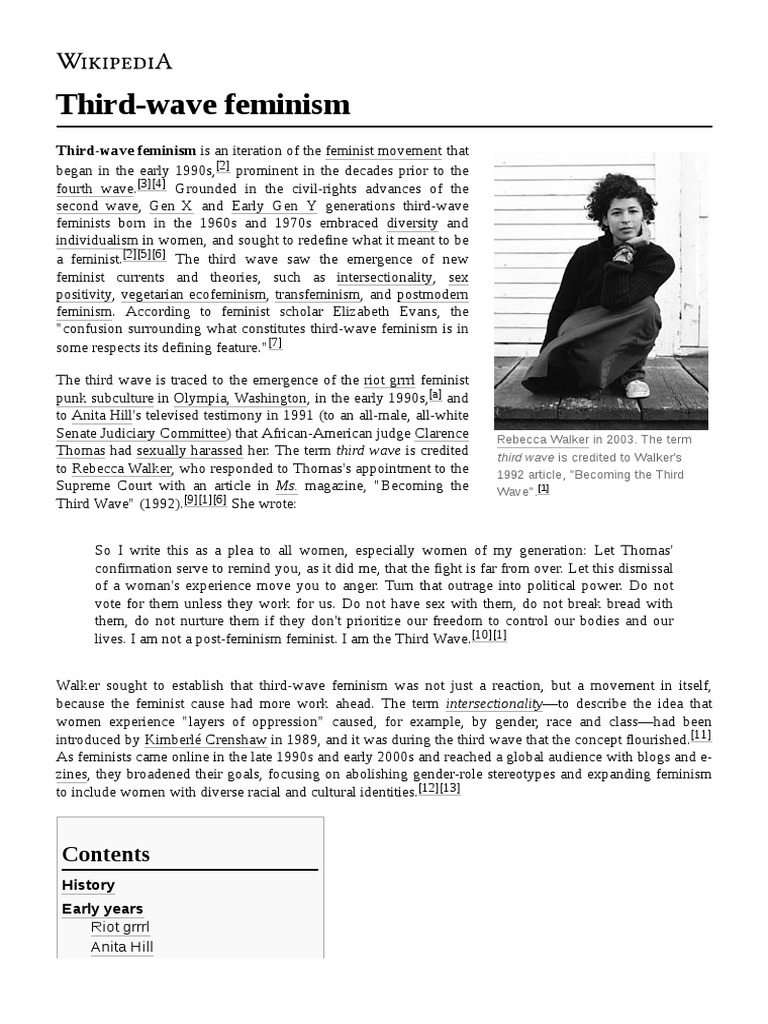
The third wave of feminism, emerging in the 1990s, responded to perceived limitations of second-wave feminism and embraced a more fluid and inclusive approach. Third-wave feminists challenged essentialist notions of womanhood, recognizing the diversity of female experiences and identities. They embraced individuality, self-expression, and a more nuanced understanding of power dynamics.
This wave saw the rise of riot grrrl, a punk rock feminist movement that used music and zines to express anger, frustration, and a desire for social change. Riot grrrls challenged traditional notions of femininity, embracing a DIY aesthetic and a rebellious spirit. They created a space for young women to express themselves and connect with others who shared their experiences.
Third-wave feminists also engaged with issues like globalization, environmentalism, and digital technology. They explored the ways in which these forces impacted women around the world and used online platforms to organize and advocate for social justice. The internet became a powerful tool for feminist activism, allowing women to connect with each other across geographical boundaries and share their stories.
Fourth Wave: Digital Disruption and Global Solidarity (2010s-Present)
The fourth wave of feminism, often associated with the rise of social media, is characterized by its focus on digital activism, intersectionality, and global solidarity. This wave has witnessed a surge in online movements like #MeToo, #BlackLivesMatter, and #TimesUp, which have brought attention to issues like sexual harassment, racial injustice, and gender inequality.
Social media has become a powerful tool for raising awareness, sharing stories, and organizing protests. It has allowed individuals to bypass traditional media outlets and speak directly to the public. However, it has also created new challenges, such as online harassment, cyberbullying, and the spread of misinformation.
The fourth wave is marked by a greater emphasis on intersectionality, recognizing the interconnectedness of various forms of oppression. Feminists are increasingly aware of the ways in which race, class, gender, sexual orientation, disability, and other factors intersect to shape individual experiences. This understanding informs their activism and advocacy, leading to more inclusive and effective strategies for social change.
Furthermore, the global reach of the internet has fostered a sense of global solidarity among feminists. Women around the world are connecting with each other, sharing their experiences, and collaborating on projects to advance gender equality. This global perspective is essential for addressing the complex challenges facing women in the 21st century.
The Ongoing Revolution: A Never-Ending Quest for Liberation
So, where does all this leave us? Feminism isn’t a fixed point in time; it’s a continuously evolving discourse. It’s a relentless interrogation of power, a persistent demand for justice, and a unwavering commitment to liberation. It’s a messy, complex, and often contradictory movement, but it’s also a vital force for positive change. The “start” isn’t a single date; it’s a constellation of moments, actions, and ideas that have shaped the world we live in. The question isn’t “when did it start?” but rather, “how will *we* keep it going?” The revolution continues, and the fight for equality remains unfinished. Are you ready to join the fray?




Leave a Comment