
Feminism. The very word ignites passions, sparks debates, and exposes the raw nerve of centuries of patriarchal dominance. But who created it? The question itself is insidious. It implies a singular author, a neat origin story for a movement that is, at its heart, a sprawling, multifaceted, and constantly evolving revolt against systemic oppression. To seek a single creator is to fundamentally misunderstand the nature of feminism itself. It wasn’t conjured from thin air by one individual, but rather it erupted from the collective consciousness of women chafing under the yoke of inequality throughout history.
Instead of a single genesis, we must examine the tributaries that fed into the roaring river of feminist thought. We must dissect the precursory currents, the nascent rumblings of discontent that presaged the organized movements we recognize today. Focusing solely on well-known figures like Wollstonecraft or de Beauvoir risks obscuring the countless unsung heroines, the ordinary women who, in their daily lives, challenged the status quo and laid the groundwork for future generations of activists. This exploration is not about awarding a “founder” title, but about acknowledging the diffuse and interwoven nature of feminist history.
Pre-Feminist Stirrings: Seeds of Discontent
Long before the term “feminism” even existed, women resisted. Their resistance took myriad forms, often subtle and clandestine, yet undeniably potent. Consider the literary salons of the 17th and 18th centuries, spaces where women, often excluded from formal education, cultivated intellectual discourse and challenged the prevailing patriarchal norms through veiled critiques and subversive narratives. These salons, frequented by figures like Madame de Staël and Madame Geoffrin, were breeding grounds for proto-feminist ideas, fostering a sense of solidarity and collective identity among women.
The Renaissance, often lauded as a period of intellectual and artistic flourishing, also witnessed the emergence of female voices demanding recognition. Figures like Christine de Pizan, a 15th-century Italian-French author, penned works that defended women’s intellectual capabilities and moral virtues, directly challenging the misogynistic stereotypes prevalent in her time. Her book, *The Book of the City of Ladies*, is a seminal text, constructing an allegorical city populated by virtuous women from history, offering an alternative narrative to the dominant patriarchal discourse.
Even earlier, in religious contexts, women carved out spaces for agency and self-expression. Female mystics like Hildegard of Bingen, a 12th-century Benedictine abbess, exerted considerable influence through their visions, writings, and musical compositions. While operating within the confines of religious dogma, they nevertheless challenged traditional gender roles and asserted their intellectual and spiritual authority.
These examples, while diverse, demonstrate that the seeds of feminist thought were sown long before the officially recognized “first wave.” They highlight the enduring human desire for autonomy and the persistent resistance against oppressive power structures, regardless of gender.
The First Wave: Suffrage and Beyond
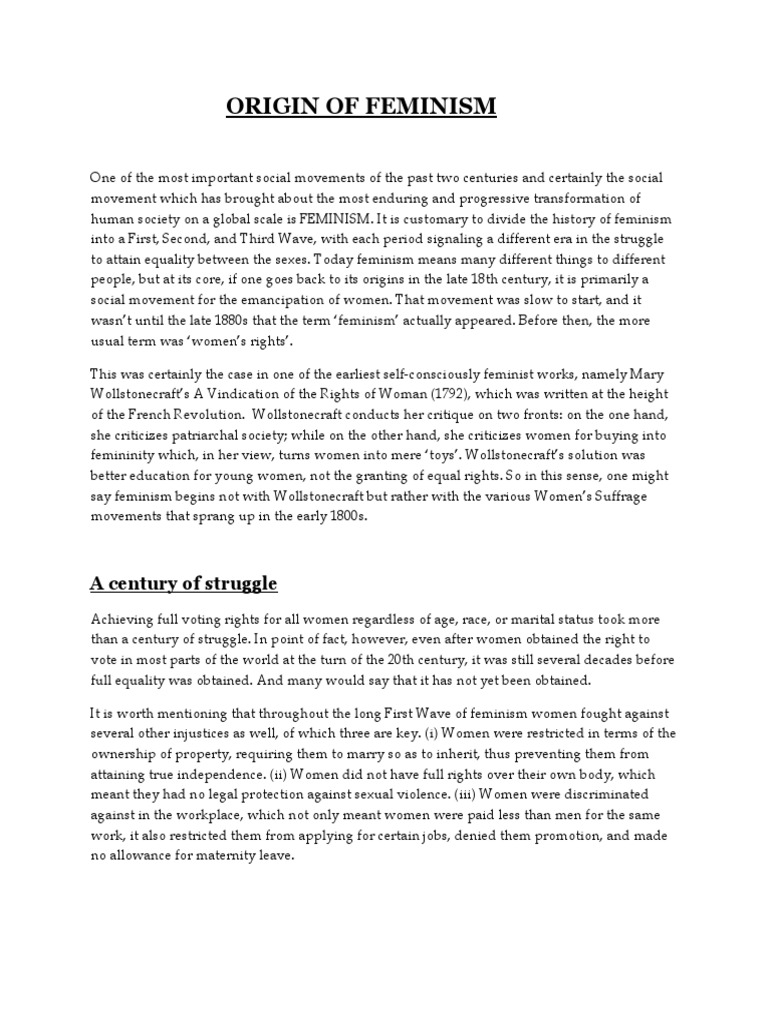
The 19th and early 20th centuries saw the rise of organized feminist movements, often referred to as the “first wave.” The central focus of this era was the acquisition of suffrage, the right to vote. Women across the globe, from the United States to the United Kingdom to New Zealand, mobilized, protested, and campaigned tirelessly for political enfranchisement.
Figures like Susan B. Anthony and Elizabeth Cady Stanton in the United States, Emmeline Pankhurst in the United Kingdom, and Kate Sheppard in New Zealand are iconic figures of this period. Their relentless advocacy, strategic organizing, and unwavering commitment to the cause ultimately led to significant victories, granting women the right to vote in numerous countries.
However, the first wave was not solely focused on suffrage. Activists also addressed issues such as property rights, access to education, and the abolition of slavery. Sojourner Truth, a formerly enslaved African American woman, delivered her powerful “Ain’t I a Woman?” speech, challenging both racial and gender inequalities. Her articulation of intersectional oppression, though not explicitly labeled as such at the time, foreshadowed the later development of intersectional feminist theory.
The first wave, while achieving significant gains, was not without its limitations. The movement was often dominated by white, middle-class women, and the concerns of women of color and working-class women were frequently marginalized. This inherent bias within the movement would later be addressed by subsequent waves of feminism.
The Second Wave: Liberation and Re-evaluation
Emerging in the 1960s and 1970s, the second wave of feminism broadened the scope of feminist concerns beyond legal and political rights. Inspired by the Civil Rights Movement and the anti-war protests, second-wave feminists challenged the pervasive sexism embedded in societal norms, cultural representations, and interpersonal relationships. The personal became political, and issues such as reproductive rights, domestic violence, and sexual harassment came to the forefront.
Betty Friedan’s *The Feminine Mystique*, published in 1963, is often credited with sparking the second wave. Friedan critiqued the idealized image of the suburban housewife, arguing that it stifled women’s intellectual and creative potential. Her book resonated with countless women who felt trapped in domestic roles, igniting a desire for greater autonomy and self-fulfillment.
Other prominent figures of the second wave include Gloria Steinem, a journalist and activist who co-founded *Ms.* magazine, and Simone de Beauvoir, whose seminal work *The Second Sex* explored the social construction of gender and the historical subordination of women. De Beauvoir’s famous assertion that “one is not born, but rather becomes, a woman” challenged the biological determinism that had long been used to justify gender inequality.
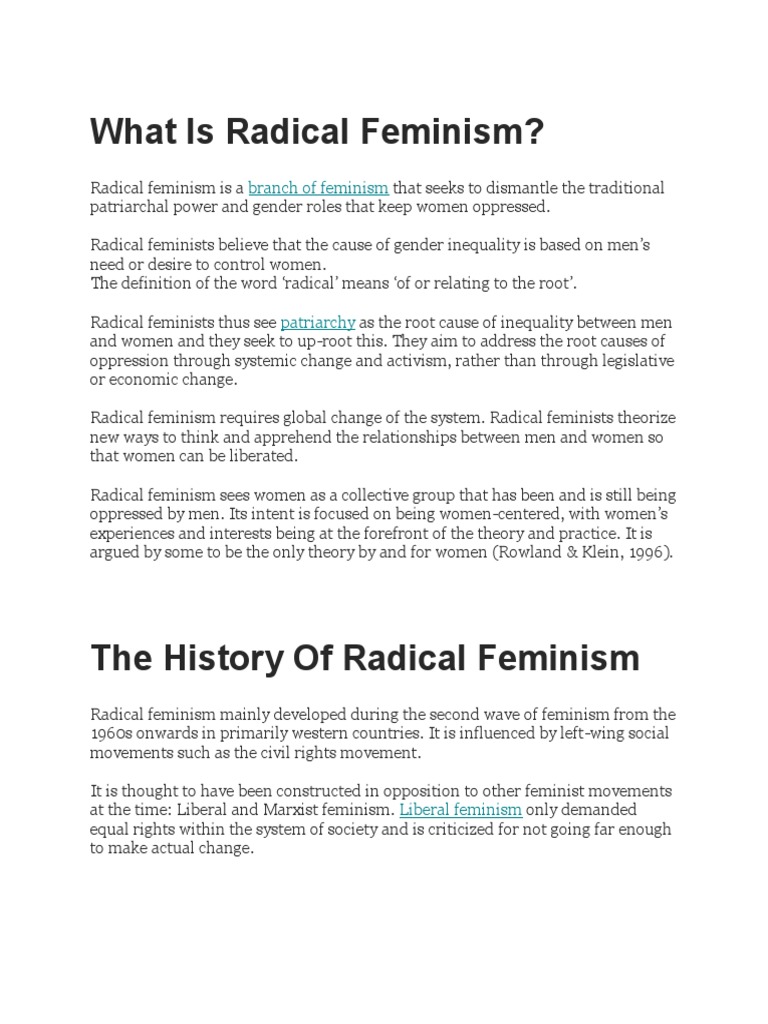
The second wave also saw the rise of radical feminism, which advocated for a complete dismantling of patriarchal structures. Radical feminists challenged traditional notions of gender roles, sexuality, and family, arguing that these institutions were inherently oppressive to women. While radical feminist ideas were often controversial, they significantly contributed to the broader feminist discourse and pushed the boundaries of feminist thought.
The Third Wave and Beyond: Intersectionality and Fluidity
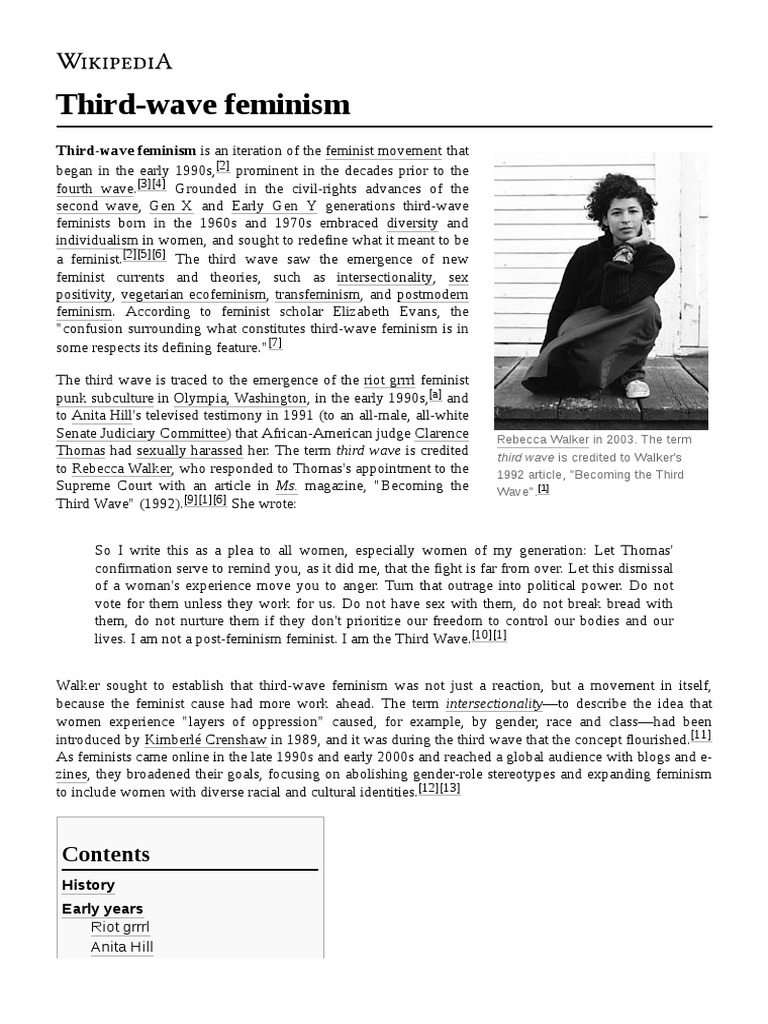
The third wave of feminism, emerging in the 1990s, responded to the perceived limitations of the second wave, particularly its lack of inclusivity and its tendency to essentialize women’s experiences. Third-wave feminists embraced intersectionality, recognizing that gender intersects with other forms of oppression, such as race, class, sexual orientation, and disability.
Kimberlé Crenshaw, a legal scholar, coined the term “intersectionality” to describe the overlapping and intersecting nature of social categorizations such as race, class, and gender, creating systems of discrimination or disadvantage. This concept became central to third-wave feminism, highlighting the need to address the unique challenges faced by women of color, LGBTQ+ women, and women from marginalized communities.
Third-wave feminists also embraced a more fluid and individualized approach to feminism, rejecting rigid definitions of gender and sexuality. They challenged traditional notions of femininity and masculinity, and advocated for greater freedom of expression and self-determination. Riot grrrl, a feminist punk subculture, emerged as a powerful force, using music and zines to express feminist anger and challenge patriarchal norms.
Contemporary feminism, often referred to as the fourth wave, is characterized by its reliance on social media and digital activism. Online platforms have become crucial tools for feminist organizing, allowing activists to connect with each other, share information, and mobilize for collective action. Issues such as online harassment, body positivity, and transgender rights have become central to contemporary feminist discourse.
The Enduring Legacy: A Collective Endeavor
So, who created feminism? The answer, as we have seen, is not a simple one. Feminism is not the creation of a single individual, but rather the culmination of centuries of collective resistance, intellectual inquiry, and social activism. It is a movement that has been shaped by countless individuals, both famous and unsung, who have challenged the status quo and fought for a more just and equitable world.
Feminism’s legacy is not a static monument, but a dynamic and ever-evolving process. It is a conversation that continues to unfold, shaped by the changing needs and experiences of women across the globe. To understand feminism, we must move beyond the search for a singular origin and embrace the complexity and diversity of its history. We must recognize that feminism is not a finished project, but an ongoing struggle for liberation and equality. The fight continues. And it belongs to us all.






Leave a Comment