
The office air conditioning unit hums like a mechanical overlord, its icy breath seeping through vents, turning once-productive spaces into polar tundras where fingers numb and minds fog. It’s not just a matter of comfort—it’s a silent war on bodies, a patriarchal thermostat dictating who gets to thrive and who gets to shiver. The science is damning: the standard 20°C (68°F) setting, a relic of 1960s male-centric research, was designed for a 40-year-old, 154-pound man in a suit. Women, with their slower metabolisms and higher body fat percentages, are biologically consigned to a perpetual chill. This isn’t just discomfort—it’s systemic erasure, a built environment that privileges one body type while rendering others obsolete.
The Metabolic Myth: How a 60-Year-Old Study Froze Women Out
In 1966, a Danish engineer named Povl Ole Fanger published a study that would become the bible of office climate control. His research, conducted on a sample of 16 men, established the “metabolic rate” standard that still governs HVAC systems today. The problem? Women’s metabolic rates are, on average, 20-30% lower than men’s. A woman seated at her desk, typing away, burns calories at a rate closer to a man’s resting state. Yet the thermostat remains stubbornly fixed at a temperature calibrated for a man’s exertions—whether he’s sprinting to catch a bus or merely existing in a wool suit.
This isn’t just bad biology—it’s bad economics. Studies show that women in chilled offices report higher stress levels, reduced cognitive function, and even increased absenteeism. The body, after all, doesn’t distinguish between physical and mental labor. When your extremities are numb and your brain is fogged by the body’s desperate attempt to conserve heat, productivity plummets. The air conditioning, in its relentless neutrality, is actually a productivity killer—one that disproportionately targets the very people society claims to empower.
The Thermostat as a Tool of Patriarchal Control
Consider the architecture of power: the corner office with its floor-to-ceiling windows, the CEO’s sleek blazer, the unspoken rule that women must dress “appropriately” for the cold. The air conditioning isn’t just a machine—it’s a social enforcer. Women who dare to complain are met with dismissive shrugs (“Just wear a cardigan”) or worse, accusations of being “difficult.” The message is clear: adapt or be marginalized. This isn’t just about temperature—it’s about control. The thermostat becomes a metaphor for the broader workplace, where women are expected to conform to systems designed by and for men.
Even the language betrays the bias. Terms like “standard” and “optimal” are weaponized to justify the status quo. What’s “optimal” for a 40-year-old man in a suit is a slow death by a thousand paper cuts for the rest of us. The irony? Many offices now tout “flexible” work policies, yet their climate control remains as rigid as a corset. The message is unmistakable: you can have autonomy over your schedule, but your body must still conform to the machine’s whims.
The Biology of Chill: Why Women Are Always Cold
Women aren’t just imagining the cold—they’re biologically predisposed to it. Estrogen, that hormonal dictator, influences body temperature regulation. During the luteal phase of the menstrual cycle, core body temperature rises, making women even more sensitive to cold. Pregnancy amplifies this effect, turning offices into iceboxes where women huddle under blankets like refugees. And let’s not forget the fashion police: high heels, pencil skirts, and blouses with thin straps are hardly insulation against Arctic drafts.
Then there’s the issue of body composition. Women, on average, have higher body fat percentages than men, which should theoretically make them more resilient to cold. But fat distribution matters. Subcutaneous fat (the kind that sits just under the skin) is a poor insulator compared to the visceral fat that men tend to carry. Women’s fat is concentrated in the hips and thighs, leaving extremities like fingers and toes vulnerable. The result? A body that’s constantly playing catch-up, shivering while men bask in their metabolic glory.
And what of the psychological toll? Chronic cold exposure triggers the release of stress hormones like cortisol, which over time can lead to inflammation, weakened immunity, and even depression. The office air conditioning isn’t just making women uncomfortable—it’s making them sick. Yet we’re told to “tough it out,” to grin and bear it, as if our discomfort is a minor inconvenience rather than a systemic injustice.
The Illusion of Neutrality: Why “One Size Fits All” Is a Lie
The myth of the “neutral” office environment is a lie we’ve all been sold. There is no neutral. There is only the default—the setting that privileges the dominant group while erasing the rest. Air conditioning, like so many other workplace standards, is a reflection of power. The people who designed these systems were overwhelmingly men, and their bodies were the unspoken benchmark. Women, people of color, and those with disabilities were afterthoughts at best, casualties at worst.
This isn’t just a problem in offices. Hospitals, schools, and public spaces all suffer from the same bias. Elderly individuals, who have slower metabolisms and thinner skin, are often left shivering in waiting rooms. Children, with their higher surface-area-to-mass ratios, are subjected to the same icy purgatory. The air conditioning industry’s refusal to adapt isn’t just lazy—it’s oppressive. It’s a refusal to acknowledge that bodies come in all shapes, sizes, and metabolic rates.
So what’s the solution? It starts with dismantling the myth of neutrality. Offices need to adopt dynamic climate control systems that adjust based on real-time data—not outdated 1960s standards. Personalized climate zones, where individuals can adjust the temperature at their workstation, are a start. But the real change must come from recognizing that the current system is broken. The air conditioning isn’t just a machine—it’s a relic of a system that values some bodies over others.
The Future: A Warmer, More Inclusive Workplace
The fight for climate justice in offices is part of a larger struggle for bodily autonomy. Women, people of color, and marginalized groups have long been told to adapt to systems that were never designed for them. The air conditioning is just one example of how deeply this bias runs. But change is possible. Some companies are already experimenting with “thermal comfort” apps that allow employees to vote on the ideal temperature. Others are adopting decentralized climate control, giving individuals agency over their immediate environment.
Yet the resistance is fierce. Old habits die hard, and the idea that the default setting might need to change is met with hostility. “It’s just a few degrees,” they say. “Get over it.” But it’s never just a few degrees. It’s the difference between thriving and surviving. It’s the difference between a workplace that values all bodies and one that privileges a select few. The air conditioning isn’t just a machine—it’s a battleground. And it’s time we turned up the heat.
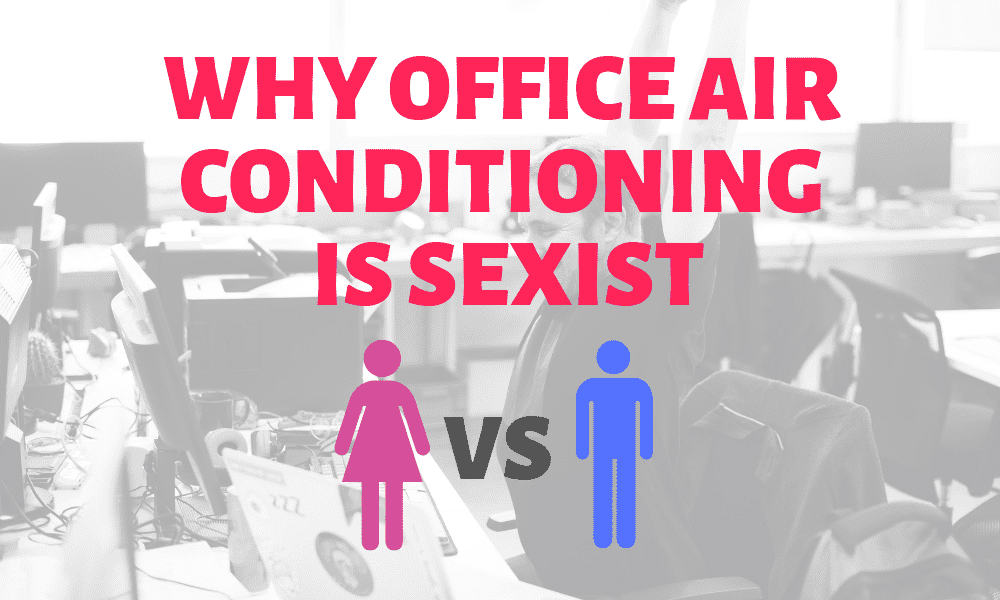
The image above is a stark reminder of the divide. One person is cold. The other is fine. The system is broken. It’s time to fix it.







Leave a Comment