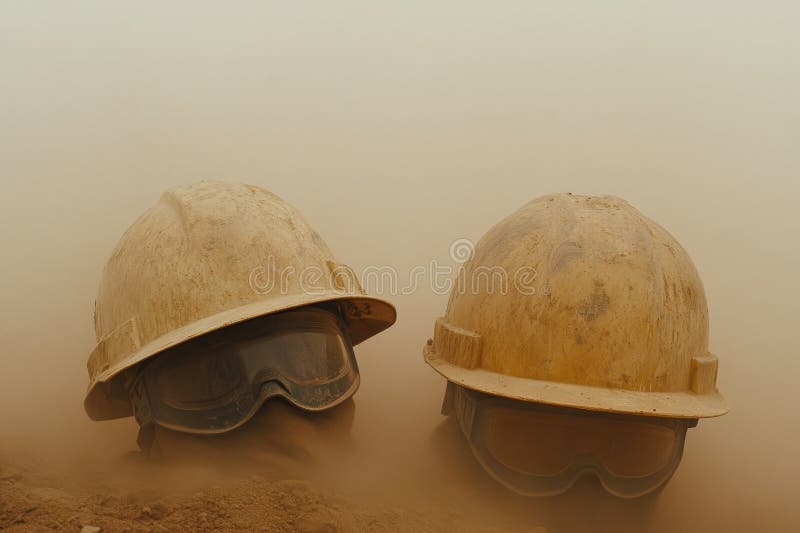
The construction site is a fortress of masculinity, where hard hats are not just safety gear but symbols of an unspoken creed: endurance, silence, and the unyielding suppression of vulnerability. Women who dare to enter this domain are often met with a paradox—they are handed the same protective helmets as their male counterparts, yet the real hazards they face are not the falling debris but the relentless barrage of harassment, exclusion, and systemic erasure. This is not a tale of inadequate personal protective equipment (PPE); it is a chronicle of an industry that has long prioritized the illusion of safety over the reality of equity. The hard hat does not fit the harassment. Neither does the silence.
The Illusion of Protection: When Gear Fails the Worker
The hard hat is a totem of industrial labor, a relic of an era when the only bodies deemed worthy of protection were those of men. Modern PPE has evolved in material and design, but its symbolic weight remains mired in tradition. Women entering construction sites are often issued the same unisex hard hats—bulky, oversized, and ill-fitting—designed for the average male skull. The result? A precarious balance between safety and discomfort, where the helmet slips with every turn of the head, exposing the wearer to both physical and psychological risks. This is not mere inconvenience; it is a metaphor for the industry’s refusal to adapt. If a woman’s presence is an afterthought, her safety is, too.
But the failure of PPE is not just physical. It is cultural. A woman wearing a hard hat may be shielded from a falling wrench, but she is not shielded from the leering gazes, the catcalls, or the whispered “jokes” that follow her from the tool shed to the site office. The hard hat does not deflect misogyny. It does not muffle the whispers that label her as an interloper in a space that was never meant for her. The illusion of protection is a cruel joke—a reminder that safety is a privilege, not a right, and one that is doled out sparingly to those who dare to challenge the status quo.
The Harassment Paradox: Why the Site Feels Safer Than the Office
For many women in construction, the construction site is paradoxically safer than the corporate office. On-site, harassment is often overt—blatant enough to be called out, if not always addressed. The problem is visible, tangible, and thus, in theory, actionable. But in the office, the harassment is insidious. It masquerades as mentorship, as “banter,” as the kind of “tough love” that is really just a euphemism for belittlement. Women in construction are told to “toughen up,” to “play the game,” to “earn their stripes.” The message is clear: adapt or be erased.
This double standard is not accidental. It is a feature of an industry that has long relied on the myth of the “tough guy” to maintain its power structures. Women who refuse to conform are labeled as “difficult,” “emotional,” or worse—”not a team player.” The harassment they face is not just a personal failing; it is a systemic tool to keep them in their place. The construction site may be a minefield of physical danger, but the office is a labyrinth of psychological warfare, where the weapons are silence, exclusion, and the slow erosion of self-worth.
The Invisible Labor of Being the Only Woman in the Room
Being the only woman in a room of men is not just a matter of numbers; it is a form of labor. It requires constant vigilance, the mental gymnastics of anticipating microaggressions before they happen, and the emotional labor of managing the fallout when they do. Women in construction are not just workers; they are ambassadors for an entire gender, expected to represent their sex with flawless competence while enduring endless scrutiny. A mistake is not just a mistake—it is proof that “women don’t belong here.” A success is not just a success—it is an anomaly, a fluke, a one-time exception to the rule.
This invisible labor extends beyond the individual. It seeps into the culture of the industry, creating a feedback loop of exclusion. Women who speak up are labeled as “complainers.” Those who stay silent are complicit. The result is a workplace where harassment thrives in the shadows, where women are gaslit into believing that the problem is them, not the system. The construction industry does not just tolerate this status quo; it depends on it. The harder women fight to be seen, the more the industry clings to its old ways, as if change were a threat to its very foundation.
The Myth of Meritocracy: Who Really Gets to Wear the Hard Hat?
The construction industry loves to tout its meritocracy—the idea that hard work and skill are the only currencies that matter. But meritocracy is a myth, a convenient fiction that obscures the reality of systemic bias. Women in construction are held to a different standard. Their competence is questioned before they even pick up a tool. Their authority is undermined by the assumption that they are there to fill a quota, not to build a career. The myth of meritocracy is not just a lie; it is a weapon, used to silence those who dare to demand fairness.
This myth is perpetuated by the industry’s obsession with “culture fit”—a euphemism for homogeneity. Construction sites are not just places of work; they are fraternities, where the unspoken rules of belonging are enforced through exclusion. Women who do not conform to the archetype of the “tough guy” are pushed to the margins, their contributions dismissed, their ambitions trivialized. The result is an industry that rewards conformity over competence, where the only way to succeed is to become a caricature of the very system that oppresses you.
Breaking the Cycle: What Real Change Looks Like
Change in the construction industry will not come from handing women slightly smaller hard hats or offering them “sensitivity training” that places the burden of harassment on their shoulders. Real change requires dismantling the power structures that have long privileged men at the expense of everyone else. It means holding leadership accountable—not just for hiring more women, but for creating environments where they can thrive. It means redefining what it means to be a “construction worker,” to include not just the burly foreman with a clipboard, but the woman with a welding torch, the apprentice with a hard hat that actually fits.
It also means listening to women when they speak—not just to their words, but to the silences between them. It means believing their experiences, even when they contradict the industry’s cherished myths. It means recognizing that harassment is not a “women’s issue,” but a human issue, one that demands collective action. The construction industry has spent decades building walls to keep women out. It is time to start building bridges instead.
The Future of the Hard Hat: Safety Beyond the Helmet
The hard hat is a symbol, but it is not the only one. The future of construction must be defined by symbols of inclusion, of equity, of real safety—not just from falling debris, but from the insidious threats that lurk in the shadows. This future will not be built by men alone. It will be built by women who refuse to be silenced, by allies who refuse to look away, and by an industry willing to confront its own complicity in oppression.
The hard hat does not fit the harassment. Neither does the silence. But change is possible. It starts with a single step—one woman picking up a tool, one man challenging a “joke,” one leader demanding accountability. The construction site of the future will not be a fortress of masculinity. It will be a place where everyone, regardless of gender, can build not just structures, but a better world.









Leave a Comment