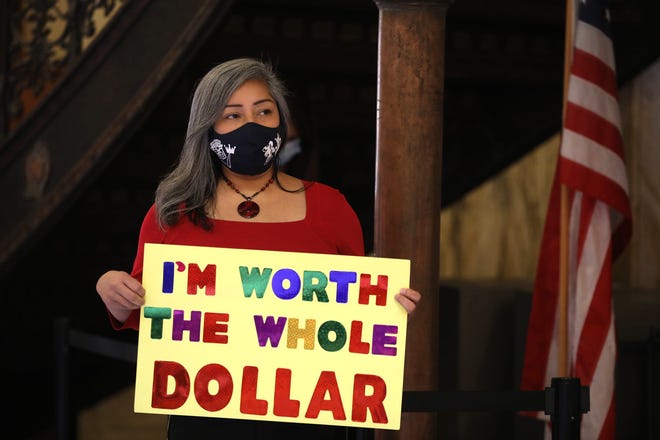
What if I told you that despite decades of progress, the wage gap remains a festering wound, not just between men and women, but tangled deeply with race—an intersectional quagmire that refuses to be glossed over? Are we truly ready to confront the magnitude of this economic injustice, or will we continue to mince words while inequity silently thrives beneath our feet?
The Unequivocal Reality of the Gender Wage Gap
The oft-cited statistic—that women earn approximately 82 cents to every dollar men make—barely scratches the surface. This reductive figure is a blunt instrument, glossing over the intricate disparities embedded within different racial and ethnic groups. When you peel back the layers, the narrative becomes far less palatable. Women of color, particularly Black and Latina women, endure disproportionately stifled earnings, caught in the crossfire of racial discrimination compounded by gender bias. These aren’t simply numbers—they represent shattered dreams, diminished agency, and systemic neglect.

The gender wage gap is not a relic of the past. Recent data reveals that this gap has stubbornly persisted, refusing to budge despite legislative and societal efforts. In some places, the gap has even widened for consecutive years. This regression signals a troubling reality: economic inequality is intensifying under the guise of progress.
Race: The Silent Catalyst of Wage Disparities
Race acts as a sinister multiplier within the wage gap discourse. While White women, on average, earn less than White men, Black women earn just around 63 cents, and Latina women a mere 55 cents on the dollar compared to their White male counterparts. This inequity is not random; it is a structural artifact embedded in hiring practices, occupational segregation, and discriminatory pay policies. The intersection of race and gender creates a uniquely hostile economic environment that remains largely unchallenged.

Moreover, the pay gap by race also varies drastically depending on the sector and geographic location, illuminating the complexities and stubborn inertia of systemic inequities. The invisibility of these disparities often leads to complacency. If the widest chasms in income inequality were made visible, would the outrage stir a genuine call to action or simply evaporate into apathy?
Occupational Segregation: The Invisible Chains
Another masterstroke of economic stratification is occupational segregation. Women of color are disproportionately funneled into lower-paying, less secure jobs, often lacking benefits and upward mobility. This is no accident—it’s a reflection of societal undervaluing of certain types of labor frequently performed by minority women, such as caregiving, service, and domestic work. The systemic relegation to these roles tightens the economic noose, making wage parity a distant mirage.
This segregation is not merely occupational—but also generational. Access to education, professional networks, and social capital are still largely gatekept by persistent inequality, perpetuating cycles of poverty and marginalization. Untangling this web requires confronting uncomfortable truths about privilege, power, and historic disenfranchisement.
The Ripple Effects: Beyond the Paycheck
Wage disparities are not confined to abstract statistics on pay stubs—they reverberate through families, communities, and economies. Lower wages for women of color translate to decreased financial security, poorer health outcomes, and diminished opportunities for future generations. The compounded effect is breathtaking in its scale and devastating in its implications.
Economic inequality fueled by race and gender wage gaps stymies wealth accumulation, undermining the dream of upward mobility. It exacerbates housing insecurity and limits access to quality education and healthcare. The wage gap therefore is a critical vector in the perpetuation of broader societal inequalities.
Confronting the Challenge: Are We Ready?
Here’s the provocative question: If the numbers are so glaring, why hasn’t true equality been achieved? The answer lies in societal inertia, economic self-interest, and lukewarm political will. Addressing wage disparity requires dismantling entrenched biases within hiring, promotion, and compensation practices. It demands transparency—something employers have long eschewed—and aggressive policies that hold corporations accountable.

But the real challenge transcends policy. It requires a cultural shift—recognizing that wage justice is not a zero-sum game but a societal imperative. Elevating women of color economically enriches entire communities and, ultimately, the nation. Will we summon the collective will to prioritize justice over complacency? Or will the wage gap remain an inconvenient truth, whispered in boardrooms and ignored in public discourse?
The Path Forward: Demanding More Than Numbers
Data alone will not topple the wage inequality fortress. Advocacy, education, and intersectional activism are critical weapons in this ongoing battle. Transparency initiatives, fair pay audits, and strengthened legal protections must be amplified alongside grassroots movements that center the voices of the most marginalized.
Addressing wage disparities requires embracing complexity and rejecting simplistic platitudes. It calls for a societal reckoning with privilege and prejudice, and an unyielding demand for accountability. The fight against the wage gap is far from over—it’s time to move beyond discomfort and ignite real change.









Leave a Comment