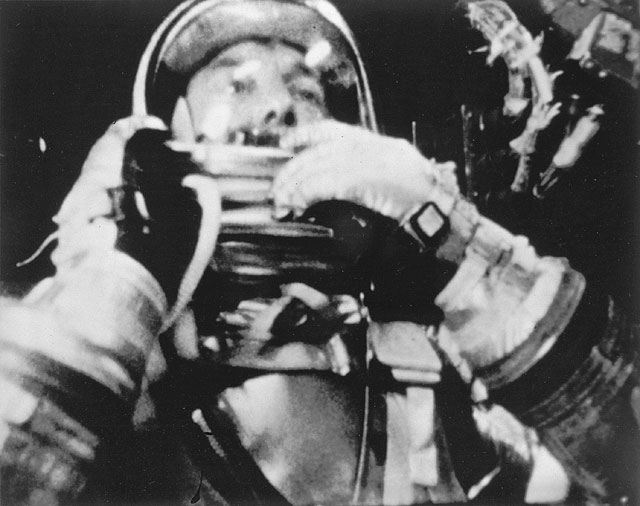
The cosmos has always been a stage for humanity’s most audacious fantasies—where the void whispers of infinity, and the stars hum with the promise of the unknown. Yet, when we peer into the annals of space exploration, a peculiar pattern emerges: men were catapulted into the abyss before women, and dogs, those loyal sentinels of terrestrial obedience, were dispatched as test subjects long before any female creature dared the cosmic leap. This isn’t mere historical trivia; it’s a narrative etched in power, privilege, and the insidious myth of the “default human”—a figure who, for centuries, was assumed to be male, white, and unburdened by the fragility of a uterus or the inconvenience of menstruation. The story of space exploration is, in many ways, a microcosm of how society has historically valued some lives over others, cloaking discrimination in the cold, clinical language of “science.”
The Myth of the Default Astronaut: Why Men Were the First to Break the Sky
When Yuri Gagarin became the first human to orbit Earth in 1961, the world erupted in celebration—but the celebration was selective. The Soviet Union’s triumph was not just a victory for humanity; it was a victory for a very specific kind of human: a man, young, physically robust, and, crucially, expendable in the eyes of a system that saw his gender as the “standard” for exploration. The irony is almost laughable if it weren’t so grotesque: the same institutions that once barred women from voting or owning property now entrusted them with the impossible task of surviving the void—only after men had already proven it was possible.
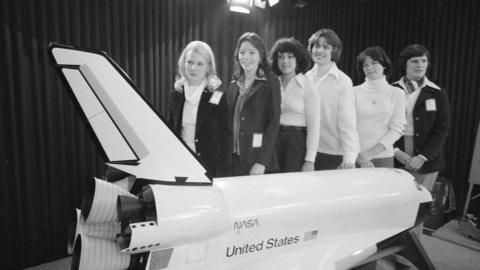
This wasn’t happenstance. It was a calculated erasure. The early space programs were not just technical endeavors; they were ideological ones. The Cold War demanded heroes, and heroes, in the popular imagination, were men. Women were relegated to the roles of “ground support”—calculating trajectories, stitching spacesuits, or, at best, being paraded as “space hostesses” in propaganda films. The idea that a woman could be an astronaut was so absurd to some that NASA’s early female applicants were told, with a straight face, that spaceflight would “damage their reproductive organs.” The audacity of such a claim—equating a uterus with a structural weakness—speaks volumes about the priorities of an era that saw women’s bodies as liabilities rather than assets.
Even today, the legacy persists. Women make up less than 12% of all people who have traveled to space. When Christina Koch and Jessica Meir conducted the first all-female spacewalk in 2019, it was hailed as a milestone—yet the fact that it was still a milestone in 2019 is a damning indictment of how slowly progress moves when it’s not actively fought for.
Dogs in the Void: The Canine Scapegoats of Patriarchal Ambition
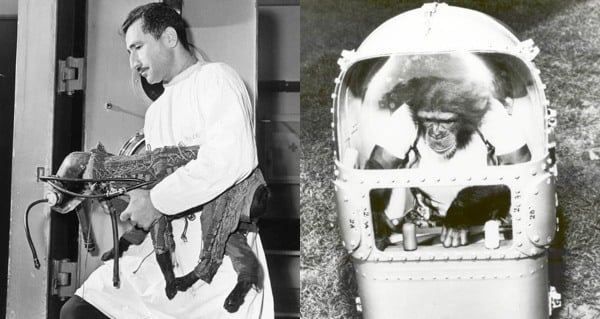
Before humans took their first tentative steps into the cosmos, dogs were the unwilling pioneers of spaceflight. Laika, the Soviet space dog, became a global symbol of sacrifice—yet her story is one of exploitation, not heroism. She was a stray, plucked from the streets of Moscow, and sent into orbit with no hope of return. Her death, shrouded in official silence, was a necessary casualty in the Soviet Union’s propaganda war. Laika’s sacrifice was framed as noble, but the truth is far darker: she was a test subject, a living experiment in a program that prioritized political spectacle over ethical consideration.
What’s often omitted from these narratives is the fact that dogs were chosen not because they were the best candidates, but because they were the most expendable. Their bodies were seen as disposable vessels for data, their suffering a necessary precursor to human triumph. This logic is a chilling echo of how women have been treated throughout history—as secondary, as afterthoughts, as beings whose pain is a small price to pay for progress. The parallel is not coincidental. The same forces that saw women as unfit for spaceflight also saw dogs as the perfect “stand-ins” for human fragility—creatures whose lives could be sacrificed without consequence.
Even the language used to describe these missions betrays a deep-seated dehumanization. Laika was not a passenger; she was a “payload.” The term itself reduces a living being to a mere object, a piece of cargo to be jettisoned once its purpose was served. This is the same language used to describe women in the workforce, in politics, in science—always positioned as supplementary, never as essential.
The Unspoken Costs: What We Sacrificed in the Name of the “Default Human”
The decision to send men—and dogs—into space first was not just a logistical choice; it was a moral one. It reflected a worldview that saw certain lives as more valuable than others, a hierarchy that placed men at the top and everything else—women, animals, even the Earth itself—at the bottom. The cost of this hierarchy has been steep. How many breakthroughs were delayed because women were excluded from the conversation? How many lives were lost because the data from canine experiments was deemed sufficient, even as it ignored the unique biological challenges faced by female astronauts?
Consider the issue of bone density loss in space. Early studies focused on male astronauts, assuming their physiology was the baseline. It wasn’t until women began flying in greater numbers that researchers discovered that female astronauts experienced bone loss at a faster rate than men—a critical oversight that could have had deadly consequences. This is not a minor detail; it’s a glaring example of how exclusion leads to incomplete science. When half the population is treated as an anomaly, the data will always be skewed.
The same logic applies to the psychological toll of spaceflight. Women, historically excluded from these missions, were assumed to be too emotionally volatile for the stresses of space. Yet, when women finally did go to space, they often outperformed their male counterparts in terms of team cohesion and stress management. The assumption that men were the “default” astronauts wasn’t just wrong—it was actively harmful to the mission itself.
The Future We Deserve: Rewriting the Cosmic Narrative
The history of space exploration is a cautionary tale, but it’s also a call to action. The next era of cosmic discovery must be one where diversity isn’t an afterthought—it’s a requirement. The Artemis program, NASA’s ambitious plan to return humans to the Moon and eventually reach Mars, has made headlines for its commitment to landing the first woman on the lunar surface. But representation alone is not enough. True progress requires dismantling the systems that have historically excluded women and minorities from these fields in the first place.
This means rethinking the very language of spaceflight. No longer can we afford to describe astronauts as “payloads” or reduce their contributions to mere spectacle. The women and non-binary people who will shape the future of space exploration must be seen as full participants in the endeavor—not as exceptions to the rule, but as the rule itself. It means funding research that accounts for the unique challenges faced by female and non-binary astronauts, from reproductive health to the psychological impacts of long-duration spaceflight.
And it means acknowledging the sacrifices of those who came before us—not just the men and dogs who were sent into the void, but the women who were denied the chance to go at all. Their stories deserve to be told, not as footnotes in a male-dominated history, but as the foundation of a new era—one where the cosmos is not the domain of a privileged few, but a frontier for all.
The stars are not the exclusive domain of men. They never were. It’s time we stopped pretending otherwise.










Leave a Comment