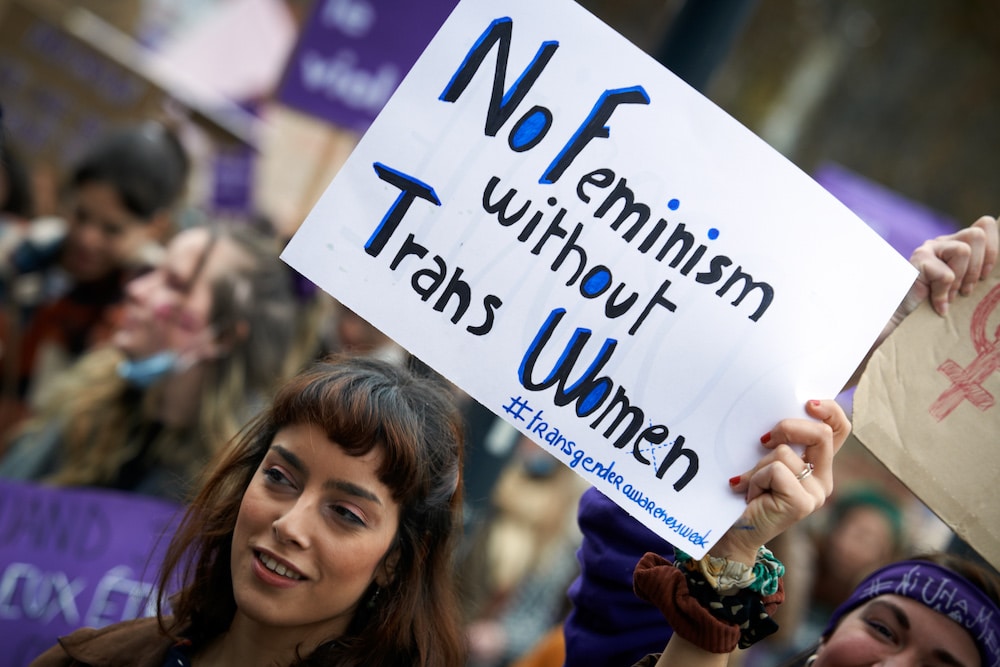
There is a peculiar tension in the feminist movement today, one that simmers beneath the surface of every rallying cry and manifesto. It is the unspoken question: What happens when feminism excludes those it claims to liberate? The answer, stark and unyielding, is that it ceases to be feminism at all. It becomes something else—something narrower, meaner, a hollowed-out ideology that clings to the husk of liberation while denying its very essence. Trans inclusion is not a peripheral concern for feminism; it is its moral and political lifeblood. Without it, feminism is not just incomplete—it is complicit in the very oppression it purports to dismantle.
The Myth of a Pure Feminism: Why Boundaries Are Just Another Cage
Feminism has always been a movement of contradictions, a paradox wrapped in the language of solidarity. It has, at times, drawn lines in the sand—lines that were never meant to be crossed, borders that were never meant to be policed. The insistence on a “pure” feminism, one that adheres to a rigid, cisnormative framework, is not just outdated; it is a betrayal of the movement’s foundational principles. Feminism was never meant to be a fortress. It was meant to be a revolution.
The obsession with defining who belongs and who does not is a relic of patriarchal thinking. It mirrors the very systems feminism seeks to dismantle—systems that categorize, rank, and exclude. When feminists demand that trans women prove their womanhood, they are not just policing gender; they are reinforcing the idea that womanhood is a finite resource, something to be hoarded rather than shared. This is not liberation. This is scarcity mentality dressed in the garb of activism.
Consider the language used to justify exclusion: “Biological woman,” “real women,” “natural feminism.” These phrases are not descriptors; they are weapons. They are the rhetorical equivalent of slamming a door in the face of those who have already been pushed to the margins. Feminism that relies on such language is not fighting for freedom—it is fighting for dominance within a system that was never designed to be inclusive in the first place.
The Erasure of Trans Women: A Feminism That Forgets Its Own History
History is a mirror, and feminism has a long, complicated relationship with it. The movement has, at various points, rewritten its own past to fit the narratives of the present—erasing the contributions of Black feminists, working-class women, and yes, trans women. The erasure of trans women from feminist discourse is not an accident. It is a deliberate act of historical revisionism, one that serves to uphold a sanitized, palatable version of womanhood.
Trans women have been part of feminist movements since their inception. Marsha P. Johnson, Sylvia Rivera, Miss Major—these names are not footnotes in the story of feminism. They are its backbone. Yet, how often are they invoked in mainstream feminist rhetoric? How often are their struggles centered in the fight for liberation? The answer is: not often enough. Instead, trans women are treated as an afterthought, a concession to be made only when convenient. This is not solidarity. This is tokenism masquerading as allyship.
The refusal to acknowledge trans women’s place in feminism is not just a failure of imagination—it is a failure of ethics. It is the equivalent of a civil rights movement that refuses to acknowledge the contributions of Black activists, or an LGBTQ+ movement that sidelines bisexual people. Feminism without trans women is like a body without a spine: it may move, but it cannot stand.
The Violence of Exclusion: How Cisnormative Feminism Harms Everyone
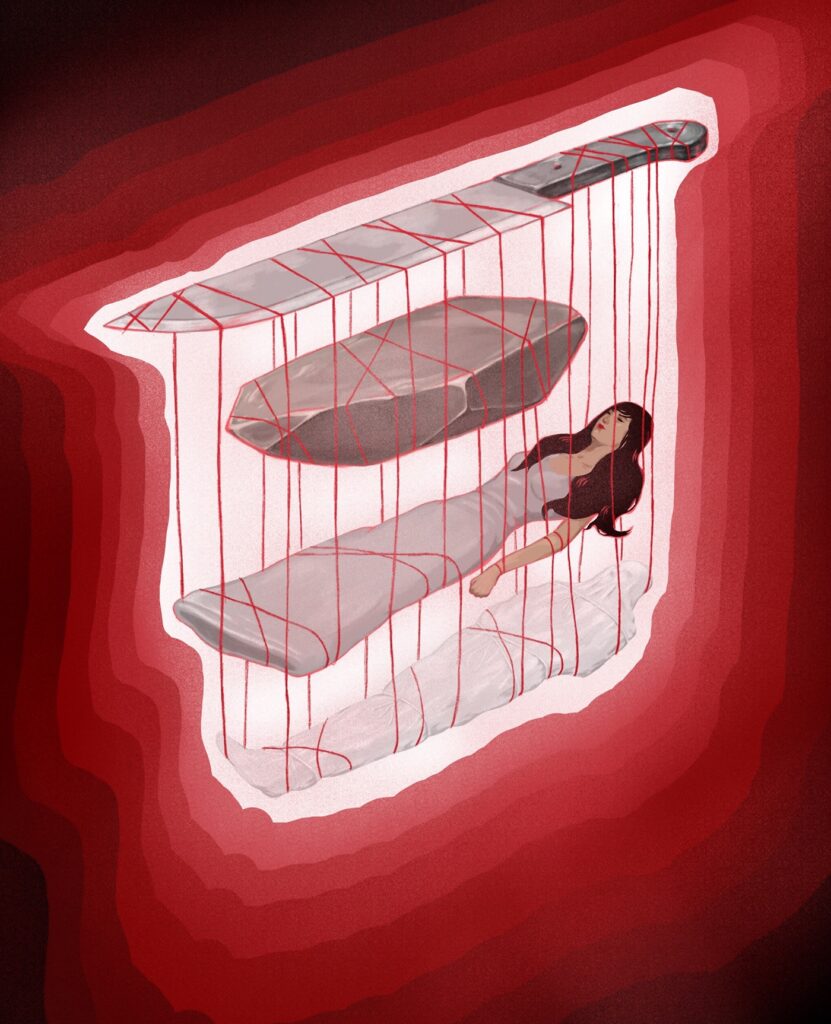
Exclusion is not a passive act. It is an active form of violence, one that leaves scars on the bodies and psyches of those it targets. When feminists exclude trans women, they are not just withholding solidarity—they are perpetuating harm. Trans women face disproportionate rates of violence, discrimination, and poverty. They are more likely to be homeless, more likely to be denied healthcare, more likely to be murdered. To exclude them from feminist spaces is to turn a blind eye to this violence, to tacitly endorse it.
But the harm does not stop at trans women. Cis women, too, are affected by the exclusionary rhetoric of cisnormative feminism. When feminism is reduced to a checklist of who qualifies as a “real woman,” it becomes a movement that is obsessed with gatekeeping rather than liberation. It becomes a movement that is more concerned with policing boundaries than breaking them. This is a feminism that is small, petty, and ultimately self-defeating. It is a feminism that cannot win because it refuses to fight for everyone.
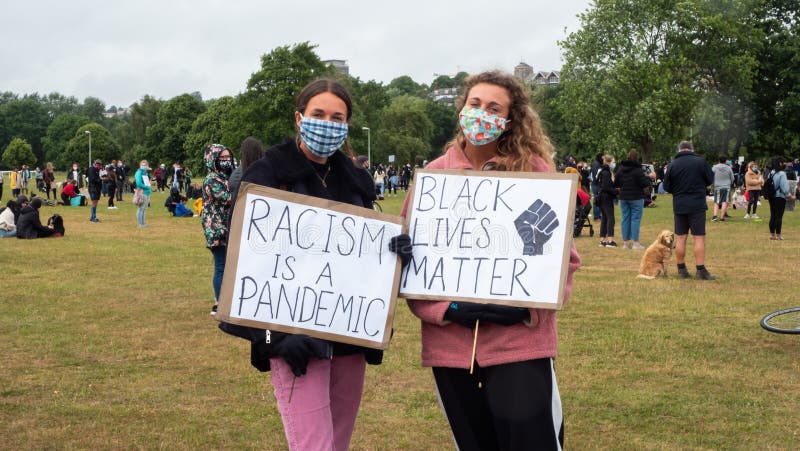
The irony is that the most effective feminisms are those that embrace intersectionality—the recognition that oppression is not a hierarchy but a web, with strands that connect us all. A feminism that excludes trans women is not intersectional. It is a feminism that has forgotten its own lessons.
The Fear Beneath the Rhetoric: Why Some Feminists Cling to Exclusion
To understand why some feminists resist trans inclusion, we must look beneath the rhetoric to the fear that drives it. There is a deep-seated anxiety in the feminist movement about the erosion of boundaries, about the blurring of lines between “us” and “them.” This anxiety is not unfounded—it is a response to a world that is rapidly changing, where traditional categories of identity are being challenged and redefined. But fear is not a justification for exclusion. It is a reason to double down on solidarity.
The fear of losing power is another driving force behind anti-trans feminism. There is a misconception that trans inclusion dilutes the feminist movement, that it waters down its demands or distracts from its goals. But this is a false dichotomy. Trans inclusion does not weaken feminism—it strengthens it. It makes it more resilient, more adaptable, more capable of confronting the complexities of modern oppression. A feminism that excludes trans women is a feminism that is afraid of its own potential.
There is also the fear of the unknown, the discomfort with what does not fit neatly into existing frameworks. But feminism has never been about comfort. It has always been about disruption, about challenging the status quo. To reject trans inclusion is to reject the very essence of what feminism is supposed to be: a movement that refuses to accept the world as it is, in favor of imagining what it could be.
A Feminism Worth Fighting For: The Case for Radical Inclusion
What would a feminism look like if it truly embraced trans inclusion? It would be a feminism that recognized womanhood as a spectrum, not a binary. It would be a feminism that centered the most marginalized, not the most palatable. It would be a feminism that saw liberation as a collective endeavor, not a zero-sum game. This is not a utopian fantasy—it is a feminism that already exists in pockets, in the work of activists, scholars, and organizers who refuse to compromise on their principles.
The fight for trans inclusion is not a distraction from the “real” work of feminism. It is the real work of feminism. It is the work of dismantling the systems that seek to divide us, of building a movement that is as expansive as the oppression it seeks to overcome. It is the work of recognizing that no one is free until everyone is free—and that includes trans women.
To those who still cling to the idea of a “pure” feminism, we must ask: What is purity, if not another word for stagnation? What is liberation, if not the freedom to be exactly who you are, without apology or caveat? Feminism without trans inclusion is not feminism at all. It is a relic, a shadow of what could have been. And it is time we let it go.






Leave a Comment