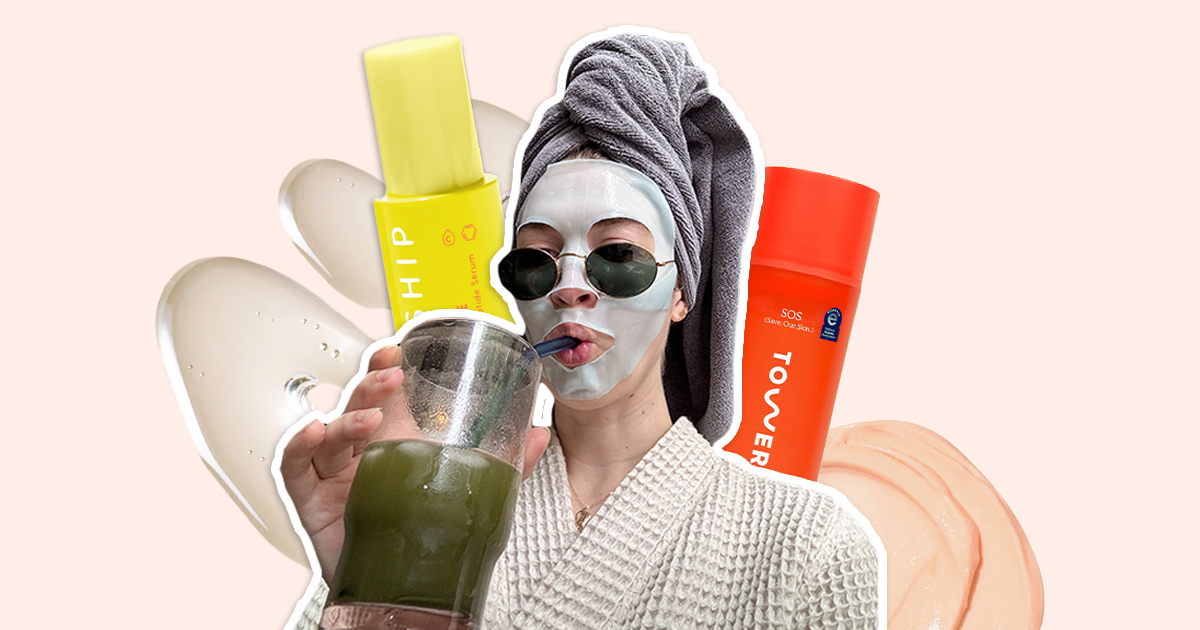
There’s a quiet revolution brewing in the aisles of your local pharmacy, one that whispers of serums and toners but screams of something far more insidious. Skincare routines, once a humble act of self-care, have metastasized into a labyrinthine ritual—a capitalist ouroboros where the product is never enough, the promise never fulfilled, and the consumer, perpetually unsatisfied, reaches for the next elixir. What began as a quest for healthy skin has been hijacked, repackaged, and sold back to us as a moral imperative. The 10-step routine isn’t just a beauty regimen; it’s a subscription to a cycle of consumption disguised as self-improvement. And the most damning part? We’ve internalized it.
The Illusion of Agency in a Market Designed for Dependence
You didn’t choose this. The algorithm did. The glowing Instagram reel, the influencer with the flawless dewy complexion, the dermatologist’s clinical tone—all of it conspires to make you believe that your pores are a problem to be solved, not a part of your body that exists in harmony with the world around you. Skincare marketing doesn’t sell hydration; it sells the fantasy of control. In a society that has stripped women, femmes, and marginalized bodies of agency in nearly every other sphere, the skincare industry offers a tantalizing illusion: *You can fix yourself.* But the fix is always just out of reach, because the moment you achieve “glow,” the industry has already moved on to the next holy grail—collagen-boosting mushrooms, probiotic-infused balms, or the latest viral TikTok serum that promises to erase years of stress with a single drop.
The truth is far less flattering. Skincare routines are a form of neoliberal self-governance, where the burden of labor—financial, emotional, temporal—is placed squarely on the individual. The message is clear: If your skin isn’t perfect, it’s your fault for not trying hard enough. Never mind the environmental toxins, the genetic predispositions, the systemic barriers to healthcare, or the fact that stress—often a byproduct of late-stage capitalism itself—is the real culprit behind your breakouts. The industry thrives on making you feel like an outlier in your own body, a walking contradiction of “I should be better by now.”
The 10-Step Routine: A Ritual of Self-Surveillance
Consider the 10-step routine, that hallowed grail of minimalist skincare discourse. It’s not just a list of products; it’s a disciplinary framework. Each step is a checkpoint, a moment of self-inspection where you scrutinize your reflection for imperfections, your skin for texture, your pores for sins. The routine doesn’t just cleanse; it conditions you to see your face as a project in need of constant upkeep. And who benefits from this relentless self-surveillance? Not you. The beauty conglomerates. The more you examine, the more you buy. The more you buy, the more they profit.
This isn’t self-care. It’s self-policing. The act of layering serums, toners, essences, and creams isn’t about health—it’s about compliance. You’re not just applying products; you’re performing a ritual of submission to an industry that profits from your dissatisfaction. The irony? The more steps you add, the more you’re told you’re doing it wrong. Too many products? You’re overloading your skin. Too few? You’re neglecting it. The beauty paradox is a masterclass in gaslighting, where the rules are written by the same corporations selling you the solutions.
The Environmental Cost of Vanity as Virtue
Every discarded serum bottle, every single-use sheet mask, every pump of a plastic tube is a testament to the skincare industry’s most egregious lie: that beauty is worth any cost. The environmental footprint of our vanity is staggering. Microplastics in exfoliants leach into waterways. Glass jars, often non-recyclable, clog landfills. Shipping exotic ingredients across continents leaves a carbon trail wider than the Amazon. And yet, we’re sold the narrative that sustainability is just another step in the routine—another product to buy, another checkbox to tick. “Clean beauty” isn’t a movement; it’s a marketing ploy, a way to make consumers feel virtuous while they continue to participate in the very system that’s poisoning the planet.
The real crime isn’t the waste—it’s the normalization of it. We’ve been conditioned to accept that self-care requires a mountain of disposables, that true beauty is synonymous with excess. But what if the most sustainable skincare routine is the one that requires nothing at all? What if the healthiest skin is the one that’s left alone to do its job without interference? The industry would have you believe that’s heresy. After all, an unadorned face is an unprofitable one.
The Myth of the “Natural” and the Erasure of Real Solutions
Walk into any beauty store and you’ll be bombarded with promises of “natural” ingredients—aloe vera, green tea, rosewater—all marketed as panaceas for your skin’s woes. But here’s the inconvenient truth: Nature is not a corporation. The most effective skincare ingredients—retinoids, hydroquinone, benzoyl peroxide—are often synthetic, lab-engineered marvels that outperform their “natural” counterparts. Yet we’re told to distrust science in favor of vague assurances that “botanical” means “better.” This isn’t just anti-intellectualism; it’s a calculated erasure of the real work being done in dermatology labs. The industry doesn’t want you to know that the most transformative skincare breakthroughs come from chemistry, not cottage gardens.
And what of the real issues plaguing our skin? Stress, diet, sleep, hormonal imbalances—these are the silent saboteurs that no serum can fix. But addressing them requires systemic change, not a trip to Sephora. The skincare industry thrives on individualizing problems that are inherently collective. Your acne isn’t just about your pores; it’s about the air you breathe, the water you drink, the food you eat, the sleep you’re denied by a culture that glorifies hustle over rest. Yet we’re sold the lie that a $50 bottle of “miracle” cream is the answer. It’s not. It’s a distraction from the fact that capitalism has made self-care a luxury, not a right.
The Future: Minimalism as Rebellion
What if the most radical act of self-care isn’t adding another step to your routine, but stripping it down to the bare essentials? What if the future of skincare isn’t more products, but fewer? The minimalist skincare movement isn’t just a trend—it’s a quiet rebellion against the machinery of consumption. It’s a refusal to participate in the cycle of manufactured dissatisfaction. It’s an acknowledgment that your skin, like your body, is not a project to be perfected, but a living, breathing entity that deserves respect, not exploitation.
The minimalist routine isn’t about deprivation; it’s about liberation. It’s about reclaiming your time, your money, and your autonomy from an industry that profits from your insecurity. It’s about recognizing that true beauty isn’t found in a jar, but in the confidence to exist unapologetically in your own skin. The next time you feel the urge to add another serum to your cart, ask yourself: Who benefits from this? The answer, as always, is not you.








Leave a Comment