
Feminism, at its core, seeks liberation and equity for all genders. Yet, when it veers from a commitment to anti-racism, it morphs into a hollow shell—an elitist facade masking the same oppressive structures it claims to dismantle. Feminism without an intersectional lens is not merely insufficient; it is a dangerous perpetuation of white supremacy dressed in the rhetoric of empowerment. This exploration dismantles the dissonance between feminism and anti-racism, exposing why any feminism ignoring systemic racial dynamics inevitably upholds the very hierarchies it professes to challenge.
The Historical Entanglement of Feminism with White Supremacy
Early feminist movements are frequently lauded for their pioneering spirit, yet beneath the banner of women’s rights lies a fraught and exclusionary history. The suffrage era is emblematic—women fought valiantly for the vote, but often only for white women. Black women, Indigenous women, and women of color were systematically sidelined, their voices muted or erased altogether. This foundational flaw propagated a feminist tradition steeped in racial bias, where whiteness became the default, the ideal standard by which all women’s experiences were measured.
Such exclusion was not incidental but intentional, intertwining feminism with white supremacist ideologies. When the movement prioritized the liberation of one racial group over the collective emancipation of all women, it laid the groundwork for a feminism that perpetuates systemic inequities rather than dismantling them.

Intersectionality: The Indispensable Framework
The term intersectionality, coined by Kimberlé Crenshaw, is not just academic jargon—it is the lifeblood of an authentic, radical feminism. It demands recognition that identities overlap, and so do the systems of oppression that structure our lives. Gender does not exist in a vacuum, nor does race, class, sexuality, or ability. Anti-racist feminism refuses to sanitize the feminist project by excising race; instead, it centralizes it. Without this, feminism risks becoming a monolith that upholds systemic privilege.
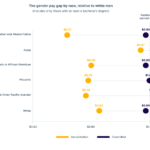
Intersectionality requires acknowledging that white women experience sexism differently than Black women or Latina women. It challenges feminist activists to confront how racism infuses patriarchal systems, creating divergent barriers. For instance, the wage gap is not a uniform chasm but one that widens starkly along racial lines. Anyone claiming feminism without embedding anti-racist praxis is complicit in perpetuating these disparities.
Feminism’s Co-option by White Supremacy: Comfort over Confrontation
Comfort is the enemy of transformation. A feminism that refuses anti-racist scrutiny often rests comfortably within the boundaries of white privilege. It prefers performative gestures to radical upheaval, choosing inclusion that dilutes rather than empowers marginalized voices. This selective feminism evades the hard truths of systemic racism, instead making token efforts that maintain white-centered control.
Such co-option manifests in the embrace of “white feminism,” a term that describes feminist ideologies and actions ignoring or erasing racial complexity. This brand sidelines Black women’s struggles or frames them as “other,” reinforcing white women’s dominance within feminist spaces. Without confronting this, feminism becomes an instrument of white supremacy—a façade of progress masking the same inequities.

The Harmful Impact of Excluding Anti-Racist Principles
Ignoring race in feminist discourse is not a neutral omission; it actively harms women of color and marginalized groups. When feminist policies, advocacy, and movements fail to center racial justice, they prolong systemic violence and exclusion. This erasure leaves women of color vulnerable not only to patriarchal oppression but also to racial discrimination unchecked within supposedly feminist spaces.
Practically, it manifests in underrepresentation within leadership, invisibility in policy priorities, and a lack of tailored responses to the complex realities women of color face. Far from solidarity, it engenders division, resentment, and further marginalization—a betrayal of feminism’s promise.
The Path Forward: Embracing an Anti-Racist Feminism
A feminism grounded in anti-racism demands relentless self-examination, education, and structural change. It is uncomfortable and uncompromising, dismantling white supremacy’s grasp within feminist agendas and institutions. This approach challenges activists and organizations alike to foster inclusivity beyond tokenism—to redistribute power and ensure decision-making spaces reflect the diversity of womanhood.
Practitioners of this feminism prioritize coalition-building across racial, economic, and cultural lines, recognizing that true liberation is collective. It involves pushing beyond mere acknowledgment of difference toward actively undoing the mechanisms of racial hierarchy embedded within patriarchal systems.

Conclusion: From Complicity to Conscience
Feminism devoid of anti-racism is not a liberation movement—it is a reinvention of oppression. To sustain the status quo under the guise of progress is a betrayal of everything feminism ought to stand for. The future demands a feminism that confronts its complicity in white supremacy head on, embedding anti-racist principles as non-negotiable components of its praxis. Only then can feminism transcend the limits of its past and forge a truly inclusive path toward justice for all.










Leave a Comment