When it comes to cinema, the gaze through which a story unfolds is far from neutral—it is imbued with the director’s prerogatives, sensibilities, and inherent biases. A female character’s portrayal is not merely about presence on screen; it is about the nuance, agency, and complexity she is afforded. She compared the treatment of female characters in films helmed by male directors to those crafted by female directors, and the disparities tell an unvarnished tale about power, representation, and narrative ethics. This examination reveals not just contrasting cinematic styles but a paradigm shift in how femininity, trauma, and identity are shaped within the visual language of film.
The Male Director’s Frame: The Continuum of Objectification and Archetype
Historically, male directors have perpetuated a reductive codex when it comes to female characters, wielding a lens that often reduces women to ornamental or mythic archetypes. Female roles frequently orbit around their relationships to men—mothers, lovers, muses—or serve as vessels to further male character development rather than existing as fully fleshed beings. This objectification manifests through a cinematic code: the lingering gaze, fragmented body shots, and a narrative that prioritizes spectacle over substance.
Female characters under male direction often embody familiar tropes—the femme fatale, the damsel in distress, the sacrificial angel—reinforcing stereotypical paradigms. Depth is frequently sacrificed at the altar of marketability and ingrained cultural mores. Even when these characters are placed in stories imbued with violence or emotional trauma, their arcs tend to be simplified, their pain a mechanism to catalyze the male protagonist’s journey, rather than a transformative experience explored on its own terms.

The Female Director’s Canvas: Complexity, Agency, and Authenticity
Contrasting this, female directors often shatter that ossified mold by infusing female characters with profound complexity and a vibrant autonomy. The female gaze reclaims the narrative authority to represent women as multidimensional—to honor their contradictions, vulnerabilities, strengths, and moral ambiguities without reduction. This reorientation unearths stories that reflect lived experience rather than male fantasy or societal caricatures.
The treatment of female characters by female directors frequently foregrounds interiority. Their films resist simplistic victimhood tropes. Instead, they excavate the nuanced interplay between trauma, resilience, desire, and identity formation, dismantling sanitized or sensationalist portrayals of violence. This approach demands that audiences grapple with the messy realities of womanhood, challenging patriarchal narratives that seek to contain or control female subjectivity.

Reframing Violence and Trauma: A Crucible of Empathy and Truth
One of the most striking divergences lies in the representation of violence and trauma. Male-directed films often depict female trauma through a spectacle that risks voyeurism—violence becomes a plot device, frequently sanitized or sensationalized, reinforcing passive victim narratives. Conversely, female directors wield an intimate, unflinching gaze toward trauma that centers survivor subjectivity. Their films navigate trauma’s aftermath with care, refusing to exploit pain for shock value or neat resolution.
This recalibration is revolutionary. It reframes violence not as an externalized spectacle but as an internal crucible that transforms identity. The female perspective challenges audiences to understand trauma through empathy, to witness survival—not merely suffering. Such narratives demand that society confront uncomfortable truths about gendered violence and resist depoliticizing these experiences.
The Industry Disparity: Talent Overlooked, Voices Silenced
The content and quality arguments aside, the schism between male and female directors’ portrayals of women is compounded by systemic inequities. Despite demonstrable capacity to craft compelling, complex female characters, female directors remain conspicuously under-hired and under-resourced within the labyrinthine corridors of Hollywood and global film industries.
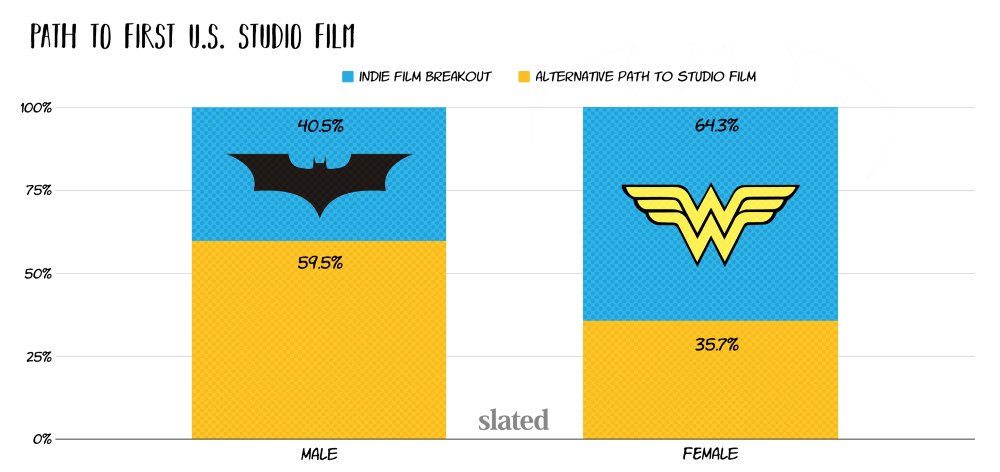
Studies reveal that films directed by women receive fewer opportunities, smaller budgets, and less promotion, exacerbating a vicious cycle where female-driven stories struggle to reach mainstream audiences. This marginalization carries cultural consequences: when female perspectives are stifled, our collective cinematic imagination is impoverished, reinforcing patriarchal paradigms within cultural storytelling.
The Transformative Potential of Female-Led Storytelling
When women direct, the cinematic landscape evolves into a more kaleidoscopic space—where narratives about gender are contested, redefined, and enriched. Female-led storytelling challenges dominant epistemologies, not merely by inserting women into stories but by reshaping the very grammar of narrative to accommodate female subjectivities.
This transformation reverberates beyond the screen. It informs societal understanding of gender, influences cultural norms, and expands the archive of collective memory. It fosters an environment where future generations may no longer accept reductive, patriarchal visions of womanhood as default, but champion multiplicity and authenticity.
Conclusion: Toward a Cinematic Reckoning
The comparison between male and female directors’ treatment of female characters reveals a critical truth: who tells the story shapes its very essence. Female directors are not merely alternative voices but agents of paradigm-shifting cinema, carving pathways for untold stories and reimagined identities. The call to action is clear: dismantle systemic barriers, amplify female authorship, and embrace narratives that reflect the complex fullness of women’s realities. Only then can cinema transcend objectification and stereotype to become a truly transformative art form.







Leave a Comment