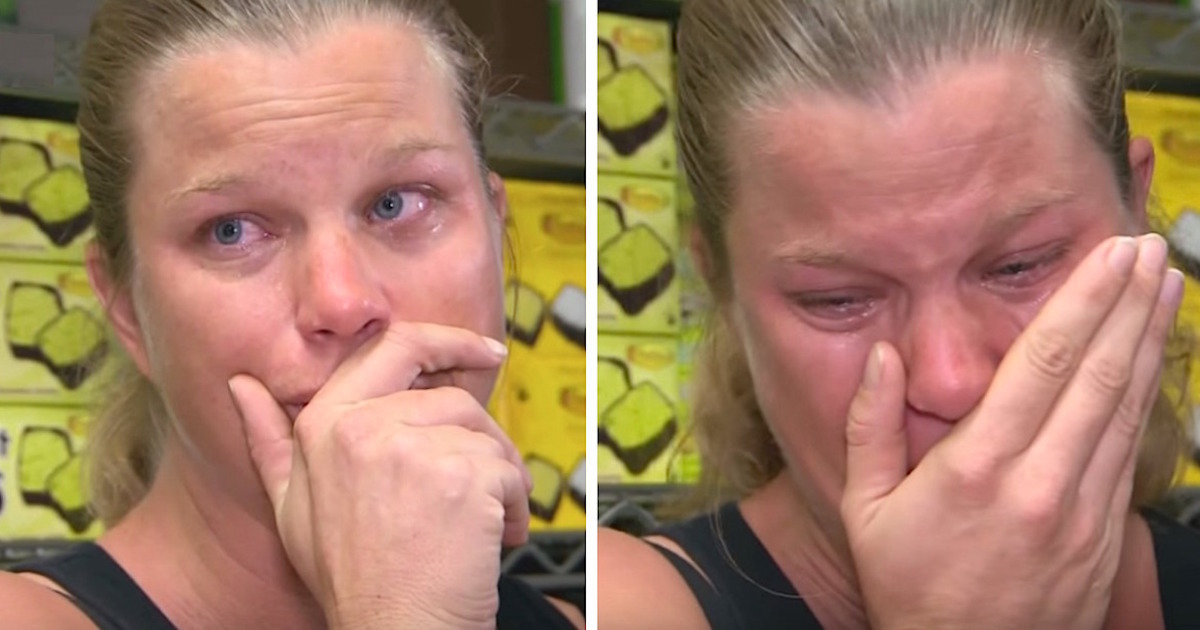
In the quiet hum of a suburban kitchen, a single mother cradles a steaming mug of coffee between her palms, her gaze fixed on the calendar pinned to the fridge. The date is circled in red. Election Day. The weight of her decision presses down—not just on her shoulders, but on the future of every woman who has ever been told her ambition is a betrayal of her children. She ran for office not as a politician, but as a mother. Not as a victim, but as a force. And the backlash? It was vicious. Personal. A calculated attempt to unravel her not just as a candidate, but as a woman who dared to believe she could have it all—even when the world insisted she couldn’t.
The Myth of the Selfless Woman and the Price of Ambition
Society has long painted single mothers as martyrs—women whose lives are defined by sacrifice, whose identities are subsumed by the relentless demands of parenting alone. But what happens when one of them dares to step beyond the altar of self-denial? When she trades the safety of obscurity for the glare of public scrutiny? The attacks began before the campaign signs were even dry. Critics sneered that her children would suffer. Pundits questioned her fitness, implying that motherhood and leadership were mutually exclusive. The subtext was clear: a woman’s place is in the home, not the halls of power. And if she insists on occupying both? Then she must be broken down until she remembers her place.
When the Personal Becomes Political—and the Political, Personal
The assault wasn’t just ideological. It was intimate. Opponents dug into her past, weaponizing her divorce, her financial struggles, even her parenting choices. They framed her as unstable, unfit, a walking contradiction—a woman who claimed to fight for families while her own were allegedly in shambles. The irony? These were the same people who had never lifted a finger to support single mothers in their communities. The attacks were a grotesque parody of justice, a reminder that for women, the personal is always political—but only when it serves as a cudgel. Her resilience wasn’t just a trait; it was a threat. And threats must be neutralized.
The Double Bind: Competence vs. Likeability
She was too emotional. Too aggressive. Too ambitious. Too everything—but never just right. The double bind of gender politics is a labyrinth with no exit, and single mothers navigating it are forced to run the gauntlet twice. Studies show that women in leadership are judged more harshly for the same behaviors that earn men praise. A man who negotiates fiercely is a strong leader; a woman is a shrew. A man who prioritizes family is dedicated; a woman is neglectful. The scrutiny wasn’t about policy. It was about policing her femininity, her morality, her very right to exist in spaces where men have always set the rules. And when she refused to apologize for her ambition? The attacks escalated.
The Children as Pawns in a Political Game
The most insidious attacks centered on her children. Opponents suggested they were being exploited, that their mother’s career came at their emotional expense. The implication? That no woman should prioritize her dreams over her children’s immediate needs—unless, of course, she’s married to a man who can provide stability. The message was a siren call to every mother who has ever second-guessed her choices: *Stay small. Stay safe. Stay silent.* But here’s the truth: her children didn’t need a perfect mother. They needed a real one. One who showed them that women don’t have to choose between their dreams and their families. One who taught them that resilience isn’t a flaw—it’s a legacy.
The Sisterhood of Solidarity—and the Cost of Betrayal
Not all women rallied behind her. Some, conditioned by years of internalized misogyny, echoed the same criticisms as her detractors. “Why now?” they asked. “Isn’t this selfish?” The betrayal stung, but it wasn’t unexpected. Patriarchy doesn’t just oppress women; it fractures them, turning them against each other in a desperate bid to maintain control. Yet, in the darkest moments, she found allies in unexpected places—other single mothers, women of color, marginalized voices who recognized the pattern. They knew the cost of speaking up. They knew the price of silence. And they chose to stand with her, not because she was perfect, but because she was fighting for a world where no woman would have to choose between her ambition and her heart.
The Aftermath: A New Blueprint for Resistance
She didn’t win the election. But she didn’t lose, either. Her campaign became a rallying cry, a testament to the fact that single mothers aren’t just survivors—they’re revolutionaries. The attacks, meant to silence her, only amplified her message. That women’s lives are not footnotes in someone else’s story. That motherhood is not a life sentence to obscurity. That ambition is not a sin. The backlash revealed the fragility of a system built on keeping women in their place. And in that revelation, she found her power.
The next time a single mother steps into the political arena, the world will remember. It will remember the woman who refused to apologize for her dreams. The mother who proved that love and leadership aren’t mutually exclusive. The fighter who turned personal attacks into a movement. And the system that tried to break her? It will tremble, because she didn’t just run for office. She redefined what it means to be a woman in power.






Leave a Comment