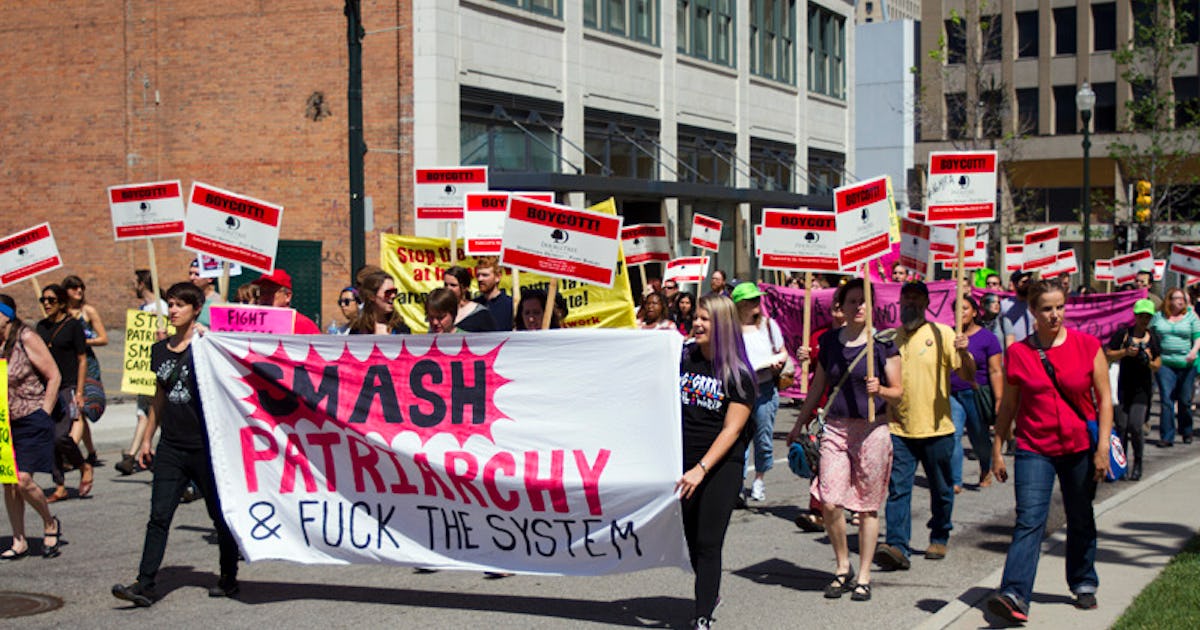
There’s a peculiar irony in watching men’s rights activists (MRAs) rail against feminism while simultaneously failing to grasp the most fundamental truths about their own supposed struggles. They clutch at straws—legislative setbacks, custody battles, workplace discrimination—yet their indignation is curiously selective, fixated on symptoms rather than the disease. It’s not that their grievances are entirely baseless; it’s that they’ve misdiagnosed the ailment, mistaking the shadow for the substance. The deeper tragedy isn’t that they’re wrong about the existence of male suffering—it’s that their myopia prevents them from seeing how deeply their own movements are complicit in perpetuating the very systems they claim to despise.
The Myth of the Oppressed Patriarch: How MRAs Confuse Privilege with Persecution
At the heart of the MRA’s delusion lies a grotesque inversion of reality. They speak of men as an oppressed class, their voices drowned out by the cacophony of feminist triumphs. Yet this narrative crumbles under the slightest scrutiny. When was the last time a man was denied a job because of his gender? When was the last time a male CEO was passed over for a promotion in favor of a less qualified woman? The answer, of course, is never—not in any systemic, institutionalized way. What MRAs conveniently overlook is that male privilege isn’t a myth; it’s a lived, breathing entity that shapes every corner of society. The same structures that grant men unearned advantages in boardrooms and courtrooms also render them invisible when they’re the victims of violence, exploitation, or emotional neglect. But instead of acknowledging this paradox, MRAs double down on their persecution complex, mistaking the absence of unearned privilege for actual oppression.
Consider the way MRAs weaponize statistics about male suicide rates or workplace fatalities. Yes, men die more often on the job. Yes, men are more likely to take their own lives. But these aren’t signs of systemic disenfranchisement—they’re the collateral damage of a society that equates masculinity with stoicism, self-sacrifice, and emotional repression. MRAs want to blame feminism for this, as if the mere existence of gender equality has somehow stripped men of their right to suffer in silence. The truth? Men have always been disposable in a capitalist-patriarchal world. The difference now is that women are no longer willing to accept that disposability as their fate. MRAs mistake this shift for an attack on men, when in reality, it’s an invitation to redefine what strength and vulnerability can look like.
The False Equivalence: Why MRAs Can’t Tell the Difference Between Equality and Supremacy
One of the most insidious tactics of the MRA movement is its relentless demand for “equality”—a word they wield like a blunt instrument, bludgeoning anyone who dares suggest that equality might not mean identical treatment under the law. They clamor for shared custody rights, for an end to the draft, for recognition of male victims of domestic violence. And yet, when these same issues are raised in the context of women’s rights, MRAs recoil in horror, as if the mere suggestion that women might deserve the same protections as men is an affront to their fragile egos. This isn’t equality. It’s a grotesque parody of it—a demand for parity that collapses the moment it encounters the slightest resistance.
Take the issue of domestic violence. MRAs are quick to point out that men are also victims, and they’re right—men can and do suffer abuse. But they conveniently ignore the fact that male victims are statistically far less likely to report their abuse, face greater skepticism when they do, and are rarely subjected to the same systemic barriers that prevent women from leaving abusive relationships. When an MRA argues that “both genders experience domestic violence equally,” they’re not making a case for equality. They’re erasing the lived reality of millions of women who live in terror of their partners, who are trapped by economic dependence, who are gaslit into believing they’re the problem. Equality isn’t a zero-sum game where one group’s suffering must be minimized to make room for another’s. It’s a recognition that some struggles are more urgent, more systemic, and more in need of redress than others.
This false equivalence extends to every corner of the MRA’s worldview. They decry “female privilege” in divorce courts, ignoring the fact that women are far more likely to lose custody of their children, far more likely to be saddled with alimony payments, and far more likely to be judged harshly for remarrying. They bemoan the lack of male role models in media, as if the solution isn’t to demand better representation for all genders, but to demand that women step aside and make room for men to take center stage. It’s a worldview that sees feminism as a zero-sum game, where every gain for women must necessarily come at the expense of men. And it’s a worldview that reveals itself, in the end, as nothing more than a desperate attempt to cling to a fading sense of male entitlement.
The Performance of Victimhood: How MRAs Turn Real Pain into Political Theater
There’s a performative quality to MRA rhetoric that’s impossible to ignore. It’s not enough for them to simply state their grievances; they must frame them as a David-and-Goliath struggle, a lone band of brothers fighting against an all-powerful feminist cabal. Their language is laced with martyrdom—“men are being silenced,” “our voices don’t matter,” “we’re the new oppressed class.” But this victimhood is a carefully constructed facade, a way to avoid confronting the uncomfortable truth that their movement is built on a foundation of resentment rather than justice.
Consider the way MRAs co-opt feminist language. They talk about “toxic masculinity” as if it’s a feminist invention, when in reality, it’s a term coined by men’s studies scholars to describe the ways in which patriarchal norms harm everyone. They rail against “misandry” as if it’s a systemic force comparable to misogyny, when in reality, it’s a fringe sentiment with no institutional power. They frame their struggles as a battle against feminism, when in reality, feminism has done more to uplift men than any MRA ever could. Feminism doesn’t just fight for women; it fights for a world where men are free to express vulnerability, where boys aren’t shamed for crying, where fathers aren’t treated as afterthoughts in their children’s lives. The MRA’s refusal to acknowledge this is telling. It reveals a movement that isn’t interested in liberation—it’s interested in domination.
And then there’s the spectacle of MRA “activism.” From trolling feminist forums to harassing women online to staging cringe-worthy “men’s rights” rallies, their tactics are less about effecting change and more about feeding their own sense of grievance. They mistake noise for progress, outrage for action. But real change doesn’t come from screaming into the void. It comes from dismantling systems, from challenging norms, from building solidarity across gender lines. The MRA’s obsession with victimhood ensures that they’ll never achieve any of these things. They’re too busy playing the part of the persecuted to notice that the script they’ve been given is a lie.
The Deeper Fascination: Why the MRA’s Narrative Resonates Despite Its Flaws
So why, then, does the MRA’s message continue to resonate with so many men? Why do they find an audience, a platform, a sense of belonging in a movement that offers them nothing but hollow rhetoric and false promises? The answer lies in the seductive power of simplicity. In a world that’s increasingly complex, where gender roles are shifting, where economic instability looms large, the MRA’s message is a balm for the anxious male ego. It tells them that their struggles aren’t their fault—that they’re the victims of a rigged system, that their pain is unique, that their anger is justified. It’s a narrative that absolves them of responsibility, that frames their frustrations as the product of external forces rather than internal contradictions.
There’s also the allure of tribalism. The MRA movement isn’t just about grievances; it’s about identity. It offers men a sense of belonging, a way to define themselves in opposition to feminism, to progressivism, to the nebulous concept of “the establishment.” In a world where traditional masculinity is under siege, the MRA provides a script—a way to be a man without having to confront the discomfort of change. It’s easier to blame women, to blame feminists, to blame a system that no longer rewards unchecked male dominance than it is to ask the harder questions: What does it mean to be a man in the 21st century? How do we build a world where men aren’t trapped by the expectations of the past?
And finally, there’s the undeniable truth that men are suffering—just not in the ways the MRAs claim. Men are dying younger, killing themselves at alarming rates, struggling with loneliness and isolation in record numbers. But these aren’t signs of oppression. They’re signs of a society that has failed men by teaching them that strength means silence, that vulnerability is weakness, that their worth is tied to their productivity. The MRA’s refusal to engage with this reality is why their movement will always be a dead end. They’re so busy fighting the wrong battles that they’ve lost sight of the ones that matter.










Leave a Comment