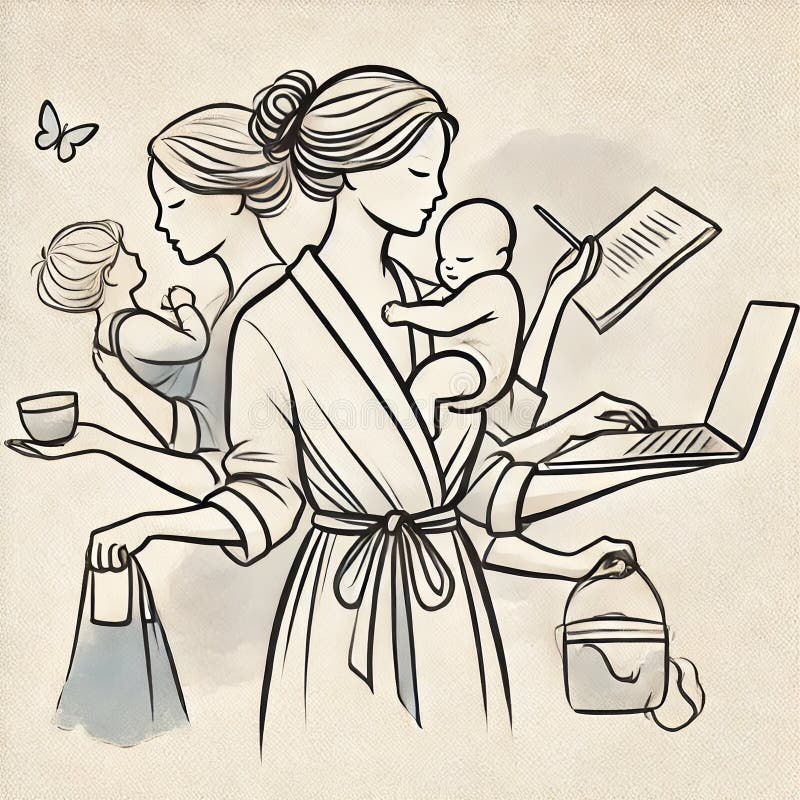
In a society that lionizes the sacrificial mother, the act of seeking help with motherhood tasks is often perceived not as pragmatism but as betrayal. When a mother delegates the seemingly sacred duties of parenting—whether by hiring caregivers, utilizing digital aids, or accepting assistance—she is frequently branded as “selfish.” This scathing judgment stifles conversations on autonomy and resilience, painting outsourcing as a moral failure rather than a strategic choice. But what if the stigmatization masks a deeper cultural dissonance? What if outsourcing motherhood tasks is not a surrender of love but an assertion of self-preservation and empowerment? This narrative challenges the reductive condemnation and promises to shift perceptions about what it means to be a mother in the modern age.
The Myth of the Supermom: An Unattainable Ideal
The ubiquitous image of the “supermom” is as exhausting as it is unrealistic. She is the omnipresent nurturer who simultaneously juggles a high-powered career, maintains a sparkling household, and offers unconditional devotion—all without so much as a hint of fatigue. This myth, perpetuated by media and cultural expectation, sets an impossibly high bar, creating a landscape where asking for help is tantamount to failure. In reality, motherhood is an unrelenting marathon, not a sprint. Outsourcing tasks—a radical yet rational act—becomes a lifeline in this relentless context. Yet, society views such delegation as an abdication rather than an adaptive strategy.

Outsourcing Motherhood: A Radical Redefinition of Care
To outsource motherhood tasks is not a rejection of maternal responsibility but a defiant redefinition of care itself. From hiring daycare providers and nannies to using online educational tools and meal-services, these actions represent an evolution in how mothering is executed. This redefinition acknowledges the complexity of modern life and the necessity for pragmatic support structures. It questions the archaic legitimacy of the myth that a mother’s love must equate to omnipotent hands-on involvement. Instead, it embraces the notion that maternal love manifests in safeguarding one’s mental health and cultivating balanced family dynamics.
Digital Nannies and Virtual Villages: The Internet as a New Ally
The internet has become an unexpected but crucial ally for mothers delegating child-rearing tasks. Virtual support groups, online parenting courses, and digital babysitters challenge the notion that all motherhood labor must be physical or direct. Yet, this reliance on technology invites fierce backlash, with critics quick to label such mothers as neglectful or indifferent. This digital judiciousness, however, offers mothers an invaluable resource to reconnect with their individuality while ensuring their children receive diverse, high-quality care. Outsourcing motherhood in this context is not about abandonment but about augmentation—enhancing care through collective and technological support.
The Silent Toll: Emotional Labor and Guilt
Underneath the veneer of practicality, outsourcing motherhood tasks is often accompanied by a silent tumult of guilt and societal condemnation. Mothers internalize the cultural script that they alone must bear the emotional and physical labor of parenting. This internalization compounds the emotional toll, fostering a pernicious cycle of self-flagellation. The internet, paradoxically, becomes both a sanctuary and a battleground—a place where mothers seek validation but often encounter harsh judgment. Dispelling these injurious sentiments requires dismantling the conflation of sacrifice with love, advocating instead for a modern ethos that honors self-care as an integral facet of parental dedication.
Systemic Failures and the Necessity of Outsourcing
Outsourcing motherhood tasks is not merely a personal choice but frequently a necessity born from systemic failure. Inadequate maternity leave policies, the prohibitive cost of childcare, and inflexible work environments leave mothers with few realistic alternatives. Outsourcing becomes a mode of survival rather than luxury—an act of resilience in a society that has yet to provide equitable support. Recognizing this reveals a societal obligation to not only normalize but support diverse modes of motherhood. To vilify the mother who outsources is to overlook the structural inequities forcing her hand.

Reclaiming Motherhood: Autonomy Through Delegation
At its core, outsourcing motherhood tasks is an act of reclamation—an assertion of autonomy within a framework that often seeks to cage maternal identity. It is a rejection of the pernicious idea that motherhood demands martyrdom. This act propels mothers towards balance, where personal ambition and caregiving coexist in harmony rather than at odds. By choosing who and what to delegate, mothers redefine ownership of their time and energy. This shift reframes mothering as a multifaceted role, comprised of choices tailored to individual needs, rather than a monolithic sacrifice demanded by societal decree.
From Selfish to Strategic: Shifting the Narrative
Labeling mothers who outsource as selfish is a catastrophic oversimplification that reveals more about cultural anxieties than about the women it targets. It is time to transition from judgment to understanding. Outsourcing is strategic, offering mothers space for self-renewal, mental clarity, and sustained love—ingredients essential for effective parenting. Productivity experts champion delegation; why then should motherhood, arguably the most demanding labor of all, be any different? The narrative must evolve from punitive to empowering, from stigmatizing to supportive.

Conclusion: Embracing a New Paradigm of Motherhood
The indictment of mothers who outsource motherhood tasks is rooted in a cultural mythology that venerates sacrifice over sustainability. But as more mothers reclaim autonomy through delegation, society must confront its archaic prejudices. Motherhood, reimagined through the lens of outsourced support, is neither less authentic nor less loving. It is a conscious, courageous choice that challenges antiquated norms and cultivates holistic well-being for both mother and child. Embracing this paradigm shift promises a future where caregiving is diversified, valued, and liberated from the shackles of misplaced guilt. The internet’s clamor labeling her “selfish” thus becomes a catalyst—not to silence but to ignite a reevaluation of motherhood in its most honest and expansive form.









Leave a Comment