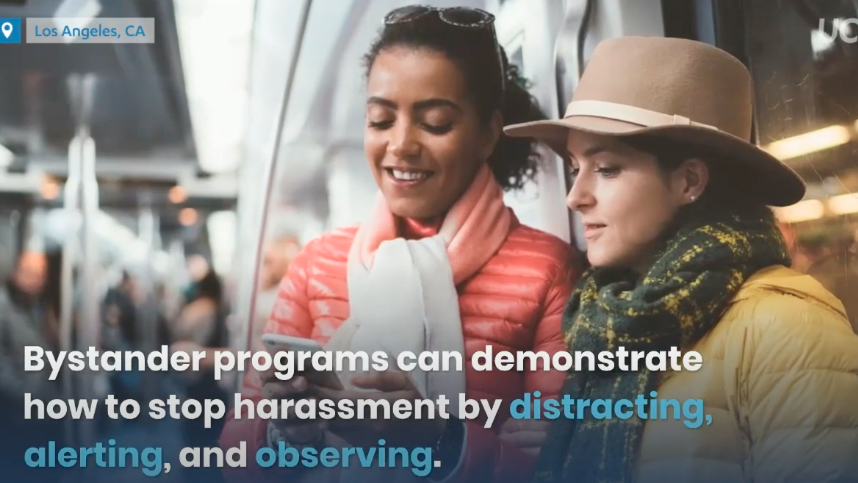
There is a peculiar alchemy to the moment when a woman’s private fury crystallizes into public data. It begins as a flicker of irritation—an elbow in the ribs, a leering glance held too long, a hand brushing against your thigh in the crush of a subway car—before erupting into something undeniable: a map. Not of streets or subway lines, but of humiliation, of fear, of the relentless micro-aggressions that stitch themselves into the fabric of urban life like invisible barbed wire. This is the story of how one woman’s act of defiance became a catalyst for change, and how cities, slow to awaken, are finally beginning to listen.
The Cartography of Catcalling: When Silence Becomes a Map
In 2016, a young woman in London decided to document every instance of street harassment she encountered over a single weekend. What began as a personal experiment—a way to quantify the unquantifiable—unfolded into a viral sensation. Her map, a constellation of red dots marking each incident, laid bare the grotesque geometry of misogyny in public space. It was not just a record of slights; it was a revelation. The subway, that gleaming artery of urban mobility, emerged as a particularly fertile ground for harassment, where the anonymity of crowds and the urgency of commutes created a perfect storm for predatory behavior.
What fascinates us about these maps is not just their stark visual power, but the way they expose the lie of urban anonymity. Cities sell themselves as neutral, democratic spaces—yet the harassment maps reveal a hidden topography, where certain bodies are perpetually surveilled, where the right to occupy public space is conditional. The subway, in particular, is a paradox: a place of enforced proximity, where strangers are forced into intimacy, yet where the rules of engagement are dictated by those who see women as either conquests or obstacles.


The Subway as a Stage for Predation: Why Public Transit is a Battleground
Public transit is not merely a convenience; it is a microcosm of societal power dynamics. The subway, with its labyrinthine tunnels and crowded cars, is a stage where harassment is not an aberration but an expected performance. Studies have shown that women are disproportionately targeted in these spaces, not because they are more vulnerable, but because they are perceived as easy prey. The logic is insidious: in the crush of a rush-hour train, a groping hand or a whispered threat can be dismissed as accidental, a byproduct of crowded conditions. The victim’s discomfort is erased by the sheer volume of bodies, her outrage drowned out by the roar of the train.
Yet the subway’s design itself is complicit. Poor lighting, isolated platforms, and a lack of surveillance create pockets of impunity where harassers operate with impunity. The very features that make public transit efficient—its density, its speed, its anonymity—also make it a hunting ground. Women, especially women of color and those from marginalized communities, navigate these spaces with a heightened awareness of risk, their bodies tensed in anticipation of the next violation. The subway, then, is not just a transit system; it is a laboratory for oppression, where the rules of engagement are written in fear.
From Data to Action: How Cities Are (Finally) Waking Up
The power of the harassment map lies in its ability to translate the intangible into the undeniable. Where anecdotes could be dismissed as isolated incidents, a map of hundreds of dots demands attention. Cities, long complicit in their silence, are now being forced to confront the reality of their public transit systems. In Los Angeles, for example, transit authorities have begun installing more visible surveillance cameras and expanding reporting mechanisms for harassment. In other cities, campaigns like “Report It” have been launched to encourage victims to speak up, their voices amplified by the collective weight of shared experience.
But the changes go beyond mere policy tweaks. Some transit systems have begun rethinking the very design of their spaces, installing brighter lighting, adding more staff during peak hours, and even experimenting with women-only train cars in high-risk areas. These measures are not just about safety; they are about reclaiming public space as a place of equity. The subway, once a symbol of urban alienation, is being reimagined as a space where women can move without fear.
Yet the fight is far from over. Many cities still treat harassment as a minor inconvenience rather than a systemic issue. Reporting mechanisms remain underutilized, and perpetrators often face little consequence. The challenge now is to ensure that the momentum generated by these maps does not fade into the background noise of bureaucratic inertia. Change requires more than good intentions; it requires accountability.

The Deeper Fascination: Why We Can’t Look Away
There is something hypnotic about these maps, something that transcends their immediate utility. They tap into a primal fascination with the hidden contours of power, the way oppression carves its own geography into the landscape. We are drawn to them because they reveal a truth we have long suspected but rarely seen so starkly: that public space is not neutral, that the right to occupy it is not guaranteed. The map is not just a tool for change; it is a mirror, reflecting back the inequalities that shape our cities.
This fascination is also a challenge. It forces us to ask uncomfortable questions: Why do we accept that women must navigate public transit with caution? Why do we tolerate systems that prioritize efficiency over safety? The answers are not simple, but they are necessary. The harassment map is not just a record of wrongs; it is a call to action. It reminds us that cities are not just collections of buildings and streets, but living, breathing entities shaped by the people who inhabit them. And if we want those cities to be truly inclusive, we must start by listening to the voices that have been silenced for too long.
The next time you step onto a subway platform, take a moment to look around. Notice the way bodies tense in the crowd, the way eyes dart toward exits, the way some passengers shrink into themselves. This is not just a transit system. It is a battleground. And the fight for its soul has only just begun.









Leave a Comment