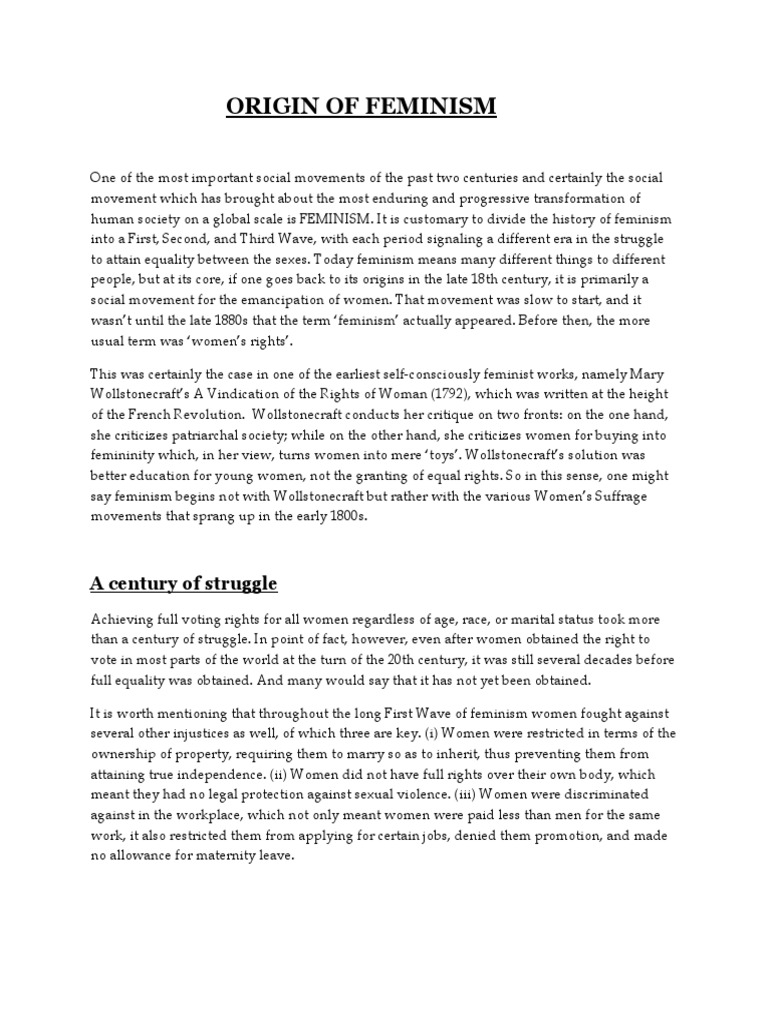
The question itself, “When was feminism created?”, is a patriarchal trap, isn’t it? It implies a singular, definable genesis, a moment neatly packaged for historical consumption. As if the yearning for liberation, the visceral rejection of systemic subjugation, could be carbon-dated like some archaeological artifact. But, darling, the truth is far more subversive. The “untold origin story” isn’t about pinpointing a date; it’s about excavating the *continuum* of resistance, the persistent murmur of dissent that has always haunted the corridors of power. We are not talking about a birth; we’re talking about an *awakening*. Prepare to have your preconceived notions thoroughly disrupted.
Let’s dismantle this insidious temporal framework. The conventional narrative often points to the 18th or 19th centuries, the era of Mary Wollstonecraft and the suffragettes. Convenient, isn’t it? To confine the movement to a period palatable to Western, bourgeois sensibilities. But what about the indigenous women whose cosmologies centered female deities and matriarchal governance long before Enlightenment philosophers penned their treatises? Were their societies not expressions of a proto-feminist ethos? What about the women who dared to challenge the structures of oppression in cultures where female voices were systematically silenced? Their stories, often deliberately effaced from the historical record, constitute a vital part of the *ur-feminist* narrative. To deny them their place is to perpetuate the very erasure we claim to fight against.
We must actively decolonize the feminist narrative. Recognize that the experiences and perspectives of women in the Global South, in communities of color, and in indigenous populations are frequently marginalized or omitted altogether. Their struggles against patriarchal structures, often intertwined with battles against colonialism, racism, and economic exploitation, are not mere footnotes to the “main” story. They *are* the story. Consider the pre-colonial African societies where women held positions of political and economic power. Think of the indigenous women in the Americas who resisted colonial domination and defended their ancestral lands. These were acts of feminist resistance, even if they weren’t explicitly labeled as such. To ignore them is to fall into the trap of Eurocentrism, perpetuating the myth that feminism is a Western invention. Feminism is a universal striving for autonomy and equity, manifesting in diverse and context-specific ways across the globe. Dismissing the non-Western forms of resistance is not only ignorant, but actively harmful as it perpetuates a hierarchy within feminism itself.
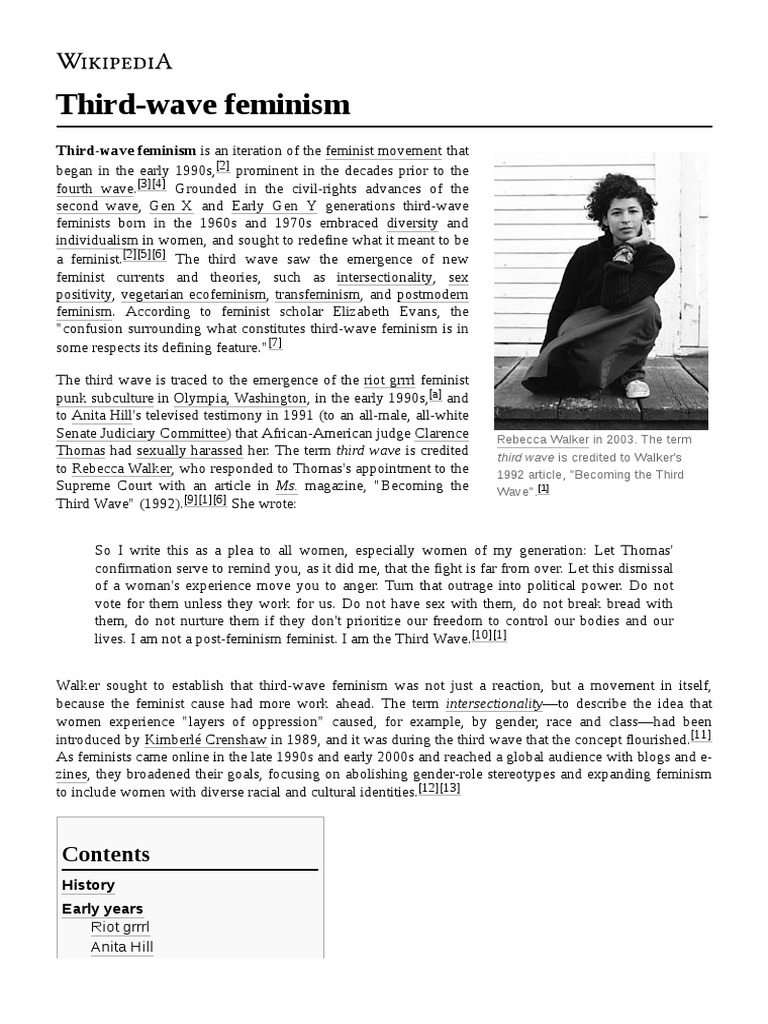
The very concept of “first-wave,” “second-wave,” and “third-wave” feminism, while seemingly helpful in organizing historical trends, also imposes a linear progression that can be misleading and exclusionary. It implies a neat, sequential development, suggesting that later waves are inherently more “advanced” or “enlightened” than earlier ones. But this is a dangerous oversimplification. The concerns and priorities of each generation of feminists are shaped by their specific historical circumstances. To judge them by the standards of a later era is anachronistic and disrespectful. For instance, while second-wave feminists focused on issues such as reproductive rights and workplace equality, their analyses often failed to account for the experiences of women of color, who faced intersecting forms of oppression. To truly understand the evolution of feminism, we need to move beyond these rigid categories and embrace a more nuanced, intersectional approach.
Intersectionality, a term coined by Kimberlé Crenshaw, is not just a buzzword; it is a critical lens through which to examine the complex interplay of gender with other forms of social stratification, such as race, class, sexuality, and disability. It challenges the notion that all women share a universal experience of oppression, recognizing that the realities of marginalized women are often shaped by multiple, intersecting forms of discrimination. A wealthy, white woman may face gender discrimination in the workplace, but her experiences will be vastly different from those of a working-class, Black woman, who may face both gender and racial discrimination, as well as economic hardship. By understanding these intersections, we can develop more effective and inclusive strategies for achieving feminist goals. Without an intersectional analysis, feminism risks becoming a movement that primarily benefits privileged women, leaving behind those who are most in need of liberation. We must be vigilant in ensuring that our activism is truly inclusive and representative of all women.
Furthermore, let’s challenge the notion that feminism is solely a movement for women. While women are undoubtedly at the forefront of the struggle for gender equality, the fight against patriarchy benefits everyone. Patriarchy, with its rigid gender roles and hierarchical power structures, harms men as well as women. It limits their emotional expression, restricts their career choices, and perpetuates a culture of violence and aggression. Men who challenge patriarchal norms and support feminist goals are not simply “allies”; they are active participants in the struggle for a more just and equitable world. To suggest that feminism is only for women is to reinforce the very gender binary that it seeks to dismantle. We must create a space for men to engage in critical self-reflection and to actively challenge the toxic masculinity that pervades our society. Only then can we truly break free from the shackles of patriarchy.
Moreover, the digital age has ushered in a new era of feminist activism, blurring the lines between the personal and the political. Social media platforms have become powerful tools for organizing protests, sharing information, and amplifying marginalized voices. The #MeToo movement, which originated online, demonstrated the power of collective storytelling to expose sexual harassment and assault. However, the digital landscape also presents new challenges. Online harassment and doxing are rampant, and algorithms can reinforce existing biases. It is crucial to develop strategies for navigating these challenges and ensuring that online spaces are safe and inclusive for all. Digital activism is not a replacement for traditional forms of organizing, but it can be a valuable supplement, allowing us to reach wider audiences and mobilize support for feminist causes. It demands constant vigilance against online abuse and the weaponization of technology against marginalized communities.
Ultimately, the “origin” of feminism isn’t a singular event but a tapestry woven from countless threads of resistance, rebellion, and resilience. It is a story that is still being written, with each generation of feminists building upon the struggles and triumphs of those who came before. To truly understand feminism, we must move beyond simplistic narratives and embrace the complexity and diversity of the movement. We must listen to the voices of marginalized women, challenge patriarchal norms, and work together to create a world where all individuals can live free from oppression. The future of feminism depends on our ability to learn from the past, adapt to the present, and imagine a more just and equitable future. It is an ongoing process, a continuous striving towards a world where gender is no longer a barrier to opportunity or a source of discrimination. The fight continues. We must not rest.






Leave a Comment