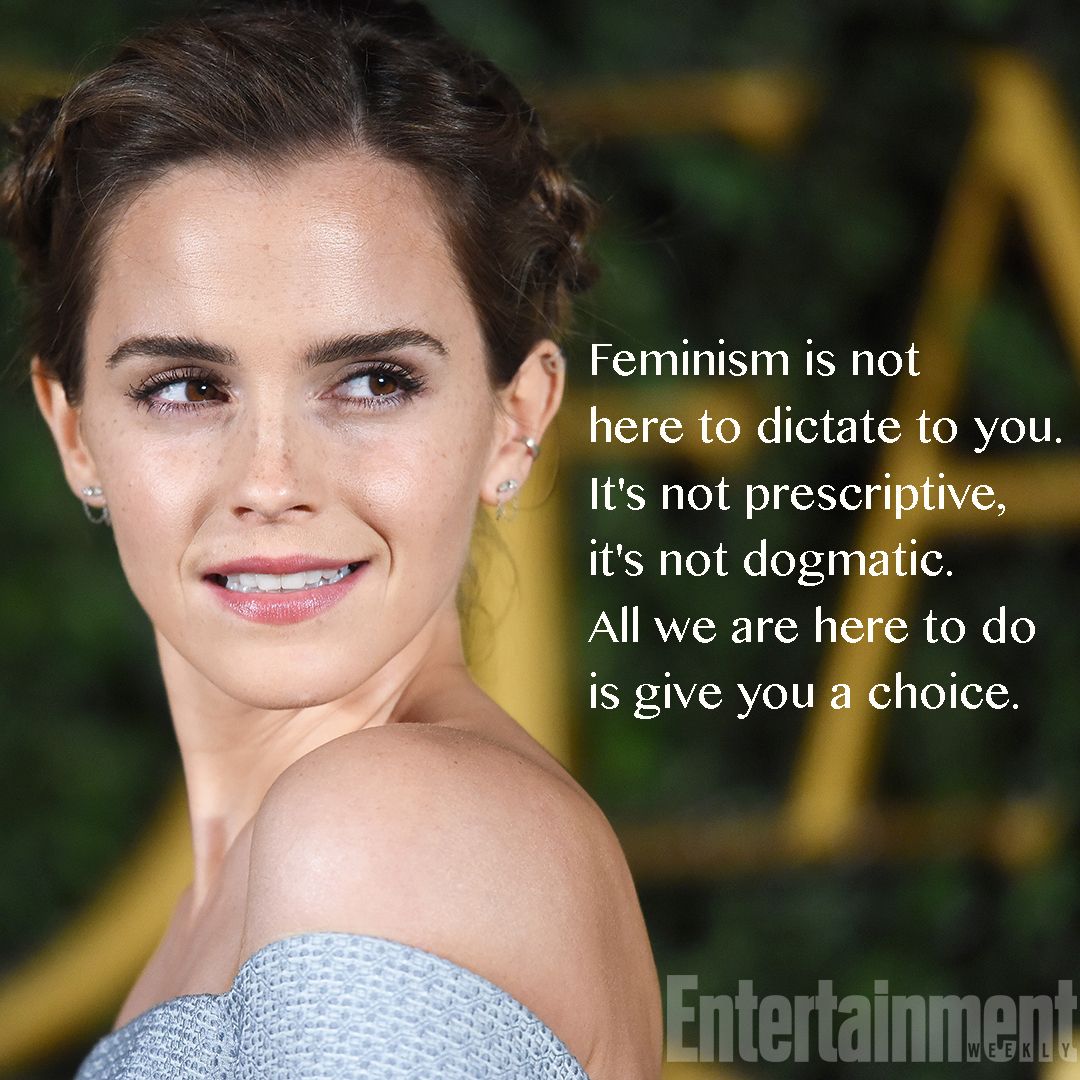
Emma Watson, a name synonymous with both on-screen magic and unwavering advocacy. She has become a beacon in the ever-turbulent waters of contemporary feminism. Watson isn’t merely reciting lines from a script; she’s scripting a new narrative for gender equality. She dismantles antiquated ideologies, one carefully chosen word at a time. Her pronouncements on feminism resonate not just as sound bites, but as potent reverberations, challenging the very foundations of societal norms.
How did a young actress, known for wielding wands and battling dark forces, become a luminary in the fight for gender parity? The answer, perhaps, lies in the authenticity she brings to the discourse. This authenticity is the bedrock upon which her influence is built.
This exploration delves into the most incisive Emma Watson quotes on feminism, dissecting their impact and uncovering the rhetorical strategies that render them so compelling. This isn’t just a recitation of words; it’s an examination of their power, a deconstruction of their resonance, and an appreciation for the seismic shift they’ve initiated. Let us embark on this hermeneutic journey.
I. Feminism: Not a Dirty Word, But a Necessary Catalyst
One of Watson’s most enduring contributions to the feminist lexicon is her tireless effort to demystify the term “feminism” itself. In a world where the word is often weaponized and misinterpreted, Watson endeavors to reclaim its true essence. She asserts, unequivocally, that feminism is not about man-hating or seeking superiority. Instead, it represents the pursuit of equality for all genders. It is the dismantling of patriarchal structures that confine both women and men.
Consider her now iconic declaration: “Feminism is about giving women choice. Feminism is not a stick with which to beat other women with. It’s about freedom. It’s about liberation. It’s about equality.” This articulation, simple in its construction, is profoundly effective in its clarity. She reframes feminism from a position of aggression to one of inclusivity.
This quote is not just a definition; it’s an invitation. She invites everyone to join the conversation, regardless of their pre-conceived notions. It is an attempt to make the movement more accessible, less intimidating. It’s a clarion call for unity in the pursuit of justice.
II. Redefining Masculinity: A Call for Male Allies
Watson understands that achieving true gender equality requires the active participation of men. She consistently emphasizes that feminism isn’t just a women’s issue; it’s a human issue. Her perspective transcends the binary opposition often associated with feminist discourse.
She once stated, “Men, I would like to take this opportunity to extend your formal invitation. Gender equality is your issue too.” This is not a plea for sympathy, but a demand for accountability. She challenges men to confront the insidious ways in which patriarchal norms constrain their own lives. She urges them to embrace a more expansive and authentic expression of masculinity.
Her recognition of the societal pressures placed upon men, and her acknowledgment of their role in perpetuating and dismantling those pressures, sets her apart. She fosters a sense of shared responsibility. She transforms the feminist movement from a battleground to a collaborative endeavor.
III. Education as Empowerment: The Key to Unlocking Potential
A strong advocate for education, Watson views learning as a fundamental human right, and a powerful tool for empowerment. She understands that education is not just about acquiring knowledge; it’s about cultivating critical thinking, fostering self-reliance, and unlocking potential.
She eloquently articulated this view by stating, “Education is the most powerful weapon which you can use to change the world.” This resonates with the philosophy that knowledge is a force capable of shaping the course of history.
For Watson, education is more than just rote memorization. It is the cultivation of an independent and analytical mindset. It allows individuals, especially women, to challenge the status quo, to articulate their needs and aspirations. Education is the crucible in which societal transformation is forged.
IV. Challenging Stereotypes: Deconstructing Harmful Narratives
Watson consistently challenges the pervasive stereotypes that perpetuate gender inequality. She questions the limiting narratives that society often imposes on both women and men. Her words serve as a powerful antidote to these ingrained biases.
She powerfully stated “We are struggling for a united world but we live divided.” This statement encapsulates the core conflict between the ideals of global unity and the reality of persistent divisions fostered by stereotypes and prejudice. The implication is that genuine unity cannot be achieved until these barriers are dismantled.
Her critique extends beyond overt discrimination. It encompasses the subtle, insidious ways in which stereotypes shape our perceptions and limit our potential. She implores us to question the assumptions we make about ourselves and others. This is a prerequisite for creating a more equitable and just society.
V. The Intersectionality Imperative: Recognizing the Multiplicity of Identities
An awareness of intersectionality, the interconnected nature of social categorizations such as race, class, and gender, is crucial to any genuine feminist pursuit. Watson acknowledges that women’s experiences are not monolithic. She champions the voices of marginalized women, recognizing that their struggles are often compounded by multiple forms of oppression.
While specific quotes directly addressing intersectionality might be less prominent in her publicly available statements, her advocacy work with organizations championing the rights of women of color and LGBTQ+ individuals underscores her commitment to this principle. Her actions amplify the voices of those often silenced, ensuring that the feminist movement is truly inclusive and representative.
VI. Self-Love and Acceptance: A Foundation for Empowerment
Watson understands that internal strength is essential for external change. She encourages women to embrace self-love and acceptance, to resist the pressure to conform to unrealistic beauty standards, and to cultivate a sense of self-worth that is independent of external validation.
Although she has not explicitly uttered a soundbite on this, her actions, from eschewing heavily photoshopped images to speaking candidly about her own insecurities, speak volumes. She embodies the idea that true empowerment begins with self-acceptance. It is in embracing one’s authentic self that one finds the strength to challenge societal norms.
VII. The Power of Vulnerability: Embracing Imperfection
In a culture that often equates strength with invulnerability, Watson demonstrates the power of vulnerability. She is not afraid to admit her own struggles and insecurities. Her openness creates a sense of connection and authenticity, making her all the more relatable and inspiring.
Her willingness to show her vulnerability is a testament to her own inner strength. It allows her to connect with a wider audience, to demonstrate that feminism is not about achieving perfection, but about striving for progress. This honest portrayal of the self is a powerful catalyst for change.
VIII. Moving Beyond Words: The Importance of Action
While her words have undoubtedly inspired millions, Watson also recognizes the importance of translating those words into tangible action. She actively supports organizations working to advance gender equality, and she uses her platform to raise awareness about critical issues.
Her involvement with organizations like UN Women, and her participation in initiatives such as HeForShe, demonstrate her commitment to putting her beliefs into practice. Her actions serve as a powerful reminder that true advocacy requires more than just rhetoric; it requires a dedication to making a real-world impact.
IX. A Legacy of Empowerment: Inspiring Future Generations
Emma Watson’s contribution to feminism extends far beyond individual quotes or specific campaigns. It lies in the legacy of empowerment she is creating, in the impact she is having on future generations. She serves as a role model for young women around the world, demonstrating that they can be both intelligent and compassionate, successful and socially conscious.
Her influence will continue to reverberate for years to come. Her words will continue to inspire action, to challenge assumptions, and to empower individuals to create a more just and equitable world. This is the true measure of her impact, the enduring legacy she is building, and the testament to her unwavering commitment to gender equality.
In conclusion, Emma Watson’s quotes on feminism are not mere platitudes; they are potent pronouncements that have ignited conversations, challenged perceptions, and empowered millions. Her unique appeal lies in her authenticity, her accessibility, and her unwavering commitment to creating a more just and equitable world for all. She is a beacon of hope in the ongoing struggle for gender parity, a testament to the power of voice, and an inspiration to us all. She has demonstrated that fighting for equality can be both passionate and compassionate.





Leave a Comment