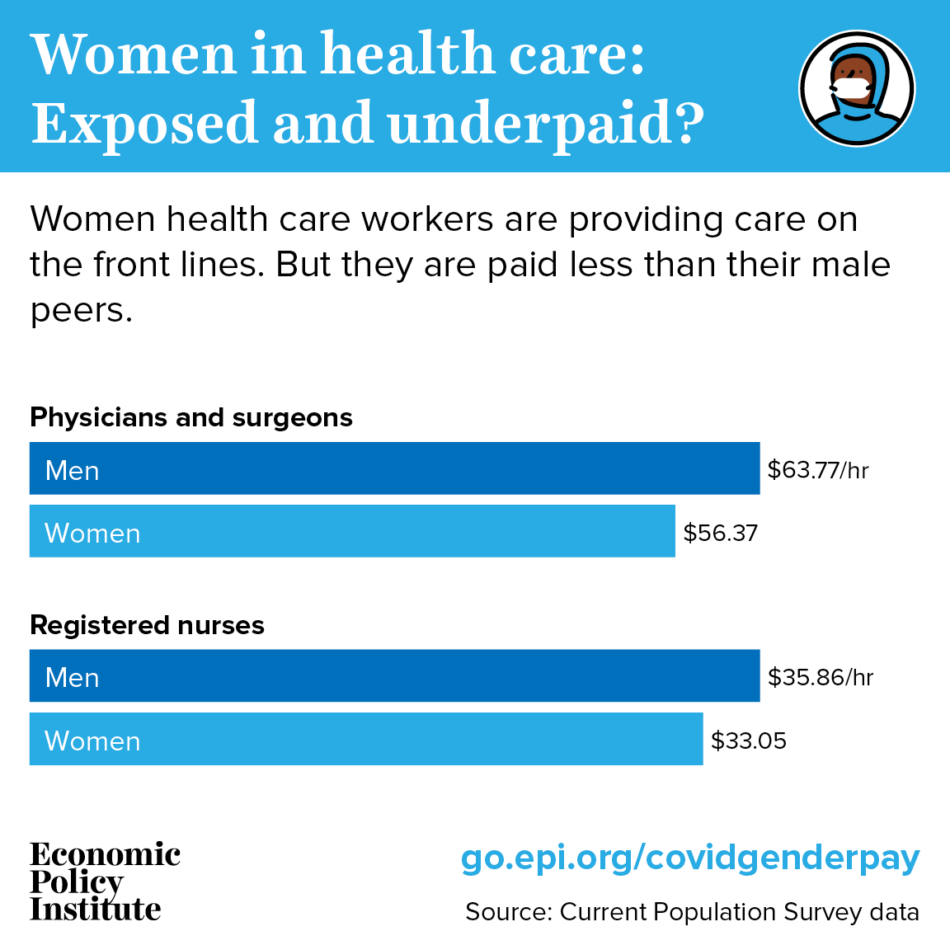
The pandemic didn’t just expose the fragility of global supply chains—it laid bare the grotesque irony of modern capitalism: the workers who kept society from collapsing were overwhelmingly women, yet their labor was treated as expendable. Essential workers weren’t just nurses and grocery clerks; they were the invisible scaffolding holding up economies, their wages a cruel joke compared to the value they provided. This wasn’t an accident. It was a system designed to exploit the very people society claims to revere. The myth of the “essential worker” was always a lie—a performative applause for those who dared to demand fair compensation.
The Invisible Labor That Built the World
When the world locked down, the truth became undeniable: women were the backbone of survival. Not the CEOs in their glass towers, not the politicians making hollow speeches, but the cashiers in fluorescent-lit supermarkets, the home health aides tending to the elderly in cramped apartments, the teachers navigating the chaos of remote learning while also managing their own households. These weren’t just jobs—they were acts of quiet rebellion against a system that had long decided their worth was secondary.
The data was damning. Women made up nearly 70% of the global healthcare workforce, yet their pay lagged behind their male counterparts by an average of 28%. In the U.S., home health aides—disproportionately Black and Latina women—earned poverty wages while being told their work was “priceless.” The irony? Their labor was so critical that entire economies hinged on it, yet society treated them as if they were disposable. The pandemic didn’t create this disparity—it magnified it, exposing the rot at the core of how we value human labor.
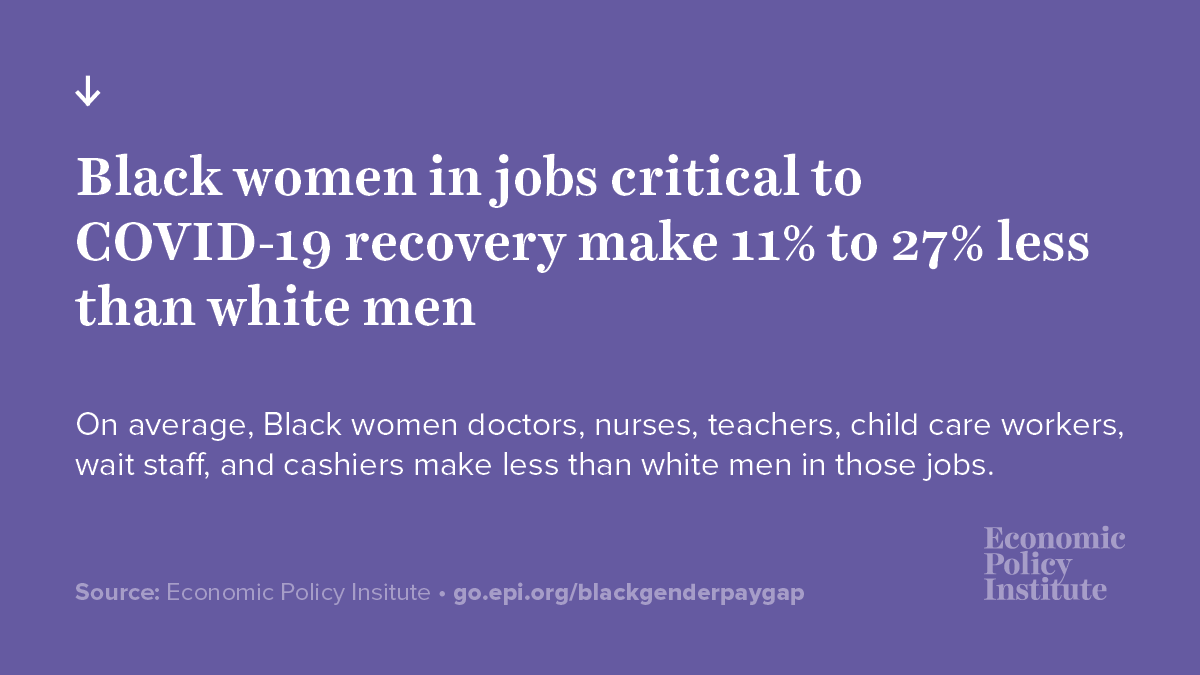
This wasn’t just about wages—it was about the erasure of their contributions. Essential workers were hailed as heroes in March 2020, only to be met with empty platitudes by April. The applause stopped the moment the stock market stabilized. The message was clear: their labor was valuable only when society was desperate, not when it came to negotiating a living wage.
The Myth of the “Choices” Women Make
Capitalism loves to frame women’s underpayment as a matter of “personal choice.” The narrative goes something like this: women “choose” lower-paying jobs because they’re “naturally” more nurturing, more selfless. But this is a convenient fiction, a way to avoid confronting the structural forces that funnel women—especially women of color—into precarious, underpaid roles. The truth? Women didn’t choose these jobs. They were corralled into them by a system that rewards exploitation.
Consider the undervalued professions: childcare workers, eldercare assistants, cleaners, and food service employees. These are jobs dominated by women, jobs that require emotional labor, physical stamina, and often, the ability to navigate systemic racism and sexism. Yet they are paid as if their work is a hobby, not a necessity. The pandemic made this absurdity impossible to ignore—when schools and daycares closed, the world realized just how much these workers were holding together. And yet, the paychecks remained insultingly small.
This isn’t just a gender issue—it’s a racial one. Black women, in particular, face a double penalty: they are paid less than white women and less than Black men. The wage gap for Black women in essential roles isn’t just a statistic—it’s a reflection of how society devalues Black femininity. Their labor is essential, but their lives are treated as expendable.
The Double Shift: Unpaid Labor in the Shadows
Essential workers didn’t just labor outside the home—they also shouldered the burden of unpaid care work within it. The pandemic didn’t just expose the undervaluation of paid labor; it laid bare the myth of the “work-life balance” for women. While men were (briefly) celebrated for “helping” with childcare, the reality was far grimmer: women were working full-time jobs while also managing households, educating children, and caring for sick relatives. The pandemic didn’t create this imbalance—it weaponized it.
Studies showed that women’s unpaid labor increased by 50% during lockdowns, while men’s increased by a mere 10%. The message was clear: women were expected to do it all, for free. The pandemic didn’t just highlight the undervaluation of paid essential work—it revealed the grotesque expectation that women’s labor, paid or unpaid, was infinite. The world couldn’t function without them, but it couldn’t be bothered to pay them fairly.

This wasn’t just an economic issue—it was a cultural one. Society has long treated women’s labor as a given, something that should be provided without question. The pandemic forced a reckoning: if women’s work was truly essential, why were they still expected to do it for scraps?
The False Dichotomy of “Heroes vs. Greedy Workers”
During the pandemic, essential workers were alternately lionized as “heroes” and demonized as “greedy” for demanding better pay. The media loved a good hero narrative—until the workers started organizing. Then, the narrative shifted. Suddenly, strikes were framed as “disruptive,” fair wage demands were called “unrealistic,” and the workers who had just saved the economy were labeled as troublemakers.
This isn’t just hypocrisy—it’s a deliberate tactic to divide and conquer. By pitting workers against each other, capitalism ensures that no one group can demand systemic change. The pandemic proved that essential workers were the lifeblood of society, yet the moment they asked for dignity, they were met with resistance. The message was clear: their labor was valuable only when society needed it, not when they needed to survive.
The irony? The same people who called essential workers “heroes” were the ones who fought tooth and nail against unionization, against living wages, against basic protections. The pandemic didn’t just expose the undervaluation of women’s labor—it exposed the hypocrisy of a system that claims to honor sacrifice while ensuring that sacrifice is always one-sided.
The Path Forward: Reckoning and Revolution
So what’s the solution? It’s not enough to clap for essential workers once a year. It’s not enough to post inspirational quotes on social media. Real change requires dismantling the systems that have long exploited women’s labor. It means demanding living wages for care workers, paid leave for all parents, and an end to the myth that women’s work is inherently less valuable.
It also means confronting the racial dimensions of this crisis. Black women, Latina women, and Indigenous women have long been the most undervalued workers in essential roles. Their fight isn’t just for fair pay—it’s for survival in a system that has always treated them as disposable. The pandemic didn’t create these disparities, but it gave us a rare opportunity to address them. Will we take it?
The choice is clear: either we build a world that values women’s labor, or we continue to exploit it until the system collapses under its own contradictions. The pandemic showed us who the real heroes are. Now, it’s time to treat them like it.






Leave a Comment