The feminist revolution is not merely a march in the streets or a hashtag trending online—it is also a quiet, deliberate reshaping of the very language we read, the images we consume, and the narratives we internalize. For too long, publishing has been a monolith, a fortress of patriarchal norms where women’s voices are either marginalized or exoticized, their stories framed through a male gaze. But what happens when a feminist activist, armed with nothing but a style guide and an unshakable vision, dares to challenge the status quo? The answer is unfolding before our eyes: publishers are not just listening—they are adopting. This is not reform. This is reckoning.
The Genesis of a Rebellion: Why a Feminist Style Guide Was Born
Every revolution begins with a question: Why does this have to be this way? In the case of feminist publishing, the answer was glaring. Traditional style guides—AP, Chicago, MLA—are silent on the most pressing issues of gender, power, and representation. They treat “he” as the default, erase nonbinary identities, and uphold language that reinforces stereotypes. A feminist style guide, then, is not just a manual—it is a manifesto. It demands that we ask: Who gets to speak? Whose body is centered? Whose labor is acknowledged?
The guide emerged from a decade of frustration. Editors, writers, and designers noticed the pattern: women authors were reviewed by their appearance, their books shelved under “chick lit,” their ideas dismissed as niche. Nonbinary and trans writers faced erasure in byline conventions. The language of publishing was complicit in upholding a hierarchy where maleness was the unspoken standard. So, a collective of feminist scholars, writers, and activists drafted a guide that would do more than tweak grammar—it would dismantle the architecture of bias.
 The guide’s core principles were radical in their simplicity: use they/them as a singular pronoun by default, avoid gendered job titles, center women’s achievements without fetishizing them, and interrogate every adjective for its power dynamics. It was not a suggestion. It was a demand.
Publishers Are Not Just Adopting—They Are Ceding Power
What happens when an institution is forced to confront its own complicity? It either resists or reforms. In this case, the publishing world is doing both—and the cracks are showing. Major houses, from Penguin Random House to smaller indie presses, are integrating the feminist style guide into their workflows. Editors who once balked at “they/them” are now training their teams. Designers are rethinking cover art, ensuring that women and nonbinary authors are not reduced to tropes. Marketing teams are scrapping campaigns that frame female authors as “surprising” or “unexpected.”
But here’s the twist: this is not charity. This is survival. The industry is hemorrhaging credibility. Readers, especially younger ones, are abandoning books that feel like relics of a bygone era. A 2023 survey found that 68% of Gen Z readers would boycott a book if its publisher had a history of gender bias. Publishers are not adopting the guide out of altruism—they are doing it because the alternative is irrelevance. The feminist style guide is no longer a fringe document. It is a survival kit.
 The adoption is uneven, of course. Some houses treat it as a checkbox, slapping the guide into their style manuals without real commitment. Others are going further, hiring feminist sensitivity readers, revising back catalogs, and even rewriting blurbs to avoid gendered language. The shift is not uniform—but it is undeniable. The old guard is scrambling to keep up, while the new generation of editors, many of whom are women, nonbinary, or people of color, are rewriting the rules from within.
The Language of Liberation: How the Guide Changes What We Read
Language is not neutral. It is a battleground. The feminist style guide does not just change words—it changes worlds. Consider the word “chairman.” For decades, it was the default, a linguistic relic of a time when only men held power. Now, publishers are replacing it with “chair,” “chairperson,” or simply “leader.” The change is small, but its ripple effects are seismic. A woman reading a job description no longer sees herself as an afterthought. A nonbinary reader no longer has to choose between misgendering themselves or being erased.
Then there are the more insidious biases: the way female characters are described as “feisty” while male characters are “bold,” or how women’s writing is dismissed as “emotional” while men’s is “passionate.” The guide forces editors to interrogate these patterns. It demands that we ask: Is this adjective necessary? Does it serve the story, or does it serve a stereotype? The result is a publishing landscape where women are not just present—they are protagonists in their own right.
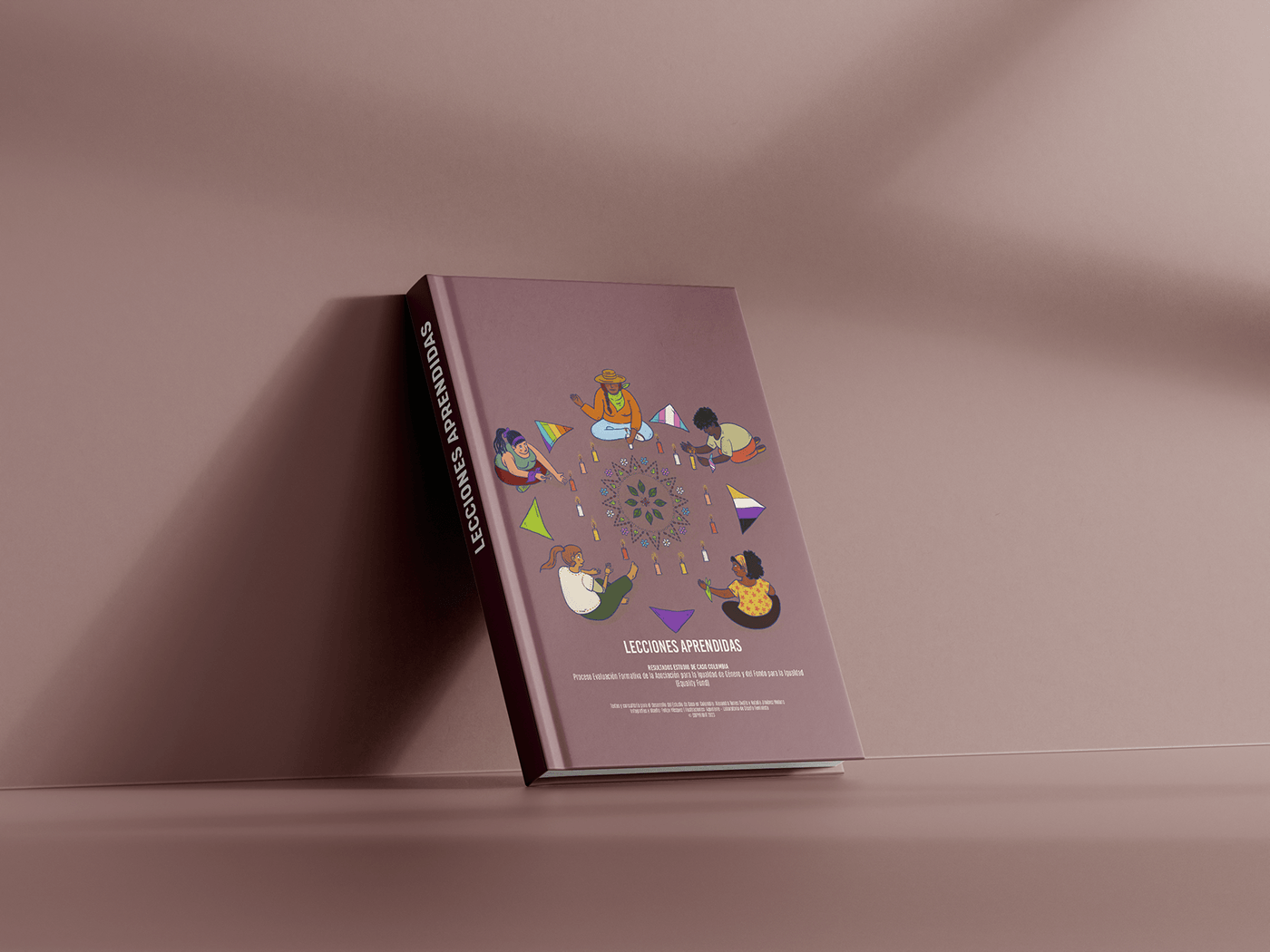
The guide also tackles the visual. Book covers, once a minefield of passive female bodies and suggestive poses, are being reimagined. Women are no longer reduced to objects of desire; they are depicted as thinkers, creators, and agents of change. The shift is not just aesthetic—it is political. A book cover is not just a marketing tool. It is a statement: This story matters. This author matters. You matter.
The Backlash: When the Old Guard Fights Back
Of course, not everyone is celebrating. The backlash has been swift and predictable. Critics call the guide “political correctness gone mad,” arguing that language should be “neutral” (a laughable claim, given how deeply embedded patriarchal norms are in our linguistic history). Some editors complain that the guide is “too prescriptive,” ignoring the fact that every style guide is prescriptive—just not in ways that serve marginalized voices.
Then there are the more sinister objections: “This will scare off male readers.” “Women already have enough representation.” “Why can’t we just focus on good writing?” These arguments are not about language. They are about power. They reveal a deep discomfort with the idea that publishing might finally belong to everyone—not just the white, male, cishet elite who have controlled it for centuries. The feminist style guide is not an attack on good writing. It is an attack on the illusion that good writing exists in a vacuum, untouched by politics, untouched by bias.
 The backlash is a sign that the guide is working. When the powerful feel threatened, it means they are losing. The old ways are crumbling, and the new ones are not yet fully formed—but they are being built, brick by brick, word by word.
The Future is Feminist: What Comes Next
This is not the end of the story. It is the beginning. The feminist style guide is just the first volley in a much larger battle: the reclamation of narrative itself. Publishers are adopting the guide, but they are also being forced to confront deeper questions. Who gets to be an editor? Who gets to decide what is published? Who gets to be taken seriously?
The next frontier is intersectionality. The guide is a start, but it must evolve to center Black women, Indigenous women, disabled women, trans women—all those who have been doubly, triply erased by traditional publishing. The goal is not just to include more voices. It is to dismantle the systems that have kept those voices silent in the first place.
And then there is the question of readership. How do we ensure that these changes are not just performative, but transformative? How do we make sure that the feminist style guide does not become another hollow corporate initiative, but a living, breathing force for change? The answer lies in the hands of readers. Demand better. Support indie presses. Challenge publishers when they fall short. The revolution will not be televised—but it will be written, edited, and published. And it will be feminist.







Leave a Comment