What if I told you that the global economy is built on a colossal, invisible scaffolding—one that props up entire nations, yet is systematically erased from balance sheets, GDP calculations, and policy debates? This scaffolding isn’t made of steel or concrete, but of unpaid labor, the relentless, uncelebrated toil performed overwhelmingly by women. Cooking meals, scrubbing floors, soothing tears, organizing chaos—these are not mere chores; they are the quiet engines of civilization. And yet, economics, that stern gatekeeper of value, turns a blind eye. Why? Because to acknowledge this labor would be to admit that the emperor of capitalism has no clothes—or at least, no accounting for the seamstresses who stitch the fabric of society together.
The Invisible Ledger: How Unpaid Labor Vanishes from Economic Calculus
Picture this: a woman rises before dawn, long before the stock markets stir. She prepares breakfast, packs lunches, ensures the children are dressed, and perhaps even tends to an aging parent. By the time she steps into her “real” job—or if she’s one of the millions confined to the home—she has already worked a full shift. Yet, in the cold, hard language of economics, her labor doesn’t exist. It doesn’t appear in GDP. It doesn’t inflate national productivity. It is, in the words of feminist economists, externalized—a cost shifted onto the shoulders of women, free of charge.
This erasure isn’t accidental. It’s a feature of a system that equates value with market exchange. Unpaid labor, by definition, doesn’t pass through the cash register. It doesn’t generate profit for corporations or tax revenue for governments. So, it’s deemed worthless—not because it lacks utility, but because it lacks a price tag. The irony? If a corporation paid someone to perform these same tasks, it would be recorded as economic activity. But when women do it for free, it’s as if it never happened. The ledger is a lie, and the lie is that unpaid labor doesn’t matter.
The Gendered Divide: Why Women Bear the Burden of Invisible Work
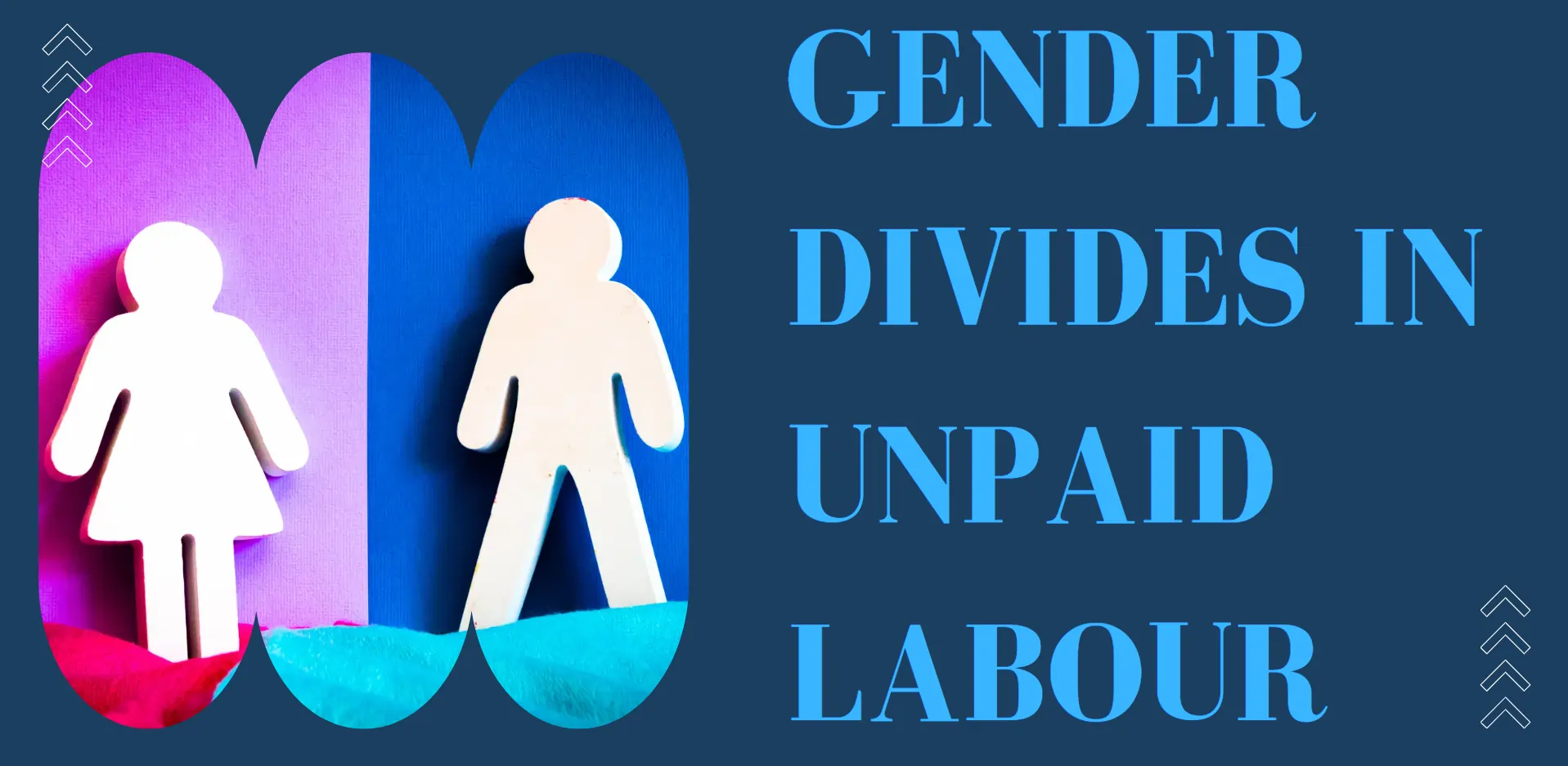
Unpaid labor isn’t just invisible—it’s gendered. Studies show that women, on average, perform two to three times more unpaid care work than men. In some cultures, this imbalance is so entrenched it’s treated as natural, like the tides or the phases of the moon. But nature doesn’t dictate who wipes a feverish child’s brow at 3 AM. Culture does. And culture, in its infinite capacity for self-deception, has convinced itself that women’s labor is an act of love, not an economic necessity.
This division isn’t just unfair—it’s a form of economic violence. When women’s time is treated as infinite and expendable, it devalues their contributions in the paid workforce. Employers assume women will always prioritize caregiving, so they offer lower wages, fewer promotions, and fewer opportunities. The result? A vicious cycle where women are trapped between the unpaid labor of the home and the underpaid labor of the market. The system doesn’t just ignore this work—it thrives on it.
The Myth of “Choice”: How Economics Gaslights Women into Accepting Exploitation
Economists and policymakers love to invoke the word choice. “Women choose to stay home,” they say. “They choose to work part-time.” But what does “choice” mean when the alternatives are starvation wages, unaffordable childcare, or the crushing weight of societal judgment? The myth of choice is the ultimate gaslighting tactic—it shifts blame from the system to the individual. If a woman “chooses” unpaid labor, it’s because the system has made paid labor an impossible luxury.
Consider the language used to describe this work: “domestic duties,” “family responsibilities,” “caregiving.” These terms sanitize what is, in reality, a form of economic coercion. No one chooses poverty. No one chooses to be trapped in a cycle of exhaustion and financial dependence. Yet, the myth persists that unpaid labor is a personal decision, not a structural failure. This narrative absolves governments and corporations of responsibility, while women are left to bear the cost alone.
The Global Cost of Invisibility: How Unpaid Labor Fuels Inequality
The erasure of unpaid labor isn’t just a feminist issue—it’s a global economic crisis. The International Labour Organization estimates that unpaid care work contributes trillions of dollars to the global economy annually. If this labor were compensated, it would dwarf the GDP of many nations. Yet, because it’s invisible, it’s also unprotected. Women performing this work have no labor rights, no pensions, no safety nets. They are the ultimate disposable workforce.
This invisibility also distorts our understanding of poverty. When unpaid labor is ignored, women’s economic dependence is framed as a personal failing, not a systemic injustice. A woman who can’t afford to leave an abusive partner isn’t seen as a victim of economic coercion—she’s seen as someone who “chose” to stay. A mother working double shifts to provide for her children isn’t celebrated as a hero—she’s invisible. The system depends on this erasure to maintain the status quo.
What Would Happen If We Counted What Matters?
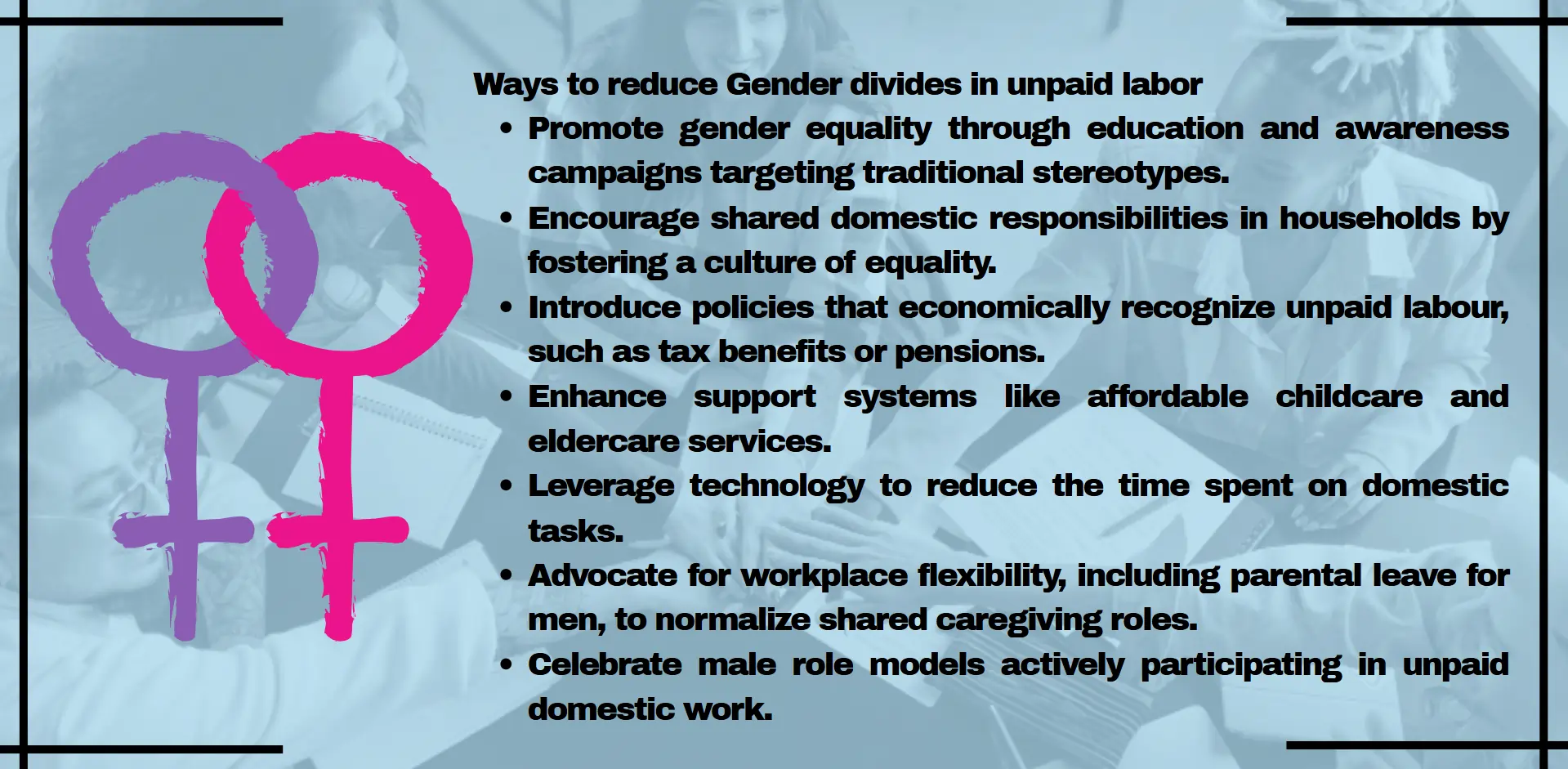
Imagine, for a moment, a world where unpaid labor was counted. Not just in spreadsheets, but in policy decisions, wages, and social protections. What if governments recognized that a nation’s well-being depends on the labor of its caregivers? What if corporations were held accountable for the unpaid work that enables their profits? The ripple effects would be seismic.
Countries like Sweden and Iceland have begun to experiment with this idea, introducing policies like paid parental leave and subsidized childcare. The results? Higher female workforce participation, stronger economies, and more equitable societies. But these are mere Band-Aids on a gaping wound. The real solution requires a fundamental rethinking of value itself—one that centers care, community, and human dignity over profit and growth.
Until then, the global economy will continue to run on the backs of women, their labor as invisible as the air we breathe. And economics, that most revered of disciplines, will keep pretending it doesn’t exist.






Leave a Comment