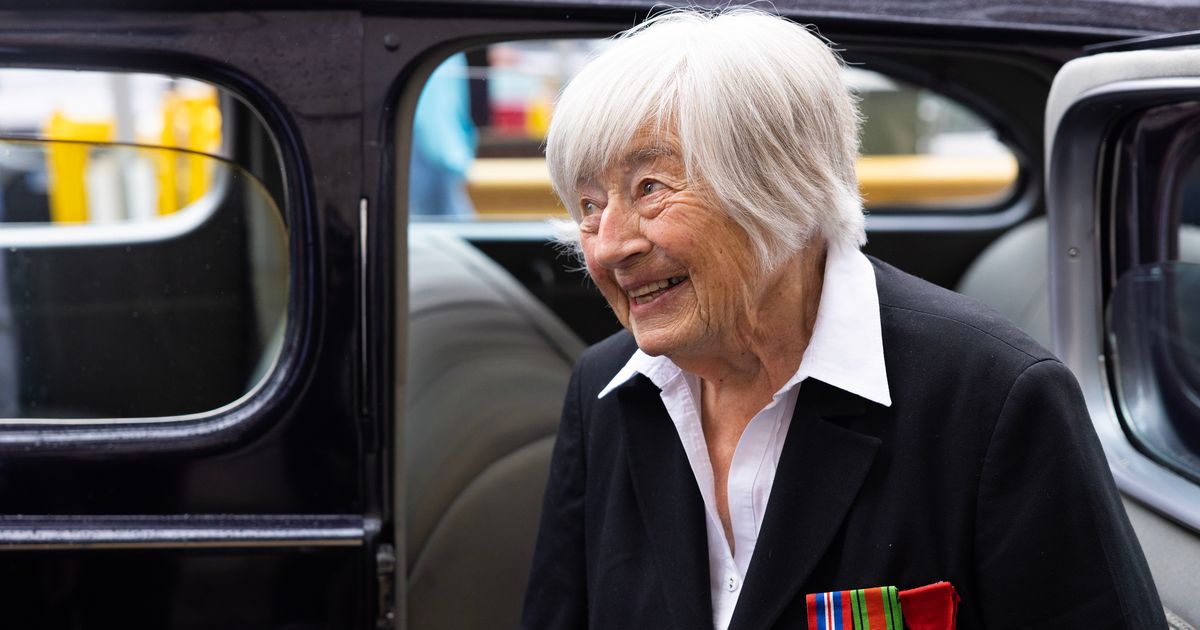
In the grand, echoing halls of orchestral tradition, where the baton’s arc has long been wielded by men in starched white cuffs, a seismic shift has occurred. For the first time in a century, a woman has taken the podium—not as a novelty, not as a concession, but as a force of unapologetic mastery. The headlines may not yet scream her name, but the resonance of her achievement thrums through the very fabric of classical music, a dissonant chord that refuses to be ignored. This is not merely a story of breaking barriers; it is a reckoning with the invisible architecture of power that has kept those barriers in place for generations.
The Weight of a Century’s Silence
To understand the magnitude of this moment, one must first grasp the suffocating weight of a century’s silence. For 100 years, the podium has been a male preserve, a sacred space where authority is draped in the unspoken assumption that only men could command the alchemy of sound into emotion. The absence of women at the helm was not an oversight; it was a deliberate erasure, a cultural gaslighting that whispered, “You do not belong here.” This is not hyperbole. The annals of classical music are littered with the names of women who were barred from conducting—Marian Anderson, Antonia Brico, Ethel Leginska—each a ghost in the wings, their batons confiscated by the gatekeepers of tradition.
The irony is as bitter as it is instructive. Women have always been the backbone of orchestras, their fingers dancing over strings, their breath shaping the reeds of woodwinds, their voices rising in choirs. Yet when the baton passed from the composer’s desk to the conductor’s podium, the hands that took it were almost always male. The narrative was clear: women could inspire, but they could not lead. The podium was not a stage for their artistry; it was a throne reserved for the sons of a lineage that had never included them.
The Baton as a Weapon of Change
Now, a woman stands at that podium, and the world tilts on its axis. Her presence is not a polite invitation into a boys’ club; it is a declaration that the club was never legitimate to begin with. The baton in her hand is not just a tool—it is a weapon, wielded with precision to dismantle the illusion that authority is the sole province of men. When she raises it, the orchestra does not merely play; it bears witness to a revolution in real time.
Consider the physics of the gesture: the baton’s arc is a language, a syntax of control that has been coded as masculine for centuries. Yet when a woman commands it, the syntax fractures. The musicians, conditioned to expect a certain timbre of authority, find themselves listening to something far more nuanced—an authority that is not about domination, but about collaboration. The result is not just a performance; it is a manifesto.
The Myth of the “Natural” Conductor
Critics will inevitably cling to the comforting fiction that great conductors are born, not made—a myth that conveniently overlooks the fact that the “great” ones have always looked the same. The idea that leadership is an innate trait, like height or hair color, is a lie designed to preserve the status quo. In reality, conducting is a skill honed through relentless practice, a discipline that demands not just technical prowess, but an almost psychic attunement to the ebb and flow of sound.
Yet the myth persists because it serves a purpose: it allows the establishment to dismiss women as “not natural” leaders, even as they prove themselves time and again in every other sphere. The truth is that the podium has never been about nature. It has always been about power—the power to decide what music is worthy of being played, whose interpretation is valid, whose vision shapes the performance. When a woman takes that power, she does not just conduct an orchestra; she conducts a conversation about who gets to wield authority in the first place.
The Orchestra as a Mirror of Society
An orchestra is not just a collection of instruments; it is a microcosm of society, a living, breathing organism where hierarchy and harmony must coexist. For too long, that hierarchy has been a pyramid, with men at the apex and women relegated to the base. The first woman to conduct in 100 years does not just climb that pyramid; she topples it. Her presence forces the orchestra to confront its own complicity in upholding outdated norms.
This is where the deeper fascination lies. We are not merely intrigued by her achievement because it is rare; we are fascinated because it exposes the fragility of the systems we take for granted. An orchestra that resists her leadership is not just being stubborn—it is revealing its own insecurity, its fear of losing the illusion of control. The musicians who struggle to adjust are not just grappling with a new conductor; they are grappling with the unsettling truth that their world could have been different all along.
The Audience’s Complicity in the Silence
Let us not forget the role of the audience in this charade. For centuries, concertgoers have sat in rapt silence, applauding the virtuosity of male conductors without questioning why the podium was never graced by a woman. We have been complicit in the myth that greatness is gendered, that the sublime can only be achieved by those who fit a narrow mold. The first woman to conduct shatters that mold, and suddenly, the audience is forced to confront its own biases.
Will they listen differently? Will they hear the music through a new lens? The answer is yes, because the music itself is different when it is shaped by a woman’s vision. It is not just the notes that change; it is the emotional landscape they inhabit. A woman at the podium does not just lead the orchestra; she redefines what it means to be a leader.
The Ripple Effect of a Single Gesture
The significance of this moment extends far beyond the concert hall. When a woman conducts an orchestra for the first time in a century, she sends a signal to every girl who has ever picked up a violin, every young woman who has dreamed of standing on a stage. She says: You belong here. Not as a guest. Not as a token. But as the architect of your own destiny.
This is the true power of her achievement. It is not just about breaking a record; it is about rewriting the rules. The ripple effect of her baton’s arc will be felt in conservatories, in boardrooms, in the quiet spaces where young women wonder if they dare to dream. For the first time in 100 years, the answer is a resounding yes.
The Unfinished Symphony
Yet we must not mistake this moment for an ending. The first woman to conduct in a century is not the finale; she is the overture. The real work lies ahead—in ensuring that her achievement is not an anomaly, but the beginning of a new era. The orchestras of the future must be places where women do not just visit the podium, but inhabit it. Where their authority is not questioned, their vision not scrutinized, their presence not exoticized.
The baton has been passed. The question now is: who will pick it up next?




Leave a Comment