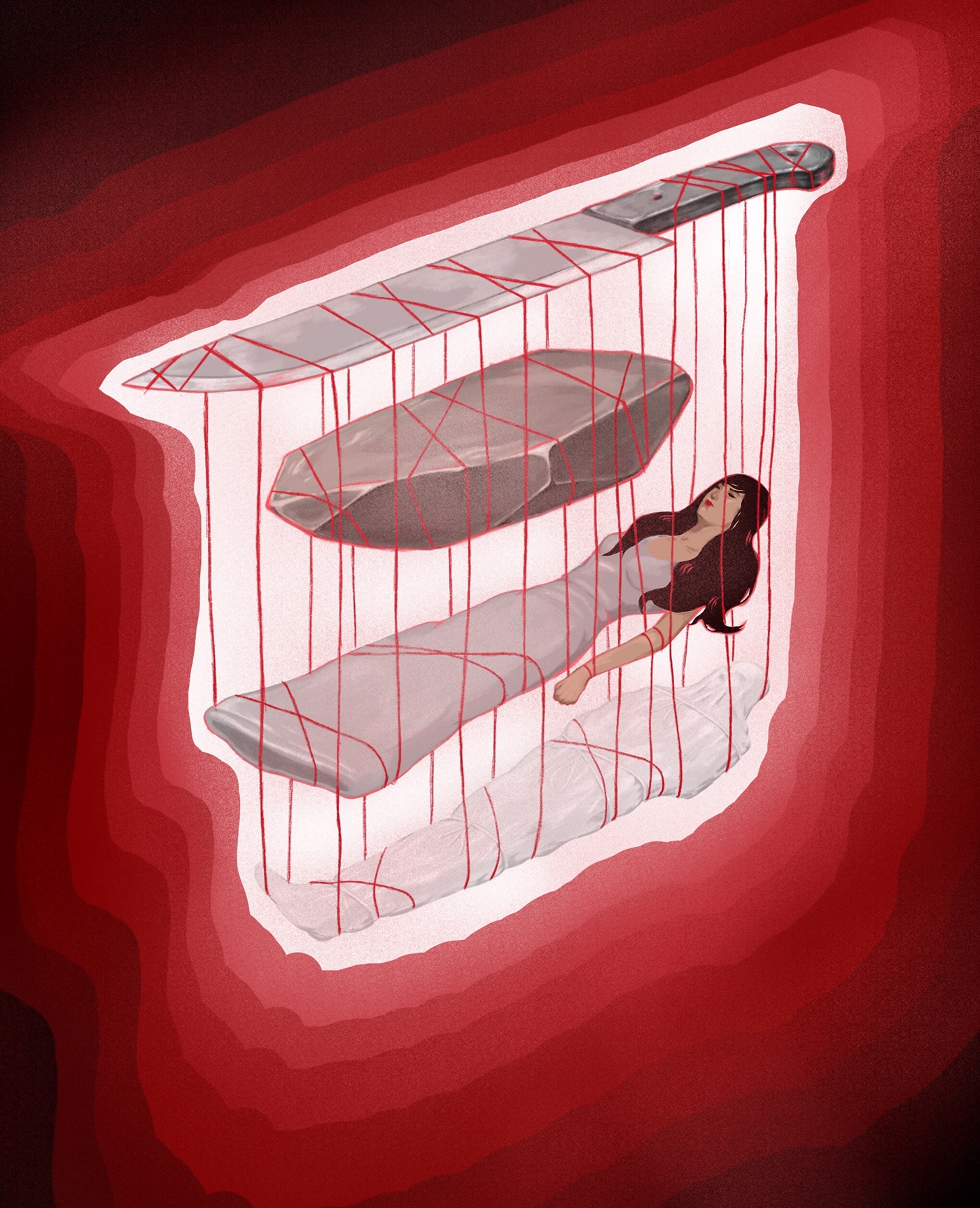
In the shadowed corners of global discourse, where the weight of tradition presses against the fragile bones of progress, a sinister euphemism thrives—honor killing. It whispers of cultural preservation, of familial duty, of some twisted moral code that demands blood as penance for perceived dishonor. But peel back the layers of this grotesque ritual, and what you uncover isn’t a tale of honor at all. It’s a chronicle of femicide masquerading as tradition, a systemic erasure of women’s autonomy under the guise of virtue. This isn’t just a crime against individuals; it’s a crime against humanity’s collective conscience.
The Myth of Honor: How a Word Became a Weapon
The term honor killing is a linguistic Trojan horse, smuggling violence into homes under the banner of respectability. It suggests a noble act, a sacrifice for the greater good of family or community. But honor, in its purest form, is not measured in bloodshed. It is measured in integrity, in the courage to defy oppression, in the refusal to let fear dictate life or death. The reality? What is labeled as honor is nothing more than patriarchal tyranny dressed in cultural garb.
Consider the language itself: honor implies a shared value, something society upholds. Yet, in cases of so-called honor killings, the only thing being honored is the perpetrator’s ego, their need to control, to punish, to reclaim dominance over a woman who dared to exist outside their dictates. The word is a lie—a deliberate obfuscation of misogyny, a way to sanitize brutality with the veneer of tradition. When a father strangles his daughter for falling in love with the wrong man, or a brother guns down his sister for seeking an education, the act is not about honor. It’s about power. And power, unchecked, is always violent.
The Reality: Femicide as a Global Pandemic
Femicide isn’t a distant tragedy confined to certain cultures or religions—it’s a pandemic with countless strains, each one more insidious than the last. The World Health Organization estimates that 50,000 women are killed by intimate partners or family members each year, a statistic that doesn’t even account for the thousands more who vanish without a trace, their disappearances dismissed as “family matters.” In some regions, the numbers are staggering: in India, dowry-related deaths claim a woman’s life every hour. In Latin America, feminicidio has become a normalized horror, with cartels and cartels-adjacent families treating women’s lives as collateral in a war they didn’t start.
What binds these disparate acts isn’t culture—it’s misogyny. The modus operandi is the same: a woman’s autonomy is a threat, her choices a provocation, her body a battleground. Whether it’s acid thrown in her face for rejecting a suitor in Pakistan, or a woman stoned to death in Afghanistan for “adultery” (a charge often fabricated to silence her), the script is chillingly familiar. The only variable is the degree of savagery permitted by the society that turns a blind eye.
The Perpetrators: Who Really Holds the Knife?
Contrary to the sanitized narratives peddled by apologists, the architects of these crimes aren’t rogue individuals acting in isolation. They are products of a system that rewards control and punishes dissent. Fathers, brothers, husbands, uncles—they are the gatekeepers of a patriarchal order that views women as property, their lives subject to the whims of male authority. The violence isn’t spontaneous; it’s calculated, a preemptive strike against any woman who dares to challenge the status quo.
Take the case of a young woman in a conservative village who dares to marry for love. Her family doesn’t just disown her—they declare her dead. Her “crime”? Choosing her own happiness over their control. Or the woman in a so-called progressive city who flees an abusive marriage, only to be tracked down and slaughtered in broad daylight, her death framed as a “family tragedy” to spare the killer’s reputation. The perpetrators aren’t monsters lurking in the dark; they’re often pillars of the community, their crimes excused as “understandable” in the name of tradition.
The Complicit Silence: How Society Becomes an Accomplice
Silence is the oxygen that fuels femicide. It’s the neighbor who hears screams but looks away. The police officer who dismisses a woman’s plea for help as “drama.” The politician who frames honor killings as a “cultural issue” rather than a human rights crisis. Every time we turn a blind eye, every time we rationalize violence as “not our problem,” we become complicit in the erasure of women’s lives.
Even well-meaning allies often fall into the trap of cultural relativism, arguing that we shouldn’t “judge” practices we don’t understand. But this isn’t about judgment—it’s about justice. No culture, no religion, no tradition has the right to demand a woman’s life as payment for her autonomy. The moment we accept that some lives are worth less than others, we’ve already lost the fight.
Breaking the Cycle: The Path to Liberation
Ending femicide isn’t about erasing culture—it’s about reclaiming humanity. It starts with education: teaching girls that their bodies are not bargaining chips, that their dreams are not negotiable. It means holding perpetrators accountable, not with empty slogans, but with real consequences. It demands that we stop framing violence as a “private matter” and start treating it as the public health crisis it is.
Change won’t come from the top down. It will come from the ground up—from women who refuse to be silent, from men who reject toxic masculinity, from communities that refuse to normalize bloodshed in the name of tradition. It will come when we stop calling femicide an “honor killing” and start calling it what it is: a crime. A preventable, inexcusable crime.
The Uncomfortable Truth: We Are All Responsible
Here’s the inconvenient reality: femicide isn’t someone else’s problem. It’s ours. Every time we share a post about “saving” women in distant lands without examining the misogyny in our own backyards, we’re part of the problem. Every time we laugh at a joke that dehumanizes women, every time we ignore the warning signs in a friend’s relationship, every time we prioritize convenience over justice, we’re complicit.
The myth of honor killing is a lie designed to keep us complacent. The reality is far uglier—and far more urgent. The question isn’t whether we can afford to fight this battle. The question is whether we can afford not to.







Leave a Comment