The sky has always been a domain of myth and conquest, a vast, uncharted expanse where the bold dare to defy gravity. Yet, for centuries, this celestial frontier has been policed by an invisible hand—one that has systematically barred women from the cockpit, relegating them to the tarmac as spectators rather than pilots. The aviation gap is not merely a statistic; it is a chasm carved by centuries of patriarchal inertia, where the wings of progress have been clipped before they could even take flight. Today, as the world hurtles toward a future where women are astronauts, engineers, and CEOs, the aviation industry remains stubbornly tethered to an archaic narrative: that the skies belong to men. But what if the real turbulence isn’t in the clouds, but in the resistance to change?
The Sky as a Male Monopoly: A Historical Cartography of Exclusion
To understand the depth of the aviation gap, one must first trace the cartography of exclusion that has mapped the skies as a male domain. The Wright brothers’ first flight in 1903 was not just a technological marvel; it was a declaration of ownership. Women, who had long been confined to the roles of weavers and nurturers, were deemed unfit for the mechanical precision and physical strength required to command an aircraft. The early 20th century saw women like Harriet Quimby and Bessie Coleman shatter these illusions, yet their achievements were met with skepticism, ridicule, and outright sabotage. Quimby, the first woman to earn a pilot’s license in the U.S., died in a plane crash just a year after her historic feat—some whispered it was divine retribution for her audacity.
The narrative of aviation as a masculine pursuit was not accidental. It was a carefully constructed myth, reinforced by institutions, media, and even the language of flight. Terms like “captain” and “commander” carried an unspoken weight, implying a natural order where men were the default leaders. Women who dared to enter the field were often relegated to roles as stewardesses—a term that itself infantilized them, reducing their presence to one of service rather than mastery. The sky, it seemed, was not a place for women to conquer, but a stage for them to perform upon.

The Glass Cockpit: Why the Aviation Industry Still Flies Blind
The modern cockpit is a marvel of technology, a glass-encased sanctuary where data streams and autopilot systems hum with quiet efficiency. Yet, despite these advancements, the aviation industry remains trapped in a glass cockpit of its own making—one that reflects only the faces of men. Women make up just 5% of commercial airline pilots worldwide, a statistic that has barely budged in decades. Why? The answer lies not in capability, but in culture. Aviation, like many male-dominated fields, operates on the principle of the “old boys’ club,” where networks, mentorship, and sponsorship are gatekept by those who look like them.
Consider the language of aviation. Terms like “stick and rudder” and “flying by the seat of your pants” are not just colloquialisms; they are linguistic relics of a time when flying was a raw, visceral act of control. Women, who were historically excluded from such physical and mechanical pursuits, are often perceived as lacking the “instinct” for flight—a notion as absurd as it is outdated. Yet, this bias persists, woven into the fabric of training programs, hiring practices, and even the design of aircraft. The cockpit, it seems, was never meant to fit a woman’s frame, both literally and metaphorically.
The glass cockpit, then, is not just a technological marvel—it is a metaphor for the industry’s myopia. The industry can see the data, the metrics, the trends, but it cannot see the women standing right in front of it, ready to take the controls. The problem is not a lack of qualified women; it is a lack of vision.
Breaking the Sound Barrier: The Women Who Redefined Flight
History is not devoid of women who have shattered the sound barrier in more ways than one. From Amelia Earhart’s solo transatlantic flight to the all-female crew of Air India’s Boeing 777 in 2017, these women have not just flown—they have rewritten the rules. Yet, their stories are often reduced to footnotes, their achievements framed as exceptions rather than the rule they should be. The aviation gap is not just a numbers game; it is a narrative gap, one where the stories of women pilots are erased or diminished.
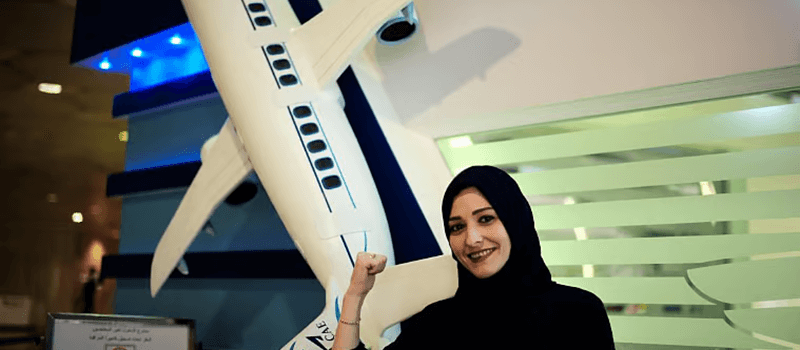
Take, for example, the case of Captain Aisha Al-Mansoori, the first female pilot in the United Arab Emirates. Her journey from a young girl dreaming of the skies to commanding a commercial airliner was not just a personal triumph—it was a cultural earthquake. In a region where women’s roles are often confined to domestic spheres, Al-Mansoori’s ascent to the cockpit was a defiance of expectations. Yet, even her story is often framed as an anomaly, a “first” rather than a harbinger of change.
These women are not just pilots; they are architects of a new narrative. They are the ones who prove that the sky is not a ceiling, but a launchpad. The challenge, then, is not to convince the world that women can fly—it is to convince the world that women should fly, in every sense of the word.

The Weight of the Headset: How Bias Weighs Down Women in Aviation
The headset is more than a piece of equipment—it is a symbol of authority, a tool that amplifies not just sound, but power. For women in aviation, the headset is also a burden, one that comes with the weight of systemic bias. Studies have shown that women pilots are more likely to be subjected to microaggressions, from being mistaken for flight attendants to facing skepticism about their competence. In one infamous incident, a female pilot was told by a male colleague that she “belonged in the kitchen, not the cockpit.” Such comments are not just offensive; they are a reminder that the aviation industry is still grappling with the ghosts of its past.
The bias is not always overt. It is in the way women are evaluated, the way their mistakes are scrutinized, and the way their successes are downplayed. It is in the language used to describe them—terms like “feisty” or “determined” are often applied to women who exhibit the same traits as men, who are simply described as “confident” or “assertive.” The headset, then, is not just a tool of communication; it is a tool of erasure, one that muffles the voices of women before they can even take off.
Yet, the most insidious form of bias is the one that women internalize. Many women in aviation report feeling the need to “prove themselves” repeatedly, to work twice as hard for half the recognition. This is not just a personal struggle; it is a structural one. The aviation industry must confront the fact that its biases are not just holding women back—they are holding the entire industry back from reaching its full potential.
The Future of Flight: Can the Aviation Industry Finally Take Off?
The future of aviation is not just about supersonic jets or electric aircraft—it is about who gets to fly them. The industry stands at a crossroads, where the choice is clear: cling to the past or embrace a future where the skies are truly open to all. The signs of change are there. More women are entering flight schools. More airlines are launching initiatives to recruit and retain female pilots. More young girls are looking up at the clouds and dreaming of a career in aviation.
But dreams alone are not enough. The aviation industry must take concrete steps to dismantle the barriers that have kept women grounded for so long. This means rethinking hiring practices, investing in mentorship programs, and challenging the cultural norms that have defined aviation for generations. It means recognizing that diversity is not just a moral imperative—it is a competitive advantage. Studies have shown that diverse teams are more innovative, more resilient, and more profitable. The aviation industry cannot afford to ignore this.
The future of flight is not a distant dream—it is a runway that has been waiting for decades. The question is not whether women can fly; it is whether the industry is ready to let them take the controls.








Leave a Comment