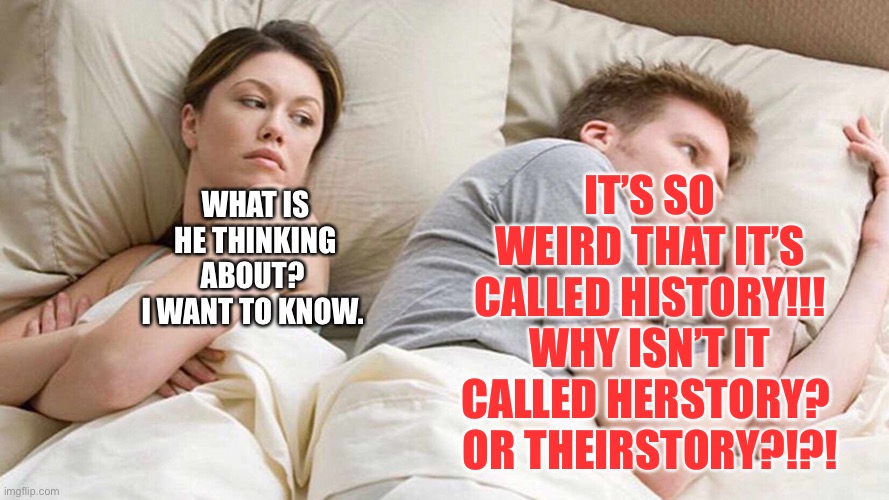
History has always been a grand tapestry woven by the hands of the powerful—until now. What if I told you that the threads of this tapestry have been frayed, deliberately snipped by those who feared the full picture? The erasure of women from the annals of time isn’t just an oversight; it’s a calculated omission, a silent coup d’état against half of humanity. And yet, we’ve been conditioned to accept it as normal. But what if we stopped laughing at “herstory” as a punchline and started treating it as the correction it truly is? What if the joke was never on us, but on the architects of a narrative that left us out in the cold?
The Archive of Absence: Where Women Vanished Like Footnotes in a Manuscript
Imagine walking into a library where every book on philosophy, science, or politics is missing a crucial chapter—one that was torn out by an invisible hand. That’s the reality of historical archives. Women’s contributions weren’t just ignored; they were systematically excised, as if their existence was an inconvenient footnote in the grand narrative of human progress. The Renaissance wasn’t just a rebirth of art and thought—it was a selective amnesia, a cultural lobotomy that privileged the voices of men while consigning women to the shadows of obscurity.
Consider Hypatia of Alexandria, a mathematician and philosopher whose murder marked the end of an era. Her story wasn’t just erased—it was weaponized. The men who killed her didn’t just silence a woman; they silenced an entire way of thinking, one that didn’t fit neatly into the patriarchal mold. And yet, we’re expected to believe that history is neutral, that the absence of women is a natural consequence of their “lack of impact.” What a convenient lie. What if herstory isn’t a joke, but the key to unlocking a truth so radical it terrifies those who’ve spent centuries hoarding the narrative?

The Great Gaslighting: How Patriarchy Rewrote the Script
Gaslighting isn’t just a psychological tactic—it’s the foundation of historical revisionism. For centuries, women’s achievements were either attributed to men or dismissed as anomalies. Rosalind Franklin’s X-ray crystallography, which was instrumental in discovering the DNA double helix, was credited to Watson and Crick. Ada Lovelace, the world’s first computer programmer, was reduced to a footnote in her own field. And let’s not forget the countless women healers burned as witches, their knowledge of medicine and botany erased in a pyre of misogyny.
This isn’t just erasure—it’s a form of intellectual vandalism. The patriarchy didn’t just ignore women; it rewrote the rules of engagement, ensuring that any woman who dared to step into the light would be met with skepticism, ridicule, or violence. And yet, we’re supposed to laugh when someone suggests that “herstory” deserves equal footing. What’s so funny about reclaiming what was stolen? What’s so amusing about correcting a narrative that has lied to us for millennia?
The great irony? The more women’s stories are suppressed, the more they simmer beneath the surface, like embers waiting to ignite. Every time a woman’s name is rediscovered, every time a forgotten manuscript is unearthed, the edifice of patriarchal history trembles. And that’s why they fear herstory—not because it’s a joke, but because it’s a reckoning.
The Unseen Hand: How Women Shaped the World Without Credit
What if I told you that the Industrial Revolution wasn’t just powered by steam engines, but by the invisible labor of women? The textile mills that fueled the economy relied on the nimble fingers of women, whose wages were so meager they were barely considered compensation. The scientific breakthroughs of the 20th century? Many were built on the backs of women like Chien-Shiung Wu, whose work in nuclear physics was crucial to the Manhattan Project, yet she was denied the Nobel Prize awarded to her male colleagues.
Women weren’t just passive observers in history—they were the architects of revolutions, the keepers of knowledge, the silent engines of progress. And yet, their stories have been reduced to whispers in the margins. The suffragettes didn’t just fight for the vote; they fought to be seen as full participants in the story of democracy. The women of the Civil Rights Movement weren’t just supporters—they were strategists, organizers, and leaders whose names history has barely bothered to record.

This isn’t just about correcting the past—it’s about rewriting the future. Because when we acknowledge the full scope of women’s contributions, we’re not just filling in gaps. We’re dismantling a system that has thrived on omission, on the lie that women’s work is secondary, that their voices don’t matter. And that’s not a joke. That’s a revolution.
The Laughter of the Oppressed: Why “Herstory” Isn’t a Punchline
There’s a reason why the idea of “herstory” is often met with eye rolls and sarcastic quips. Laughter is a coping mechanism, a way to disarm the discomfort of confronting uncomfortable truths. But what if the joke isn’t on us—what if it’s on the system that has spent centuries trying to silence us? The term “herstory” isn’t an attempt to replace history; it’s an invitation to see it fully, to recognize the distortions that have kept us in the dark.
Consider the way we talk about Cleopatra. She’s reduced to a seductress, a femme fatale whose power was wielded through manipulation rather than intellect. But what if she was a strategist, a linguist, a ruler who navigated the treacherous waters of Roman politics with cunning and precision? The erasure of her political acumen isn’t just an oversight—it’s a deliberate distortion, a way to undermine the legitimacy of women in positions of power.
The laughter fades when you realize that “herstory” isn’t a joke—it’s a mirror. And the reflection it offers isn’t flattering to those who’ve spent centuries writing history in their own image. When we laugh at the idea of herstory, we’re laughing at the idea of justice. We’re laughing at the idea that women’s stories deserve to be told, that their voices deserve to be heard. And that’s not funny at all.
The Future Written in Ink and Fire
The correction is coming. It’s already here, in the form of archives being digitized, of forgotten women being reclaimed, of stories being told that were never meant to see the light of day. The future of history isn’t just about adding women to the narrative—it’s about burning the old script and writing a new one from the ashes.
What would happen if we treated herstory not as a joke, but as the foundation of a new world? A world where women’s contributions are celebrated, where their voices are amplified, where their stories are told with the same reverence as those of men? It’s not just a correction—it’s a rebirth. And it’s long overdue.
The joke’s on them. Because history wasn’t written by the powerful. It was written by the erased. And now, we’re taking it back.







Leave a Comment