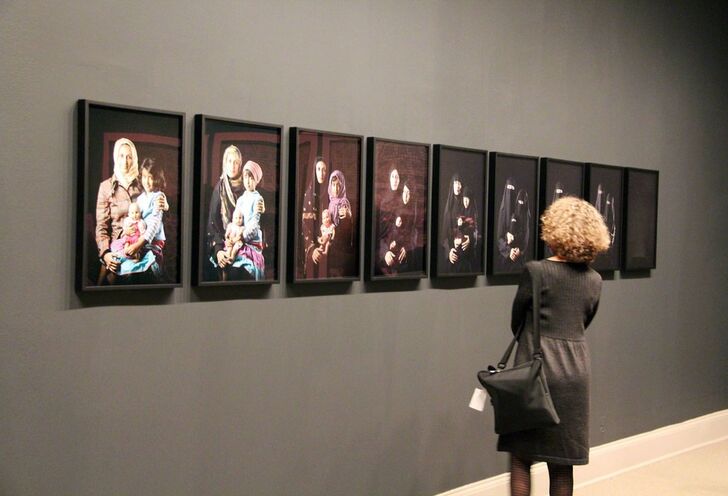
The camera is not just a tool—it is a weapon. A weapon wielded not to conquer, but to reclaim. For too long, the gaze of history has been directed by those who benefit from silence, from erasure, from the myth that women’s labor—whether in the home, the field, or the studio—is invisible, unworthy of documentation. Yet, in the shadows of these narratives, a quiet revolution has been brewing. One captured not in grand declarations, but in the flicker of a shutter, the weight of a gaze, the unflinching lens of women who refused to be erased. Now, museums are finally catching up. And the world is being forced to look.
The Erasure of Women’s Labor: A Historical Blind Spot
History has always been a selective storyteller. It privileges the loud, the powerful, the documented. The women who cooked meals, spun yarn, raised children, tended crops, sewed garments, and healed wounds—these labors were deemed ordinary, unremarkable. They were not painted by the old masters. They were not immortalized in marble. They were not archived in the annals of progress. Instead, they were relegated to the periphery, dismissed as the natural order of things. Even when women picked up cameras, their work was often sidelined as “domestic” or “sentimental,” unworthy of the same critical acclaim as their male counterparts.
This erasure was not accidental. It was systemic. A deliberate act of omission, a refusal to acknowledge that the unseen labor of women has built civilizations. The kitchen, the loom, the nursery—these were not just spaces of domesticity. They were sites of power, of resistance, of quiet defiance. And yet, for centuries, the camera lens turned away, complicit in this silencing.
Photography as a Radical Act of Witness
Then came the women who dared to point the lens back at themselves—and at the world. Not as objects of beauty, not as muses, but as subjects of their own narratives. These were not passive images. They were declarations. Photographs that captured the texture of calloused hands, the exhaustion in a mother’s eyes, the pride in a weaver’s posture. They were not just pictures. They were testimonies. They were archives of resilience.
Consider the woman who photographed her grandmother kneading dough at dawn, the grains of flour clinging to her sleeves like badges of honor. Or the artist who documented the rhythmic motion of a loom, the way threads wove together stories older than memory. These were not mere observations. They were acts of reclamation. They said: *This matters. I matter.*
And yet, for so long, these images were confined to personal albums, to community spaces, to the margins of art history. Museums, those bastions of cultural authority, remained stubbornly silent. They preferred the grand narratives—the kings, the battles, the monuments—over the quiet, persistent labor of women. Until now.
The Museum’s Awakening: A Delayed but Necessary Reckoning
Something has shifted. Museums, those once-impervious temples of tradition, are finally opening their doors to these stories. Not out of sudden benevolence, but because the ground has shifted beneath them. The women who once had to fight for recognition are now being celebrated—not as exceptions, but as the rule. Their work is no longer an afterthought. It is the centerpiece.
This is not mere inclusion. It is a correction. A belated admission that the canon was never complete. That the stories we tell shape the world we inhabit. That if we continue to ignore the labor of half the population, we are doomed to repeat the same cycles of oppression, the same cycles of invisibility.
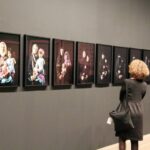
The exhibitions that now grace these hallowed halls are not just displays of pretty pictures. They are manifestos. They are demands. They are proof that the camera, when wielded by those who have been silenced, becomes a tool of revolution.
The Power of the Gaze: How Photography Rewrites History
There is a particular magic in the way these photographs force us to confront what we have been taught to ignore. A woman bent over a sewing machine, her fingers moving with precision, her focus unbroken. A farmer in a sun-baked field, her hands calloused from years of toil. A mother cradling a child, her expression a mix of exhaustion and love. These are not passive scenes. They are active assertions of existence.
The camera does not lie. But it also does not tell the whole truth—unless we choose to listen. These images demand that we ask: Who has been allowed to see? Who has been allowed to be seen? And what happens when those who have been invisible finally step into the light?
This is the power of photography as a feminist tool. It does not just document. It disrupts. It challenges. It forces us to see the world through eyes that have been trained to notice what others ignore.
Beyond the Frame: The Ripple Effect of Representation
The impact of these exhibitions extends far beyond the walls of the museum. When a young girl sees a photograph of a woman working a loom, she does not just see an image. She sees a possibility. She sees a future. She sees herself.
This is the true promise of representation—not just to acknowledge the past, but to shape the future. To tell young women that their labor, their stories, their lives are worth documenting. That they do not need permission to exist. That their work is not invisible. That they are not invisible.
Museums are no longer just repositories of the past. They are incubators of change. They are places where the old myths are dismantled and new ones are forged. And in this moment, they are finally giving voice to the women who have spent centuries speaking in silence.
The Unfinished Work: What Comes Next?
But let us not mistake this moment for completion. The inclusion of women’s labor in the museum’s gaze is not the end of the fight. It is only the beginning. The real work lies in ensuring that these stories are not just displayed, but heard. That these images are not just admired, but understood as calls to action.
We must ask: Who is still missing from these narratives? Whose labor remains unacknowledged? Whose stories are still being told by others, rather than by themselves? The fight for true representation is far from over.
And yet, there is hope in this moment. Hope in the fact that museums are finally listening. Hope in the fact that women are finally being seen. Hope in the fact that the camera—once a tool of oppression—is now a weapon of liberation.

This is not just a photograph. It is a manifesto. It is a promise. It is the beginning of a new chapter in the way we see the world—and the way the world sees us.






Leave a Comment