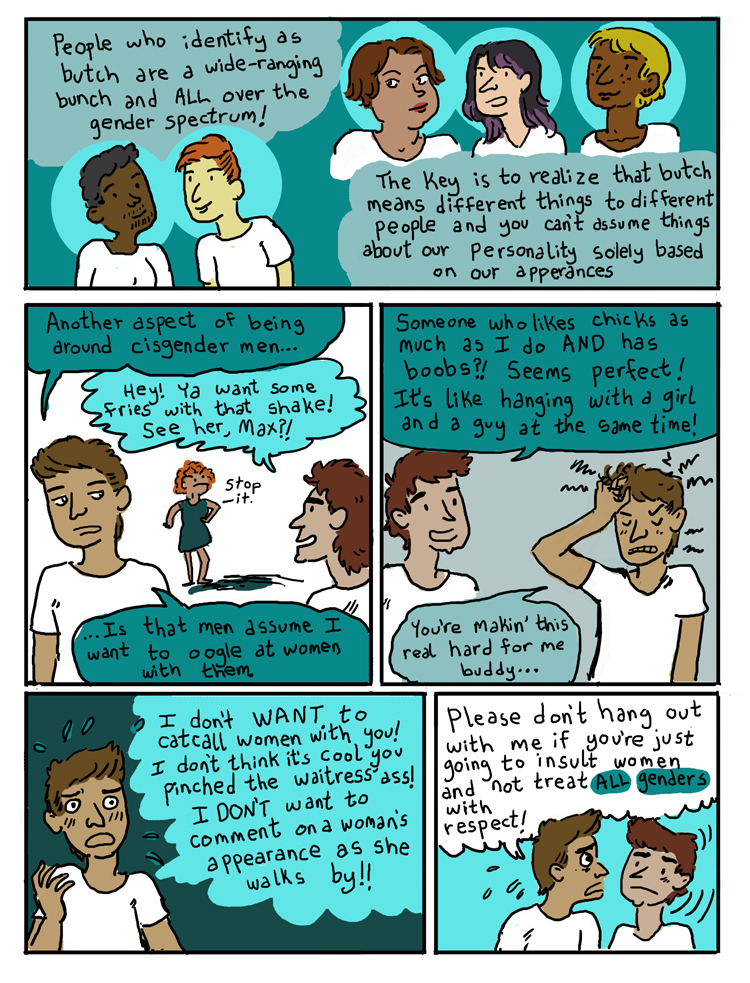
What if the most radical act of feminism isn’t just demanding equality, but refusing to shrink yourself to fit the mold of what men—and even some women—expect you to be? What if the fiercest resistance lies in the way you walk, the way you dress, the way you command space with your very presence? The butch identity isn’t just a style; it’s a defiant reclamation of power, a refusal to be boxed into femininity’s narrow confines. But reclaiming that space within feminism itself? That’s where the real friction begins.
The Butch Aesthetic: A Visual Manifesto of Defiance
There’s something inherently political about the way a butch woman carries herself—shoulders squared, stride unapologetic, a presence that demands attention without asking for permission. The butch aesthetic isn’t just about clothing; it’s a language, a silent scream that says, *I refuse to be invisible.* Whether it’s the sharp lines of a tailored suit, the deliberate slouch of a hoodie, or the unshakable confidence of a cropped undercut, these choices are deliberate. They reject the idea that femininity is the only acceptable armor for women. But here’s the catch: while the butch look can intimidate, it can also isolate. Not all feminists understand that defiance isn’t just about fighting the patriarchy—it’s about refusing to perform femininity on its terms.

Feminism’s Uncomfortable Mirror: Who Gets to Be Butch?
Here’s the uncomfortable truth: feminism has a hierarchy, and butchness doesn’t always sit at the top. While femme-presenting women are often celebrated for their ability to “pass” as non-threatening, butches are frequently met with suspicion—*Are you trying too hard? Are you alienating men on purpose?* The challenge isn’t just external; it’s internal. Some feminist spaces, despite their progressive ideals, still police gender expression. A butch woman might be told she’s “too aggressive” or “not feminist enough” because her presence disrupts the status quo. But what if that disruption is the point? Feminism isn’t a monolith, and neither is butchness. The real question is: can feminism handle the women who refuse to perform femininity for its comfort?
The Paradox of Visibility: When Being Seen Means Being Targeted
Visibility is a double-edged sword. For butch women, being seen often means being fetishized, exoticized, or worse—erased. The media loves to reduce butchness to a stereotype: the “cool girl” trope, the “lesbian until graduation” fantasy. But real butch women exist beyond these tropes, and their experiences are far more complex. They navigate a world where their very existence is politicized—whether it’s the way they’re stared at in public, the assumptions made about their sexuality, or the way their gender expression is dissected by strangers. The challenge? To be seen without being reduced to a caricature. To demand respect without having to smile or soften their edges to be palatable.

Reclaiming the Butch Body: Strength as a Radical Act
The butch body isn’t just a rejection of femininity—it’s a celebration of physicality in a world that tells women to be small. Whether it’s the calloused hands of a construction worker, the inked arms of an artist, or the broad shoulders of an athlete, butch bodies carry a history of labor, resilience, and unapologetic presence. But this strength isn’t always welcomed. Women’s bodies are policed in countless ways, but butch bodies face an additional layer of scrutiny: *Are you too strong? Too intimidating?* The challenge is to reframe this strength not as a threat, but as a form of resistance. A butch woman’s body isn’t just hers—it’s a walking protest against the idea that women must be delicate, quiet, and compliant.
The Intersectional Struggle: Butchness and Marginalized Identities
Butchness doesn’t exist in a vacuum. For women of color, disabled women, trans women, and non-binary people who embrace butch aesthetics, the struggle is compounded. A Black butch woman isn’t just fighting gender norms—she’s fighting racism, colorism, and the stereotypes that paint her as “too aggressive” or “unfeminine” in ways that white butch women might not face. A disabled butch woman might be told her body doesn’t fit the “ideal” of butchness, as if her physical limitations negate her right to claim that identity. The challenge? To center the voices of those who exist at these intersections, who navigate multiple layers of oppression while still claiming their space. Feminism must ask itself: does it truly make room for all butch women, or does it default to a white, able-bodied, cisgender ideal?
Can Feminism Handle the Butch Woman?
This is the provocative question at the heart of it all. Feminism has made strides in recognizing the diversity of women’s experiences, but butchness remains a thorn in its side. It forces a confrontation with the movement’s own biases—its tendency to prioritize certain forms of femininity over others, its discomfort with women who refuse to perform vulnerability. The butch woman doesn’t just challenge the patriarchy; she challenges feminism to live up to its own ideals. Can it embrace a woman who doesn’t just want equality, but demands the right to be unapologetically herself? The answer will define whether feminism is truly inclusive—or just another system that polices women’s bodies in new ways.
The butch identity isn’t a trend. It’s not a phase. It’s a legacy of women who have always known that the most powerful thing a woman can be is herself—without apology, without permission, without shrinking. The question isn’t whether feminism can handle the butch woman. The question is whether feminism is willing to evolve.





Leave a Comment