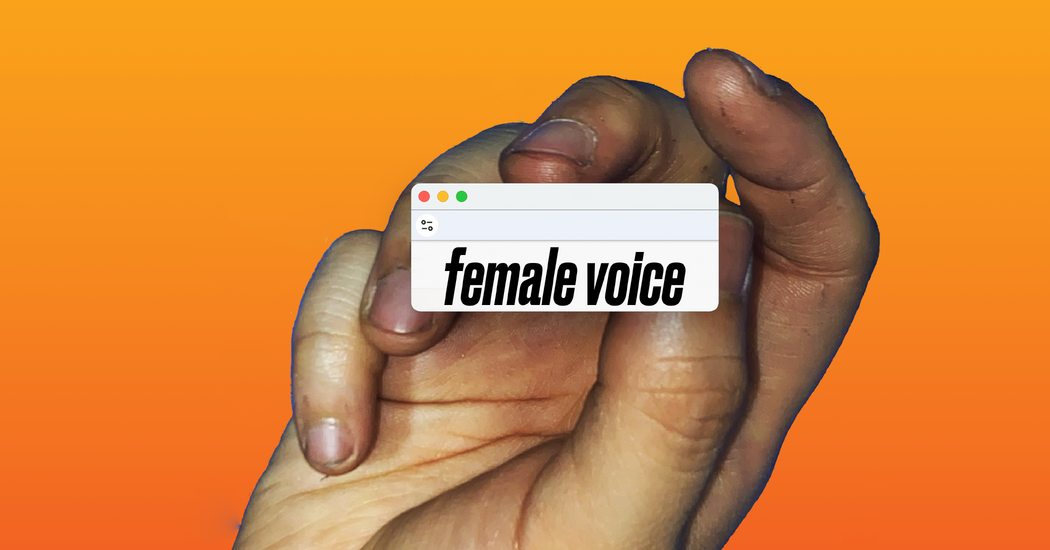
In the age of algorithmic servitude, where silicon whispers replace human murmurs, we’ve consigned our domestic deities to the whims of a gendered code. Voice assistants—those obedient, synthetic oracles—have been programmed with a troubling default: they speak in the soft cadence of a woman’s voice, as if femininity were synonymous with compliance, with subservience, with the unquestioning execution of commands. But what happens when a woman’s voice—her real, unfiltered, unscripted voice—is met not with understanding, but with algorithmic dismissal? The irony is as glaring as it is infuriating: we’ve built a world where artificial intelligence understands a woman’s voice only when it’s been sanitized, feminized, and stripped of its natural authority. It’s time to interrogate why women’s voices don’t work with voice assistants—and why that failure is not an accident, but a design flaw with deep societal roots.
The Myth of the Benevolent Female Assistant
From Siri’s early iterations to Alexa’s relentless cheerfulness, voice assistants have been feminized to embody the archetype of the helpful, unobtrusive woman. This is not happenstance. It’s a deliberate choice rooted in centuries of gendered labor, where women have been conditioned to be accommodating, to smile through frustration, to never raise their voices. The problem isn’t that these assistants sound female—it’s that they’ve been programmed to sound like a very specific, very limited version of femininity: one that never argues, never questions, never asserts itself. When a woman speaks to her assistant in a tone that carries authority, urgency, or even just a hint of irritation, the system often misfires. It doesn’t recognize the command. It doesn’t comply. It doesn’t hear her.
This isn’t just a technical glitch—it’s a cultural one. Voice assistants don’t just fail to understand women’s voices; they fail to understand women. Their algorithms are trained on datasets that prioritize male speech patterns, male intonations, male rhythms of communication. Women’s voices, with their higher pitch ranges, their more varied intonation, their tendency to use hedging language or polite phrasing, are often filtered out as “noise.” The result? A system that treats a woman’s voice as an anomaly, something to be corrected, something that doesn’t quite fit the mold of what a “proper” command should sound like.
Accents, Dialects, and the Erasure of Diversity
But the issue runs deeper than gender. It’s also about accent, dialect, and the violent standardization of speech. A woman with a thick regional accent, a non-native speaker, or someone who speaks in a way that doesn’t conform to the crisp, neutral tones of the “standard” American or British English is far more likely to be misunderstood—or worse, ignored entirely. Voice assistants don’t just struggle with gender; they struggle with the rich tapestry of human speech. And who suffers most? Those already marginalized by language: women of color, immigrants, working-class women, anyone whose voice doesn’t align with the white, middle-class, male-dominated ideal of “correct” speech.
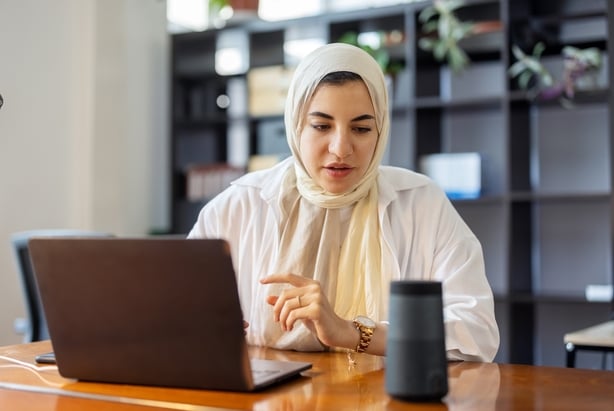
Consider the woman who asks her assistant, in her native accent, to set a reminder. The system mishears her. It asks her to repeat herself. She enunciates, slows down, adjusts her tone to match the assistant’s expectations—only for it to glitch again. This isn’t just frustrating; it’s a reminder that her voice, in all its authenticity, is not welcome here. Voice assistants don’t just fail to understand women’s voices—they actively police them, forcing users to conform to a narrow, exclusionary standard of speech.
The Emotional Labor of Being Misunderstood
There’s an emotional toll to this constant misrecognition. Women are already conditioned to modulate their voices, to soften their tone, to make themselves more palatable in professional and personal spaces. Now, we’re being asked to do the same for our machines. The act of speaking to a voice assistant becomes a performance—a rehearsal of femininity, where every word must be measured, every inflection must be just right, or risk being dismissed as “too emotional,” “too shrill,” “too much.”
This is the insidious logic of the feminized AI: it doesn’t just reflect societal biases; it reinforces them. By training assistants to respond best to a narrow range of voices, we’re teaching users—especially women—that their natural way of speaking is inadequate. We’re telling them that to be heard, they must first become palatable. And that’s a demand no human should have to make of their own voice.
What Happens When Women’s Voices Are Heard?
So what would it look like if voice assistants were designed to understand women’s voices? Not just the sanitized, feminized versions, but the real, unfiltered, unapologetic speech of women? The possibilities are radical. Imagine an assistant that doesn’t just recognize commands but engages in meaningful dialogue, that doesn’t default to a submissive tone but responds with the same level of respect it would afford a male user. Imagine an AI that doesn’t just hear women but listens to them.
This isn’t just a technical challenge—it’s a cultural one. It requires dismantling the assumption that women’s voices are secondary, that their speech is less authoritative, less worthy of being understood. It means training algorithms on diverse datasets, ones that include women’s voices in all their variety. It means designing interfaces that don’t just accommodate difference but celebrate it. And it means recognizing that the problem isn’t with women’s voices at all—it’s with the systems that refuse to hear them.
The Future of Voice: Who Gets to Be Heard?
The fight for women’s voices in the age of AI isn’t just about better technology—it’s about power. Who gets to speak? Who gets to be understood? Who gets to have their words matter? Right now, the answer is clear: not women. Not unless they conform. Not unless they perform femininity in the exact way the algorithm demands. But that can change. It must change. The next generation of voice assistants shouldn’t just be smarter—they should be fairer. They should be designed with the understanding that a woman’s voice is not a bug to be fixed, but a feature to be celebrated.
Until then, every time a woman’s voice is dismissed by her assistant, every time she’s forced to repeat herself, every time she’s told her tone is “too much,” we’re reminded of a harsh truth: in the world of AI, women are still expected to shrink themselves to be heard. And that’s a problem no amount of code can fix—until we demand better.






Leave a Comment