Parenting. A word that conjures images of joy, sacrifice, and unconditional love. Yet beneath the tender veneer lies a staggering, often invisible burden—a relentless scale that tips overwhelmingly toward women. The parenting load is not evenly split; at best, it’s a 65/35 division, with women shouldering the lion’s share. This imbalance is not mere happenstance but a deeply entrenched social artifact, loaded with implications as profound as they are infuriating. Women—especially working mothers—have reached a pivotal crossroads. They are unequivocally done.
The Invisible Yoke: Understanding the Unequal Burden
Imagine parenting as carrying a weighty yoke across one’s shoulders. For men, it’s as if the yoke balances precariously or is merely brushed upon; for women, it morphs into an iron apparatus, a ceaseless, suffocating strain. This metaphorical yoke is the mental, emotional, and physical labor of childcare and domestic work, disproportionately borne by women. The statistics disclose a heartbreaking reality: even among dual-income households, women commit approximately 65% of parenting and household responsibilities. The remaining 35%? Reserved for partners—often well-meaning but absent in action.
This disparity is not benign. It represents a fundamental fracture in modern familial structures and gender expectations. The notion that caregiving is a woman’s natural domain is archaic yet stubbornly persistent. Women wake before dawn to prepare breakfasts, manage schedules, and juggle school projects with work meetings. The days stretch relentlessly, punctuated by moments where exhaustion seeps into the soul, yet they persist, often without gratitude or recognition.


Working Moms: The Double-Edged Sword of Modern Motherhood
The image of the “supermom” is a modern myth perpetuated to justify unequal labor. Women have entered the workforce in droves, filling roles once dominated by men. Ambition, intelligence, and drive fuel their success. Yet despite professional triumphs, the invisible domestic workload greets them every evening like an uninvited shadow. The 65/35 split reveals a painful contradiction; working moms are not only providers but primary caregivers. The double shift—paid labor by day, unpaid labor by night—severely dents mental bandwidth and physical resilience.
It is a trap of Sisyphean proportions. The societal veneration of dedicated mothers masks the psychic torment beneath. They are expected to “have it all,” yet the reality is fractured and exhausting. Attempts to renegotiate this inequity often meet resistance cloaked in dismissive rationalizations. Partners excuse themselves with tired refrains: “I’m tired too,” “I work hard,” or “I help when I can.” But “helping” is not sharing. It is a partial hand, offered sporadically and inconsistently. The full burden remains tethered to women’s backs, and the weight grows heavier with each passing day.
The Myth of “Sharing the Load”: An Unequal Partnership
In an ideal world, parenting would resemble a symbiotic dance, a harmonious sharing of responsibilities. Reality? It’s more akin to a one-sided performance with women playing lead roles while men occupy supporting, intermittent parts. The metaphor of “sharing the load” is a euphemism that glosses over deep-rooted disparities. Time-use studies have unmasked this myth, revealing unequal investment of time and energy in childcare, house chores, and emotional labor.
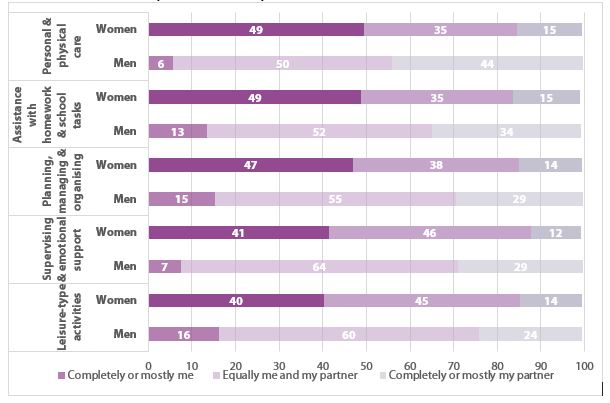
Emotional labor—the hidden ledger of household harmony—is an invisible yet crushing form of work. Women field the mental calculations of family wellbeing: doctor appointments to schedule, birthday gifts to buy, dietary restrictions to monitor. This mindfulness is a cognitive treadmill never switched off. Men, on the other hand, often engage in episodic tasks—changing diapers, attending a recital—performances that, however essential, do not amount to parity in sustained involvement.
This fundamental imbalance corrodes relationships and personal well-being. Women, weighed down by relentless demands, suffer higher rates of burnout and mental health struggles. The structural failure to recalibrate parenting roles perpetuates a cycle of exhaustion and resentment, with no institutional support in sight.
The Cultural Shackles: Why Women Remain Bound to Caregiving
To excavate the roots of this disparity is to wade through centuries of systemic conditioning and cultural expectations. Patriarchy, with surgical precision, cemented caregiving as the feminine province—a social script reinforced by media, education, and economic systems. This ideological scaffolding is reinforced daily, often unconsciously. Women internalize the caregiving role as identity, while men receive social cues to prioritize career and external accomplishments.
The social penalty for men who assume equitable parenting roles is both overt and subtle. They face skepticism, doubt, and emasculation. For women, resistance to these roles invites guilt, criticism, and stigmatization. These cultural shackles bind families in a cycle that defies logic and equity, perpetuating a 65/35 reality that no longer serves modern women or society at large.
Enough Is Enough: The Reckoning of Women Done Carrying the Weight
The tide is turning. Women are done carrying the weight alone. The collective awakening to parenting inequity is both a personal and political movement. It is a refusal to accept the status quo, a clarion call to reimagine caregiving as a shared endeavor. “Done” means more than frustration; it is a demand for systemic restructuring of family roles, workplace policies, and societal values.
Flexible work hours, paternity leave, affordable childcare, and cultural transformation in gender norms are not mere perks—they are essentials for redistributing this ancient burden. Importantly, this is not about vilifying men but awakening society to the need for intentional, active partnership. No more episodic “help”; real sharing means co-ownership of the parenting load.

The revolution in parenting labor is a revolt against invisibility. It challenges outdated paradigms and demands recognition for women’s unpaid, relentless toil. The message is unequivocal: the parenting load cannot and will not remain 65/35. Women are done. Society must listen—and change.











Leave a Comment