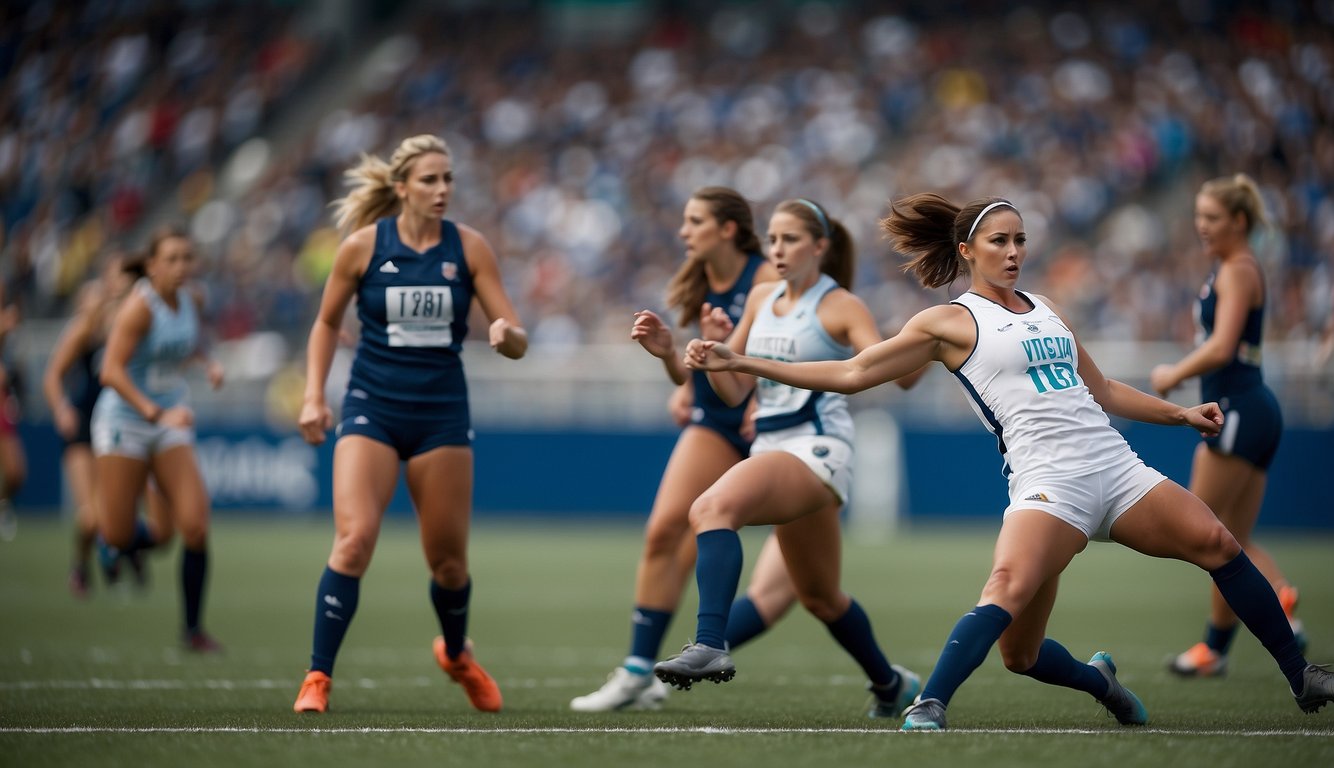
The myth that women’s sports are inherently less captivating than men’s is not just outdated—it’s a carefully constructed illusion, a smokescreen obscuring the raw, unfiltered truth: women’s athletics aren’t failing the audience; they’re being starved of the oxygen they need to thrive. The fascination with this disparity isn’t just about numbers or viewership; it’s about power, perception, and the deliberate erasure of excellence when it doesn’t fit the narrative. What if the real question isn’t why women’s sports aren’t popular, but why they’ve been systematically denied the resources to become so? The answer lies not in the athletes themselves, but in the infrastructure that has long prioritized men’s dominance over women’s potential.
The Illusion of Popularity: A Numbers Game Rigged Against Women
We’ve been conditioned to measure success in sports by broadcast deals, sponsorship dollars, and stadium attendance—metrics that have historically favored men’s leagues. Women’s sports, by contrast, are often dismissed as niche, their audiences labeled as “niche” as if devotion to excellence were a limited-edition commodity. Yet, when women’s matches are given the same promotional weight, the numbers tell a different story. The Women’s World Cup in 2019 shattered records, drawing over a billion viewers, yet the narrative persisted: women’s soccer just isn’t as exciting. This isn’t a failure of the sport; it’s a failure of investment. The same infrastructure that ensures men’s games are beamed into every living room, bar, and airport lounge is the same one that relegates women’s competitions to late-night slots or paywalled streams. The disparity isn’t in the product—it’s in the platform.
Consider the optics: a men’s tennis match at a Grand Slam is a global spectacle, while a women’s final is often an afterthought, tucked between commercial breaks. The difference isn’t in the skill of the athletes—it’s in the allocation of airtime, the production budgets, and the cultural permission to treat women’s sports as secondary entertainment. This isn’t just unfair; it’s a self-fulfilling prophecy. When women’s games are consistently underpromoted, underfunded, and undervalued, the audience that might have discovered them never gets the chance. The fascination isn’t with the lack of interest—it’s with the manufactured scarcity of opportunity.
The Funding Gap: Where Potential Goes to Die
Follow the money, and the rot becomes visible. Women’s sports receive a fraction of the funding poured into men’s leagues, not because they’re less profitable, but because the systems that control sports media and sponsorships have long operated on the assumption that women’s athletics are a charity case rather than a commercial goldmine. In the U.S., women’s college sports teams receive 42% less funding than men’s, despite generating nearly the same revenue in some cases. Globally, the gap is even wider: FIFA’s 2023 Women’s World Cup prize pool was $110 million, while the men’s was $440 million—despite the women’s tournament drawing record-breaking viewership. This isn’t a coincidence; it’s a pattern of deliberate undervaluation.
The consequences are brutal. Without funding, women’s teams can’t afford top-tier coaching, state-of-the-art facilities, or the kind of medical and nutritional support that keeps male athletes at peak performance. Injuries go untreated. Training regimens are cut short. The best athletes burn out or switch to sports where their talents are recognized. Meanwhile, men’s leagues enjoy tax breaks, corporate sponsorships, and media deals that ensure their dominance is self-perpetuating. The funding gap isn’t just a financial issue—it’s a feedback loop of exclusion, where women are systematically denied the tools to compete on equal footing. And then we wonder why the results don’t match up.
But here’s the kicker: when women’s sports *are* given the resources, they thrive. The WNBA, despite its paltry salaries and limited visibility, has seen a 66% increase in viewership over the past five years. The NWSL, once dismissed as a “hobby league,” now draws sell-out crowds and lucrative sponsorships. The lesson is clear: women’s sports aren’t unpopular—they’re underfunded. The fascination isn’t with their inferiority; it’s with the untapped potential that’s been stifled for decades.
The Media’s Complicity: How Narratives Shape Reality
Media coverage is the oxygen of modern sports culture, and for women’s athletics, that oxygen has been thin and intermittent. Studies show that women’s sports receive just 4% of total sports media coverage in the U.S., despite making up nearly half of all athletic participation. When they *are* featured, it’s often in the context of their personal lives—marriage, motherhood, fashion—rather than their prowess on the field. The message is clear: their bodies are objects of curiosity, not instruments of dominance. This isn’t just lazy journalism; it’s a form of soft censorship, ensuring that women’s sports remain in the cultural periphery.

The framing matters. When a male athlete scores a goal, the narrative is about skill, strategy, and dominance. When a female athlete does the same, it’s often about her “grit” or her “inspiration,” as if her success were an anomaly rather than the result of years of training. This isn’t just reductive—it’s a way to keep the spotlight on men’s sports by default. The media doesn’t just reflect reality; it constructs it. And for decades, it has constructed a reality where women’s sports are an afterthought, a sideshow, a footnote in the grand narrative of athletic achievement.
But the tide is turning. Social media has given athletes like Serena Williams, Alex Morgan, and Megan Rapinoe platforms to bypass traditional gatekeepers. Documentaries like *LFG* and *Battle of the Sexes* have reframed the conversation, highlighting the systemic barriers rather than the athletes’ supposed shortcomings. The fascination isn’t with women’s sports being “less than”—it’s with the stories of resilience, innovation, and sheer force of will that have been ignored for too long.
The Cultural Myth: Why We’re Still Sold the Lie
The idea that women’s sports are inherently less exciting is a cultural myth, one that serves a very specific purpose: to justify the status quo. It’s easier to blame the athletes than to confront the systems that have kept them in the shadows. This myth is perpetuated by commentators who dismiss women’s basketball as “not as physical” (despite WNBA players outworking their male counterparts in conditioning), by sponsors who assume female athletes don’t have the same commercial appeal, and by fans who’ve been conditioned to expect less. But the truth is far more radical: women’s sports aren’t less than—they’re different, and that difference is their strength.
Women’s athletics often prioritize technical skill, tactical brilliance, and endurance over brute force. Soccer, tennis, and gymnastics reward precision and artistry in ways that football and basketball don’t. Yet these qualities are dismissed as “less exciting” because they don’t fit the traditional mold of sports as a spectacle of physical dominance. This isn’t a failing of the sports themselves; it’s a failing of our imagination. What if the fascination with women’s sports lies in their ability to redefine what athleticism can be? What if the real thrill isn’t in watching bodies collide, but in witnessing the fusion of grace and power, strategy and stamina?
The cultural myth is also a financial one. Advertisers and broadcasters assume that women’s sports won’t attract the same demographics as men’s, so they invest accordingly. But this is a chicken-and-egg problem: the audience isn’t there because the exposure isn’t there. When brands like Nike, Budweiser, and Visa finally commit to women’s sports, the results are staggering. The 2023 FIFA Women’s World Cup saw a 118% increase in social media engagement when sponsors amplified the coverage. The lesson is clear: the market isn’t the problem—the narrative is.
The Way Forward: Breaking the Cycle
Change won’t come from waiting for the systems to catch up. It will come from demanding equity at every level—from the boardrooms of sports federations to the living rooms where fans decide what to watch. The first step is to stop treating women’s sports as a novelty and start treating them as the main event. That means equal pay, equal airtime, and equal investment in infrastructure. It means media outlets hiring more women in editorial and production roles to ensure coverage isn’t just about the athletes’ personal lives but their athletic achievements. It means sponsors recognizing that women’s sports aren’t a charity case but a commercial opportunity waiting to be seized.
It also means challenging the narratives that have kept women’s sports in the shadows. When a commentator says a women’s match was “entertaining despite the lack of physicality,” call it out. When a sponsor assumes a female athlete’s appeal is limited to her appearance, demand better. The fascination with women’s sports isn’t about their inferiority—it’s about the untold stories, the unrecognized talent, and the unshakable will to compete against all odds. The real question isn’t why women’s sports aren’t popular. It’s why we’ve been trained to ask that question in the first place.









Leave a Comment