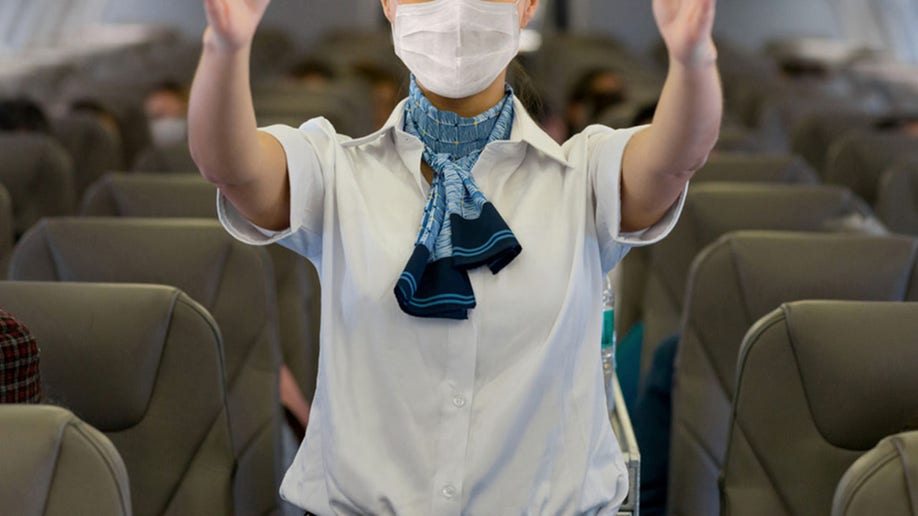
Picture this: a woman steps onto a plane, her uniform a corset of corporate expectations, her skirt a silent testament to the gendered gaze that has policed her body for decades. The aisle stretches before her, not just a path to the galley, but a gauntlet of judgment—each button, each hem, a reminder that her presence is not just tolerated, but meticulously curated to satisfy an audience she never chose. This is the reality of flight attendants, whose uniforms have long been less about functionality and more about the performative display of femininity, a relic of an industry that once treated its crew as much as adornments as they were employees. But the winds of change are stirring. Airlines are finally beginning to unravel the seams of these archaic rules, and the question lingers: why did it take so long?
The Corset of Corporate Femininity: How Uniforms Became a Cage
Flight attendants were not always the glamorous, subservient figures we associate with mid-century air travel. In the 1930s, they were nurses—uniformed professionals whose attire signaled competence, not compliance. But as commercial aviation boomed, so did the objectification of its workforce. By the 1950s and 60s, the industry had transformed flight attendants into living advertisements for femininity: skirts mandated, heels prescribed, makeup obligatory. These weren’t just dress codes; they were decrees on how a woman’s body should be presented to the world. The message was clear: your worth is tied to your appearance, and your role is to please.
The irony? These rules were never about safety or efficiency. Studies have shown that high heels impair movement, restrictive skirts limit mobility, and mandatory makeup serves no functional purpose. Yet airlines clung to them, framing these constraints as “professionalism.” The truth was far darker: uniforms became a tool of control, ensuring that flight attendants embodied a narrow, heteronormative ideal. A woman who dared to challenge the skirt length or the heel height risked being labeled “unprofessional”—a euphemism for defiance in a system designed to keep her in her place.

Even today, remnants of this legacy persist. Many airlines still enforce gendered uniform policies, with women required to wear skirts and men permitted trousers. The justification? Tradition. The reality? A refusal to acknowledge that tradition is often just prejudice in disguise. The uniform is not a neutral garment; it is a political statement, a daily reminder that the aviation industry has long treated its female employees as much as decorative objects as it has as professionals.
The Double Standard in the Skies: Why Men’s Uniforms Are a Different Beast
Walk into any airport, and you’ll notice the stark contrast: men in trousers, women in skirts. The disparity isn’t just aesthetic; it’s ideological. For men, uniforms are functional—designed for movement, durability, and comfort. For women, they are performative—tailored to fit an impossible standard of “feminine elegance.” A man’s uniform is a uniform. A woman’s uniform is a costume.
This double standard extends beyond fabric choices. Men are rarely policed for their grooming, while women face scrutiny over hair length, nail polish, and even the shade of their lipstick. The message is unmistakable: a man’s body is a tool; a woman’s body is a display. Airlines have long argued that these rules are about “brand image,” but whose image are they really protecting? The answer is as uncomfortable as it is obvious: the male gaze.
Consider the language used in uniform policies. Terms like “neat,” “tidy,” and “professional” are often code for “feminine.” A woman who wears trousers may be told she’s “unladylike.” A man who opts for a skirt? Rarely, if ever, faces the same judgment. The system is rigged to punish deviation, ensuring that flight attendants conform to a binary, heteronormative ideal. It’s not about safety or efficiency—it’s about control. And control, in an industry built on the backs of women, has always been the name of the game.
The Psychological Toll: When Your Uniform Becomes Your Prison
The mental burden of these rules is often overlooked. Flight attendants are subjected to constant evaluation—not just of their service, but of their appearance. A wrinkle in a skirt, a smudge of lipstick, a hair out of place—each is a potential mark against them. The psychological toll is immense. Studies have shown that women in uniformed professions report higher levels of anxiety and self-consciousness, not because of the work itself, but because of the relentless scrutiny of their bodies.
Then there’s the issue of comfort—or the lack thereof. Flight attendants work 12-hour shifts, often in cramped spaces. High heels cause chronic pain. Tight skirts restrict movement. Yet airlines continue to enforce these rules, framing them as “non-negotiable.” The result? A workforce that is physically and emotionally drained, all for the sake of maintaining an outdated aesthetic. It’s a form of institutional gaslighting: you are told that your discomfort is trivial, that your pain is a necessary sacrifice for the “image” of the airline.
And let’s not forget the intersectional impact. Women of color, plus-size women, and those who don’t conform to traditional beauty standards face even greater scrutiny. For them, the uniform is not just a cage—it’s a shackle. They are held to an even narrower standard, their bodies dissected and judged in ways their white, slender counterparts rarely experience. The message is clear: if you don’t fit the mold, you don’t belong.

The psychological toll doesn’t end with the uniform. It seeps into every aspect of a flight attendant’s life. The constant pressure to conform creates a culture of self-doubt, where women internalize the idea that their worth is tied to their appearance. They learn to shrink themselves—literally and figuratively—to fit into a system that was never designed for them. It’s a cycle of oppression, one that is only now beginning to unravel.
The Tipping Point: Why Airlines Are Finally Rethinking Uniforms
The shift is slow, but it is happening. Airlines like Alaska and Qantas have begun to relax their gendered uniform policies, allowing employees to choose attire that aligns with their gender identity and comfort. It’s a small step, but a significant one. For the first time in decades, flight attendants are being given agency over their own bodies. The question is: why now?
Part of the answer lies in the changing attitudes of younger generations. Millennials and Gen Z workers are demanding more from their employers—not just fair pay, but respect. They refuse to be treated as decorative objects, and they’re vocal about it. Social media has amplified their voices, exposing the absurdity of uniform policies that prioritize aesthetics over humanity. Airlines can no longer hide behind tradition; they must confront the reality that their rules are outdated, discriminatory, and, frankly, ridiculous.
There’s also the issue of talent retention. The aviation industry is facing a severe shortage of flight attendants, and rigid uniform policies are a turnoff for many potential employees. Why would someone choose a career that demands they sacrifice their comfort and identity? Airlines are finally realizing that if they want to attract top talent, they need to offer more than just a paycheck—they need to offer dignity.
And let’s not underestimate the power of activism. Flight attendants have long been at the forefront of labor rights movements, fighting for better pay, safer working conditions, and, now, the right to wear what they please. Their collective voice is impossible to ignore. When flight attendants speak out, the world listens—and airlines are starting to take notice.
The Future of Flight: A Uniform Revolution or Just a Band-Aid?
So, where do we go from here? The relaxation of gendered uniform policies is a start, but it’s not enough. True change requires a complete overhaul of the industry’s attitudes toward its workforce. Uniforms should be functional, comfortable, and inclusive—not a tool of oppression disguised as professionalism.
Imagine a world where flight attendants can wear whatever makes them feel confident and capable. Trousers for those who prefer them. Skirts for those who do. Gender-neutral options for those who don’t fit the binary. No more policing of hemlines or heel heights. No more judgments based on appearance. Just a workforce that is free to focus on what truly matters: keeping passengers safe and comfortable.
The revolution won’t happen overnight. Airlines will resist, clinging to tradition like a drowning man to a life preserver. But the tide is turning. The younger generation won’t stand for it. The activists won’t let it slide. And the flight attendants themselves? They’re done being silent.
The uniform is more than just fabric and thread. It’s a symbol of an industry’s history—a history of sexism, of control, of bodies policed and voices silenced. But it’s also a symbol of change. The cracks are showing. The revolution is coming. And when it arrives, it will be as unstoppable as the flight attendants who have spent decades fighting for their right to take off—not just their heels, but the shackles of the past.





Leave a Comment