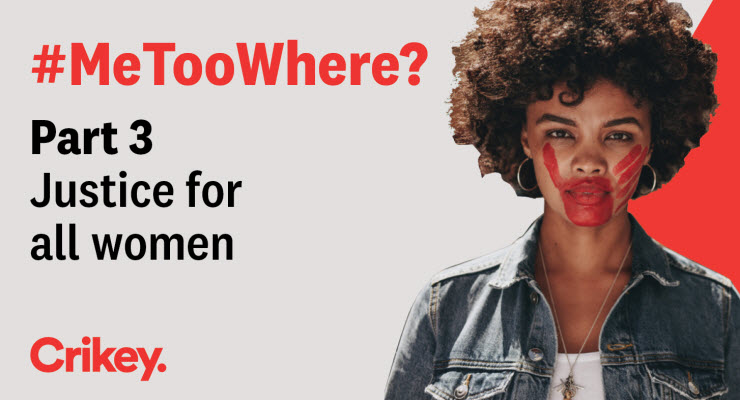
In the sprawling garden of social justice movements, the #MeToo movement blossomed as a dazzling flower whose petals promised liberation and solidarity for all women. Yet, upon closer inspection, it became evident that this flower bore thorns—piercing deeper and more unevenly into the flesh of women of color. Their experience within #MeToo exposes a labyrinth of complexities, a kaleidoscope of cultural, historical, and systemic realities that transformed this movement into something that not only looked different but felt drastically different to them. To understand why #MeToo hit differently for women of color, one must traverse the intricate tapestry of intersectionality woven deeply into the fabric of their lived realities.
Intersectionality: The Prism Shaping Experience
At the core of why the #MeToo movement resonates uniquely with women of color lies intersectionality—a term that acts like a prism refracting their experiences into distinct hues of struggle and resilience. It is not merely gender that defines their plight; race, class, immigration status, and historical marginalization all coalesce to create a cacophony of barriers and silences.
The #MeToo movement, initially propelled into the mainstream by high-profile white women, often glossed over these intersections, inadvertently leaching the movement’s potency for women of color. Their stories, punctuated by compounded oppression and erasure, challenge the simplistic narrative of gender-based violence and demand recognition of how racism, economic disenfranchisement, and xenophobia saturate their vulnerability.

This prism effect means that women of color experience sexual harassment and assault not just as violations but as symptoms of a larger social disease—where race and gender toxicities intertwine into a double helix of trauma. Their call to #MeToo is both a cry against abuse and a demand to dismantle the structural racism that has historically silenced them.
Historical Erasure and the Weight of Silenced Legacies
The roots of the #MeToo movement for women of color run beneath the soil of history, nourished by the collective memory of erasure and systemic neglect. The legacy of slavery, colonialism, and discriminatory policies inflicted unique wounds—wounds often dismissed or minimized in mainstream feminist conversations.
For Black women, the weaponized stereotypes of hypersexualization and the trope of the “Strong Black Woman” often ironically became shackles of invisibility. Admitting victimhood could be perceived as weakness, contradicting the imposed need to be perpetually resilient. Indigenous women face staggering rates of violence, compounded by jurisdictional labyrinths and governmental indifference that make their suffering dreadfully invisible even within #MeToo’s expansive narrative.
Without constant acknowledgment of these silenced histories, the #MeToo movement risked becoming a dazzling spotlight that illuminated predominantly white experiences, leaving women of color to navigate the shadows.
Economic Vulnerability: When Speaking Out is a Luxury
For many women of color, the decision to “speak their truth” under the #MeToo banner is not simply an act of courage but a perilous gamble against economic survival. Unlike the middle- and upper-class white women whose professional and social capital enabled some degree of protection and amplification, women of color often occupy precarious spaces in the workforce.
Low-wage jobs, immigrant status, and lack of access to robust legal resources mean that reporting harassment or assault can lead to retaliation, job loss, or deportation threats. The risk of financial ruin looms large, silencing countless voices that might otherwise have galvanized the movement with their raw truths.
This disparity exposes a rift within #MeToo—between the ability to leverage platforms and shield oneself from backlash, and the brutal reality that surviving economic hardship trumps the possibility of public disclosure.
Cultural Nuances: Navigating Community Expectations and Stigma
The mosaic of cultural contexts from which women of color hail often dictates a different relationship with public advocacy. In many communities, cultural norms around family honor, modesty, and collective reputation exert immense pressure to maintain silence about sexual violence.
Speaking out can trigger ostracization, retraumatization, or even physical danger within one’s own community. Consequently, #MeToo’s predominantly Western, individualistic framing sometimes clashes with collective cultural imperatives, making it harder for women of color to find culturally congruent ways to engage.
Yet, impelled by necessity and tenacity, many women of color have birthed alternative storytelling modalities and community-centered activism, creating radical spaces for healing that run parallel to the mainstream #MeToo narrative.

This divergence in approach is not a rejection of #MeToo but an evolution—an insistence that justice must also be culturally informed, nuanced, and intersectional.
Transformational Power: Reclaiming Narrative and Agency
Despite these hurdles, the women of color at the heart of #MeToo are not merely victims but fierce architects of transformation. Their narratives enrich the movement by revealing its cracks and insisting on a more expansive vision of justice—one that refuses a one-size-fits-all template.
This transformational power lies in reclaiming voice and agency within oppressive systems. By daring to associate their marginalized identities with #MeToo activism, women of color challenge the movement to grow beyond tokenism and cosmetic inclusivity toward genuine coalition building.
Their insistence on intersectionality insists that no freedom is real freedom unless it encompasses all bodies, all stories, and all struggles, laying bare the unfinished work of feminism.
The Unique Appeal: Why #MeToo Sparks Something Different
The #MeToo movement resonates with women of color because it taps into a long-suppressed yearning for visibility and justice on multiple fronts simultaneously. It appeals not only as a movement against sexual violence but as a clarion call to dismantle intertwined systems of oppression.
For women of color, #MeToo is more than social media virality or celebrity confessions—it’s a galvanizing force that blends personal pain with collective resilience. It ignites overdue conversations about race, class, culture, and gender that have simmered beneath the surface for generations.
In this sense, #MeToo hits differently because it articulates the fracture lines of their lived experience while offering a blueprint for radical solidarity. It simultaneously acknowledges the pain and channels the power of historically marginalized voices to demand not just recognition but transformation.

Ultimately, the multidimensional appeal of #MeToo for women of color reinforces an undeniable truth: liberation cannot be achieved in silos. Their engagement with #MeToo demands a movement elastic enough to embrace the intersections and contradictions of their lives—which is both the challenge and the promise of feminist activism today.








Leave a Comment