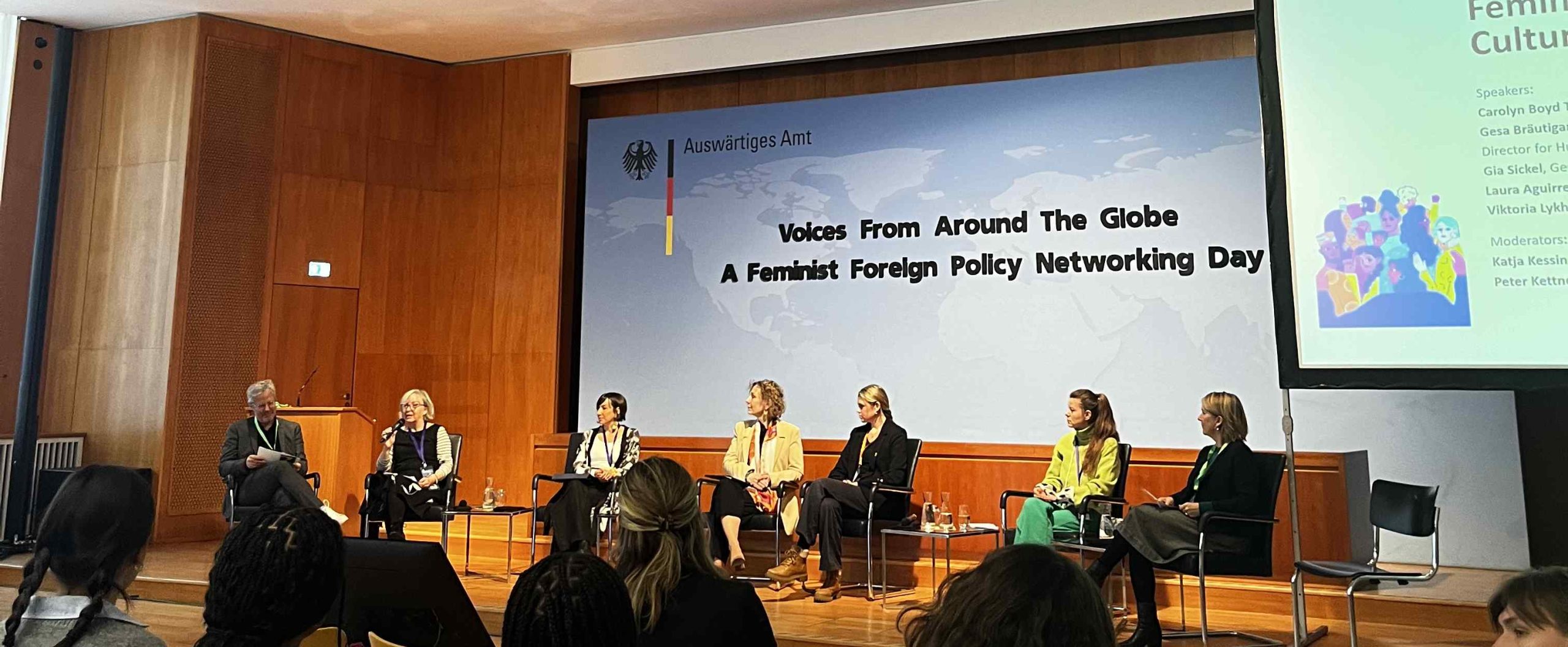
In a world marred by endless geopolitical catfights, the concept of feminist foreign policy often meets skepticism, derision, or mere bewilderment. How can such a seemingly gentle, almost utopian approach thrive amid the ruthless spectacle of power politics? Yet, surprisingly, this paradigm shift is not only taking root but flourishing in some trailblazing nations. The fascination lies not just in its novelty but in how it boldly recalibrates the traditional sinews of international relations. Beneath the surface of incremental policy changes is a robust framework that confronts patriarchy on a global scale, redefines power, and institutionalizes equity. This is why feminist foreign policy is not a fleeting trend—it’s working, and it’s reinventing how countries engage beyond their borders.
Deconstructing Conventional Power: A Revolutionary Shift
The bedrock of feminist foreign policy is a categorical repudiation of the archaic, macho definition of power. Traditionally, power in international relations is measured through military might, economic dominance, and political leverage—metrics that often glorify aggression, competition, and zero-sum outcomes. Feminist foreign policy dares to dismantle this narrative by asserting that power is relational, intersectional, and inherently connected to justice and inclusivity. It recognizes that sustainable influence emerges not from coercion but from empowerment.
This paradigm shift refashions diplomacy into a practice that prioritizes care, transparency, and mutual respect. Rather than pursuing hegemonic control, countries employing feminist foreign policy advocate for cooperation across borders and recognize historically marginalized voices. The subversion of conventional metrics opens space for alternative strategies—such as conflict mediation, resource sharing, and addressing systemic inequalities—that yield durable, less violent outcomes. It is precisely this reimagination of influence that makes feminist foreign policy so captivating and paradoxically effective amid realpolitik.

Intersectionality as a Compass: Navigating Complex Global Realities
One of the most profound reasons feminist foreign policy gains traction is its embrace of intersectionality—a framework that acknowledges how overlapping social identities impact people’s experiences of oppression and privilege. By integrating intersectional analysis into foreign policy, governments avoid one-dimensional approaches that often exacerbate inequalities or oversimplify conflicts.
This nuanced approach concretely shifts aid distribution, peacebuilding efforts, and global cooperation towards recognizing gender, race, class, sexual orientation, and disability as critical lenses. For example, rather than funneling assistance solely through state mechanisms or elite factions, feminist foreign policy channels resources directly to grassroots organizations led by women and marginalized groups. This realignment not only addresses immediate humanitarian needs but also plants seeds for long-term structural transformation.
Furthermore, by prioritizing intersectionality, feminist foreign policy complicates the simplistic hero/villain tropes prevalent in international affairs, fostering empathy and collaboration instead of demonization. This depth of understanding breaks down barriers, allowing diplomacy to move beyond symbolic gestures into meaningful change—a secret weapon that underpins its growing effectiveness.
Institutionalizing Gender Parity: From Tokenism to Transformation
It is a truism that true change requires embedding principles into the very infrastructure of governance. Feminist foreign policy, remarkably, pushes for institutionalized gender parity within diplomatic and security sectors, transcending performative equality. Governments that successfully implement these policies undertake proactive recruitment, retention, and empowerment of women and gender minorities in decision-making roles.
This transformation is not cosmetic but strategic. Research consistently reveals that gender-diverse teams enhance problem-solving, foster innovation, and reduce the propensity for conflict escalation. By institutionalizing gender parity, countries rewrite the rules of foreign engagement, making diplomacy less prone to the myopic and hypermasculine tendencies that have fueled countless crises.

This institutional change also alters the internal culture of foreign ministries and defense establishments. It encourages introspection about biases, promotes work-life balance, and cultivates environments where empathy and collaborative leadership are valued. The aggregate effect is a foreign policy apparatus that is more agile, humane, and reflective of the societies it represents.
Centering Peacebuilding and Human Rights: The Feminist Construct of Security
Perhaps the most groundbreaking aspect of feminist foreign policy is its redefinition of security. Traditional security paradigms focus narrowly on territorial defense and military preparedness. Contrarily, feminist foreign policy argues for a holistic conception of security that centers human rights, social justice, and peacebuilding.
Countries adopting this perspective allocate resources toward conflict prevention and post-conflict recovery with a lens that understands violence as interconnected with gender inequality, economic exclusion, and social marginalization. For instance, investments in education, healthcare, and social services in fragile contexts are heralded as integral components of foreign policy. This approach systematically reduces the root causes of conflict rather than merely managing symptoms through force.
The feminist security paradigm also magnifies the importance of women’s participation in peace negotiations and reconstruction processes. Empirical evidence buttresses the argument: peace agreements are significantly more durable when women have meaningful involvement. By institutionalizing this proof into policy, feminist foreign policy crafts pathways for more sustainable peace and stability—a profound reorientation that challenges militaristic orthodoxy.
Accountability and Transparency: The Antidotes to Diplomatic Cynicism
Global diplomacy often suffers from opacity, elitism, and a deficit of accountability, breeding mistrust between states and their citizens. Feminist foreign policy confronts this malaise by championing transparency and democratic accountability as core tenets. Opening diplomatic processes to public scrutiny and creating mechanisms for civil society engagement ensures that foreign policy decisions reflect collective interests rather than shadowy power plays.
This emphasis on openness transforms foreign policy from an exclusive domain of the privileged few to a participatory practice. It invites diverse stakeholders—including marginalized communities, activists, and independent experts—to scrutinize and shape agendas, fostering legitimacy and ethical rigor. Such democratization of foreign policy helps circumvent exploitative practices that have historically sidelined vulnerable populations.
By committing to these principles, countries practicing feminist foreign policy also send ripples through international institutions, demanding reform and greater inclusivity. The resultant shift emboldens alliances based on shared values rather than transactional expediency, injecting moral clarity into a murky arena.

Conclusion: The Quiet Revolution Reframing Global Power
Feminist foreign policy’s growing success in certain countries is not a happenstance nor a naive ideal. It is a deliberate, painstaking reengineering of foreign engagement that confronts entrenched inequalities, redefines power, and rebuilds trust within and between nations. The fascination with this approach transcends superficial appeal; it resonates because it addresses the deep fractures in global governance and security paradigms.
By deconstructing traditional power, employing intersectionality, institutionalizing gender parity, centering peace and human rights, and insisting on accountability, feminist foreign policy charts an alternative route that is effective, resilient, and profoundly just. This quiet revolution, often overlooked in mainstream discourse, is steadily proving that transforming foreign policy through a feminist lens is not only possible but imperative for a more equitable world order.










Leave a Comment