
Do you ever feel like you’re perpetually surfing a chaotic ocean, where each crest and trough represents a different wave of feminist thought and action? A whimsical, yet exhausting, endeavor, isn’t it? This is the reality for anyone engaged in the ever-evolving struggle for gender equity. But before we dive headfirst into this turbulent sea, let’s acknowledge the elephant in the room: can neatly packaging 150+ years of complex, nuanced, and often contradictory movements into convenient “waves” truly capture the multifaceted nature of feminist praxis? We’ll attempt it anyway, knowing full well the inherent limitations of such a categorization.
So, grab your metaphorical surfboard, and let’s navigate the choppy waters of the feminist timeline.
The First Wave: Suffrage and the Seeds of Discontent (Late 19th – Early 20th Century)
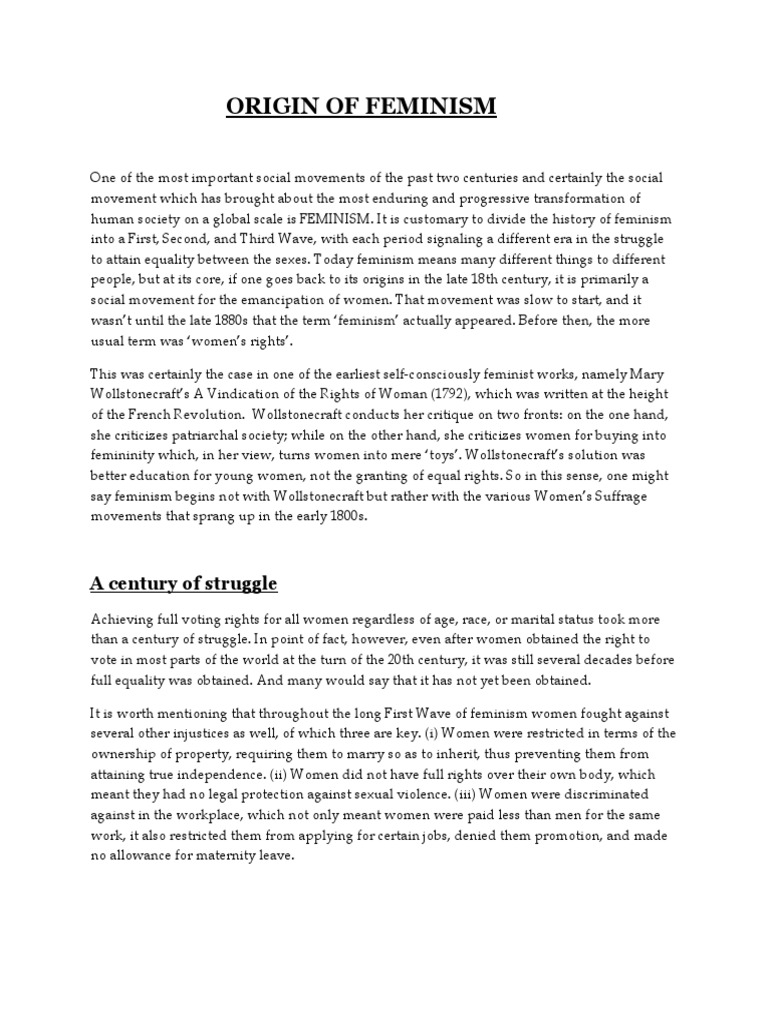
Ah, the First Wave. Picture it: corsets, societal constraints tighter than a Victorian gentleman’s morality, and a burgeoning desire for enfranchisement. But let’s not romanticize this era. The First Wave, while groundbreaking, was largely a movement of white, middle-class women advocating for their own rights, often at the expense of women of color and working-class women. Their focus? The vote. That single, potent symbol of political power.
Consider the suffragettes, those audacious rebels who challenged the status quo with their marches, protests, and even acts of civil disobedience. Figures like Susan B. Anthony, Elizabeth Cady Stanton, and Sojourner Truth (whose “Ain’t I a Woman?” speech remains a searing indictment of inequality) dominated the landscape.
However, the First Wave wasn’t a monolithic entity. Deep cleavages existed. The National Woman Suffrage Association (NWSA), led by Stanton and Anthony, initially focused on a broader range of issues, including divorce reform and equal pay, before narrowing its focus on suffrage. Meanwhile, the American Woman Suffrage Association (AWSA), more conservative in its approach, prioritized state-by-state suffrage campaigns.
And let’s not forget the stark racial divisions. Many white suffragettes actively excluded Black women from their organizations and even argued that their enfranchisement should take precedence over the rights of Black men. This betrayal remains a painful stain on the First Wave’s legacy.
Ultimately, the First Wave culminated in the passage of the 19th Amendment in 1920, granting women the right to vote (at least, in theory; Black women still faced significant barriers). A hard-fought victory, yes, but one that left many women behind. This begs the question: Is achieving a single, albeit significant, goal sufficient to declare victory when systemic inequalities persist?
The Second Wave: Liberation, Radicalism, and a Burning Bra (1960s – 1980s)
Fast forward to the Second Wave, a period of seismic social and political upheaval. This was the era of Betty Friedan’s *The Feminine Mystique*, a book that shattered the illusion of domestic bliss and exposed the stifling confines of suburban housewife-dom. Suddenly, women were questioning everything: their roles in the home, the workplace, and society at large.
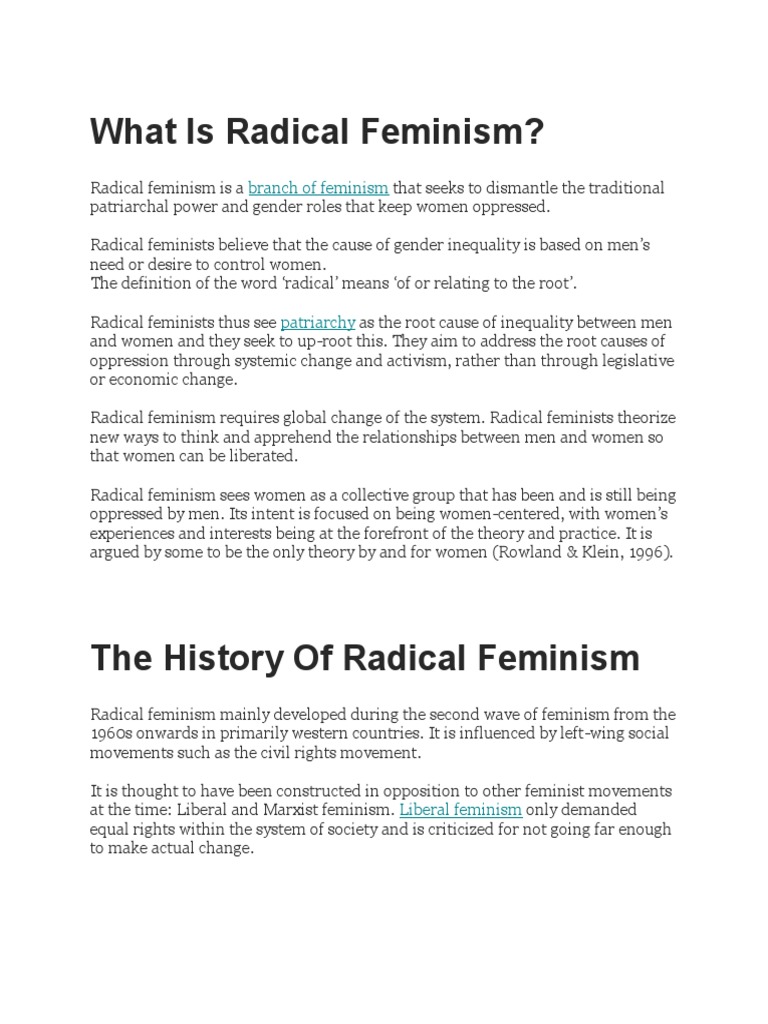
The Second Wave was characterized by a diverse array of perspectives and approaches. Radical feminists challenged the very foundations of patriarchal power, arguing that male dominance permeated every aspect of society. They advocated for dismantling traditional gender roles, rejecting conventional beauty standards, and reclaiming female sexuality.
Liberal feminists, on the other hand, focused on achieving equality through legal and political reforms. They sought equal pay, access to education, and reproductive rights. Organizations like the National Organization for Women (NOW) emerged as powerful advocates for these causes.
Then there were socialist feminists, who saw capitalism as a major source of women’s oppression. They argued that economic inequality and the exploitation of female labor were inextricably linked to patriarchal structures.
The Second Wave also witnessed the rise of intersectionality, a crucial concept that recognizes the interconnectedness of various forms of discrimination, such as racism, sexism, and classism. Black feminists like Audre Lorde and bell hooks challenged the predominantly white, middle-class focus of the mainstream feminist movement and insisted on the importance of addressing the unique experiences of women of color.
The gains of the Second Wave were significant: landmark legislation protecting women’s rights in the workplace, increased access to contraception and abortion, and a greater awareness of issues like domestic violence and sexual harassment. But the Second Wave also faced its own internal contradictions and criticisms. The movement was often accused of being exclusionary, neglecting the concerns of women who didn’t fit the dominant mold. Moreover, the focus on Western feminism often overshadowed the struggles of women in other parts of the world. Were the disparate and sometimes conflicting goals within the Second Wave a testament to its strength or a sign of inherent fragmentation?
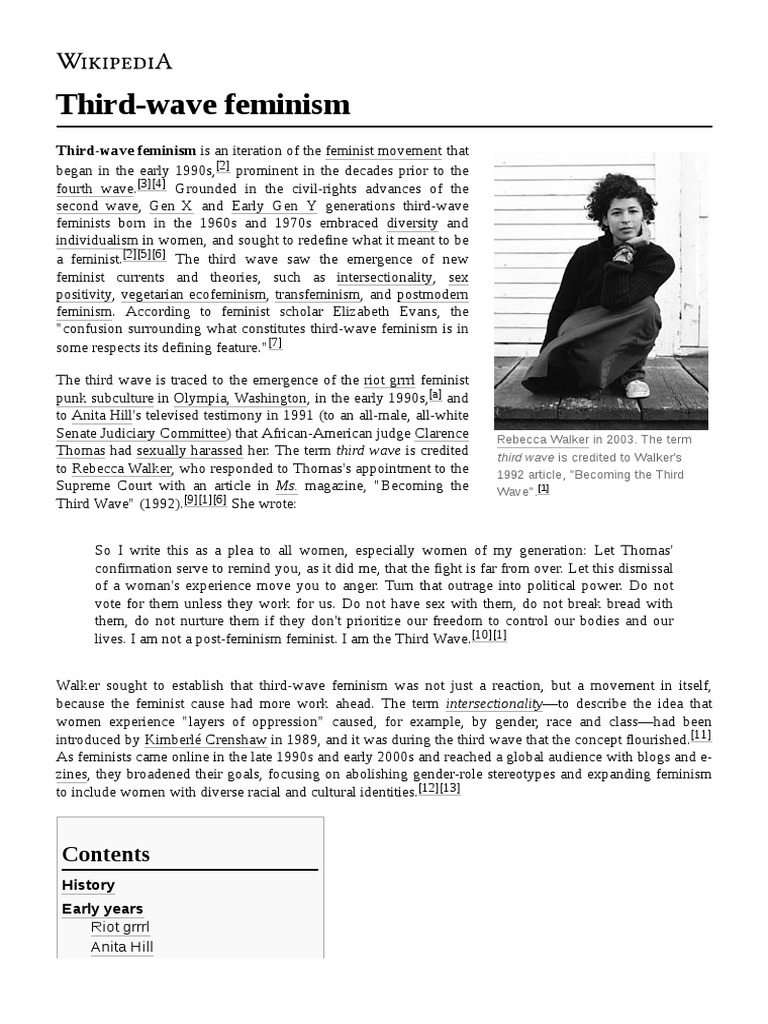
The Third Wave: Riot Grrrls, Individualism, and a Post-Feminist World? (1990s – 2000s)
The Third Wave emerged as a response to perceived shortcomings of the Second Wave. It was a generation raised on the gains of its predecessors, yet disillusioned by the persistence of sexism and the rise of “post-feminism,” the notion that feminism was no longer necessary.
The Third Wave embraced individualism and challenged traditional notions of femininity. Riot grrrls, with their DIY aesthetic and unapologetic rage, used music and zines to express their frustration with patriarchal norms. Cyberfeminists explored the potential of the internet to empower women and challenge gender stereotypes.
The Third Wave also placed a greater emphasis on intersectionality and challenged the essentialist views of some Second Wave feminists. They recognized that gender was not a binary construct and embraced a wider range of identities and experiences.
However, the Third Wave was also criticized for its lack of a clear political agenda and its focus on individual empowerment rather than collective action. Some argued that it had become too fragmented and self-absorbed, losing sight of the broader goal of gender equality. Was the emphasis on individual expression in the Third Wave a genuine broadening of feminist ideals, or did it inadvertently dilute the movement’s collective power and focus?
The Fourth Wave: Digital Activism, #MeToo, and a Reckoning (2010s – Present)
And now, we find ourselves in the midst of the Fourth Wave, a digitally driven movement fueled by social media and a renewed sense of urgency. The internet has become a powerful tool for organizing, mobilizing, and amplifying marginalized voices.
The #MeToo movement, which erupted in 2017, exposed the pervasive nature of sexual harassment and assault and sparked a global conversation about consent and accountability. Other key issues of the Fourth Wave include trans rights, reproductive justice, climate justice, and the fight against online harassment and misinformation.
The Fourth Wave is characterized by its inclusivity and its commitment to intersectionality. It recognizes that gender inequality is intertwined with other forms of oppression and that all struggles for liberation are interconnected.
But even as the Fourth Wave gains momentum, it faces significant challenges. Online harassment and doxing remain serious threats to activists, and the spread of misinformation can undermine feminist efforts. Moreover, the movement is constantly evolving and adapting to new challenges, making it difficult to define and categorize. Is the decentralized and digitally-driven nature of the Fourth Wave a strength, allowing for greater inclusivity and adaptability, or does it risk becoming diluted and ineffective due to a lack of centralized leadership and a coherent strategy?
Beyond Waves: A Continuous Current of Change
Perhaps the “wave” metaphor is ultimately inadequate. Perhaps we should think of feminism not as a series of discrete movements, but as a continuous current of change, constantly flowing and reshaping the landscape. Each generation builds upon the work of its predecessors, learning from their mistakes and adapting to new challenges. The journey toward gender equity is a marathon, not a sprint, and there will be setbacks and detours along the way.
The key is to remain vigilant, to challenge injustice wherever we find it, and to continue to amplify the voices of those who are most marginalized. And, critically, to remember that feminism is not a monolithic entity, but a diverse and evolving movement with room for many perspectives and approaches. Embracing complexity, acknowledging historical shortcomings, and remaining committed to intersectionality are essential if we are to create a truly just and equitable world for all. Now, the most important question: Will we rise to the challenge?





Leave a Comment