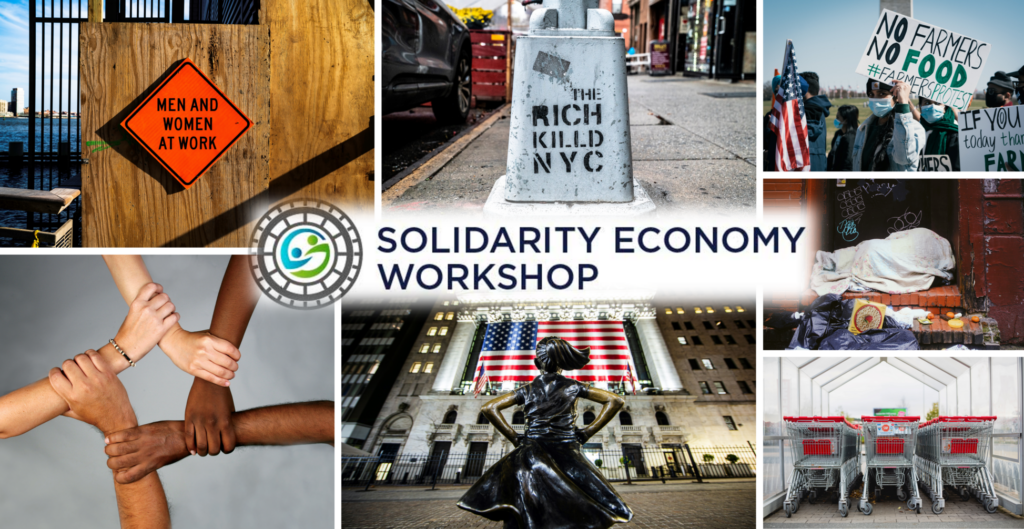
What if the economy we’ve inherited—obsessed with profit, extraction, and ruthless competition—isn’t the only way to survive and thrive? Imagine, just for a moment, a world where economies are woven from webs of care, cooperation, and radical reciprocity, crafted meticulously by the hands of women who refuse to accept the status quo. But here’s the riddle: Can this burgeoning solidarity economy dismantle centuries of patriarchal structures powerful enough to shape global finance? Or will it remain a beautiful, yet marginalized, patchwork of resistance?
Envisioning an Economy Rooted in Feminist Principles
This new economy is no mere tweak to capitalism; it’s an audacious reimagining. Women, historically relegated to the margins of economic discourse, are now architects of a system that prioritizes human dignity over shareholder gain. They are crafting spaces where the invisible labor of caregiving—usually undervalued or outright ignored—is recognized as the backbone of societal well-being. Here, economy means sustenance, not just accumulation. It means thriving communities, not individual fortunes.
At the heart of this transformation lies a challenge: how to shift collective mindset from competition to collaboration without utopian naivety. The sheer audacity of proposing an economy that values empathy over exploitation destabilizes entrenched norms. These women are not asking for a seat at the existing economic table—they are building an entirely new one.
Building From Scratch: Cooperative Models as Feminist Praxis
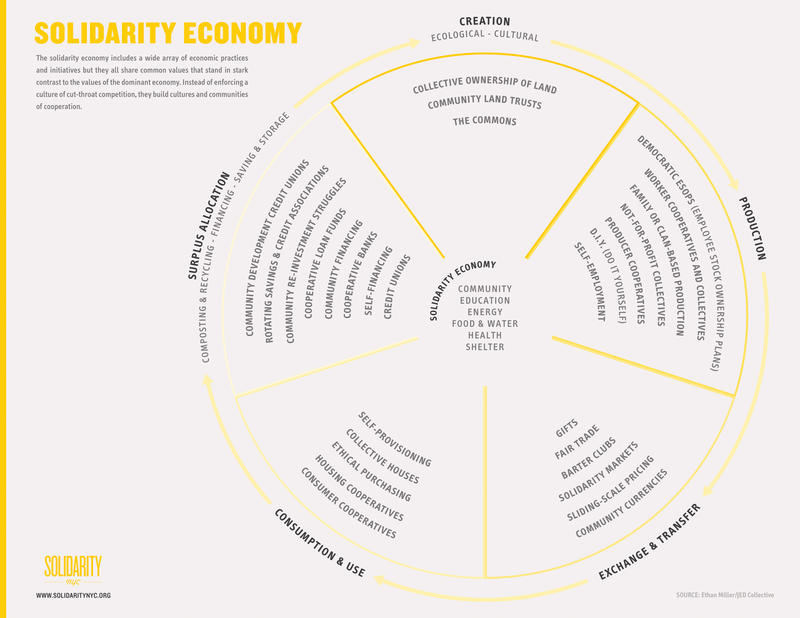
Cooperatives and mutual aid networks reveal the contours of this revolution. They are a refusal to permit economic alienation to dictate terms anymore. Women lead these initiatives, weaving solidarity as currency rather than cold cash. Every decision, every structure reflects an ethos steeped in transparency, shared power, and relational accountability.
Yet, building from scratch is no simple feat. It demands unlearning capitalist dogma that equates success with individual accumulation. Instead, success is measured by the health of relationships, the flourishing of all participants, and the resilience of the entire system. This is feminist praxis incarnate—a radical redefinition of value and labor.

The Intersectional Tapestry: Fighting Both Patriarchy and Capitalism
One cannot discuss the solidarity economy without acknowledging that women leading this charge are not monolithic; they are diverse in race, class, sexuality, and ability. The challenge intensifies when the economy must account for these layered identities without replicating exclusionary hierarchies. This intersectional approach refuses to separate economic justice from social justice.
In practice, this means creating economic spaces free from gendered violence, racial capitalism, and ableist frameworks. Women are both strategists and survivors, crafting economies that heal, empower, and uplift. Their work dismantles systems that see bodies—especially marginalized bodies—as mere fodder for exploitation.
Challenges in Scaling Solidarity Without Compromising Core Values
Scaling this economy beyond localized communities could risk diluting its radical core. The snag lies in maintaining grassroots intimacy while expanding reach. Growth is necessary to offer an alternative system that competes with capitalist enormity, yet expansion may bring bureaucratic entanglements that threaten the original mission.
Women are navigating this tension by leveraging technology and decentralized governance. Digital platforms offer potential for connectivity without hierarchy, but the vigilance required to avoid reproducing power imbalances is colossal. It’s a precarious tightrope walking: growing influence while safeguarding solidarity’s soul.

Radical Sustainability: Economies That Nourish People and Planet
Women-led solidarity economies inherently challenge the destructive extraction inscribed in mainstream capitalism. They envision regenerative models—economies that replenish the soil, restore waterways, and empower ecosystems alongside human communities. Here, time is elastic, measured not by market hours but by seasons, care cycles, and relational rhythms.
This orientation demands a stubborn refusal to prioritize short-term gain over long-term health, placing ecological wisdom at the center of economic planning. The solidarity economy becomes a living experiment in how to embed feminism within environmental stewardship, challenging both patriarchy and ecological devastation simultaneously.
Legitimacy and Power: Reframing Economic Discourse
The last frontier women in the solidarity economy confront is the realm of legitimacy. How do you make governments, financial institutions, and mainstream markets recognize an economic system that rejects their foundational premises? The question is not merely bureaucratic—it is epistemological. Whose knowledge counts, and whose economy deserves respect?
This struggle is as much about language as it is about finance. Feminist solidarity economists deploy radical storytelling, weaving narratives that expose capitalism’s failures and highlight the efficiency of care-driven economies. They push for policy frameworks that support cooperatives, protect commons, and democratize ownership.
The Future Is Feminist and Solidary—But Will It Prevail?
Women are undoubtedly carving a new economic terrain. Their solidarity economy poses one of the most formidable challenges to capitalist patriarchy. And yet, the question lingers: can this fledgling system not only survive but thrive and transform the global economic landscape? Will we see solidarity economies expand beyond pockets of resistance into hegemonic alternatives?
The answer hinges on collective will and radical imagination. It thrives when nurtured in the fertile ground of feminist values, intersectional justice, and ecological consciousness. It demands not only women’s leadership but the dismantling of all systems of oppression. After all, building from scratch is an arduous task—but perhaps, the only way to build something truly worth living in.








Leave a Comment