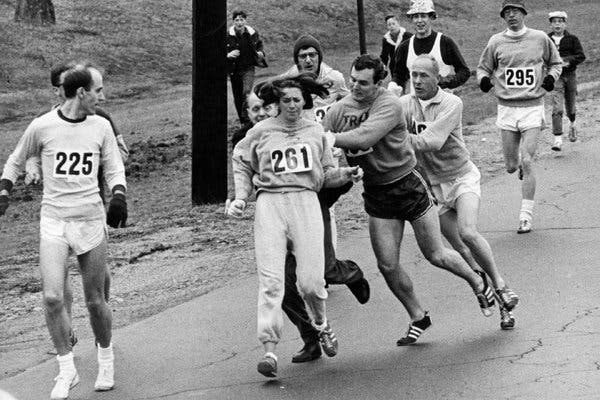
The running community is a microcosm of society’s most stubborn paradox: a space where physical prowess is celebrated, yet systemic inequities persist beneath the surface. We celebrate the marathoner’s grit, the sprinter’s speed, the ultrarunner’s endurance—but what about the invisible barriers that shape who gets to run, how far they go, and who is celebrated for it? The gender gap in running isn’t about who’s faster. It’s about who is seen, who is sponsored, who is safe, and who is given the space to fail and try again. This isn’t just a numbers game. It’s a power struggle disguised as a sport.
The Myth of the “Natural” Runner: How Biology Became a Cop-Out
For decades, the running world has clung to a seductive narrative: men are faster, women are slower, and that’s just science. But this reductionist tale ignores the fact that biology is only part of the equation. The real story lies in the training, the opportunities, the cultural conditioning that tells women to pace themselves—not just in their runs, but in their ambitions. Studies show that when women are given equal access to coaching, nutrition, and recovery resources, the gap narrows dramatically. Yet, how often do we see women’s races covered with the same fervor as men’s? How often are their achievements met with skepticism rather than applause? The myth of the “natural” runner is a convenient fiction, one that absolves the community of its responsibility to level the playing field.

The Sponsorship Scarcity: When Visibility Becomes a Privilege
Sponsorship in running isn’t just about money—it’s about legitimacy. A sponsored athlete isn’t just a competitor; they’re a brand ambassador, a role model, a voice in the community. Yet, women in running receive a fraction of the sponsorship deals compared to their male counterparts. Why? Because the industry still operates on outdated metrics of marketability. Women’s races are often sidelined in coverage, their stories reduced to “inspirational” soundbites rather than athletic achievements. The result? A vicious cycle where lack of visibility leads to fewer sponsorships, which leads to fewer opportunities to break records, which leads to even less visibility. It’s a feedback loop designed to keep women running—but only in the shadows.
The Safety Paradox: Where Fear Dictates the Route
Ask any woman who runs regularly about her safety concerns, and you’ll hear stories that sound like cautionary tales from a bygone era. Harassment, catcalling, even assault—these aren’t anomalies; they’re the unspoken hazards of being a woman in motion. The running community prides itself on freedom, on the open road, on the unshackling of limits. Yet, for women, the road is often a minefield. Many alter their routes, their schedules, even their attire to minimize risk. This isn’t just a personal choice; it’s a systemic failure. Where are the campaigns to make running spaces safer? Where are the calls to hold harassers accountable? The silence is deafening. Until the community treats women’s safety as a non-negotiable priority, the gender gap will remain not just in statistics, but in lived experience.
The Participation Gap: Who Gets to Run—and Who Doesn’t
Running is often sold as an egalitarian sport—all you need is a pair of shoes and the open road. But the reality is far more exclusionary. Women, particularly those from marginalized communities, face barriers that go beyond gender. Economic disparities, cultural stigmas, and lack of access to safe spaces all play a role in who gets to participate. In some neighborhoods, running isn’t a leisure activity; it’s a luxury. In others, it’s a radical act of defiance. The participation gap isn’t just about numbers; it’s about who is allowed to claim the identity of “runner” in the first place. Until the community actively dismantles these barriers, the gender gap will remain a symptom of a much larger disease.
The Language of Exclusion: How Words Shape Who Belongs
Language isn’t neutral. It’s a tool of inclusion or exclusion, and the running community has a long history of using it poorly. Terms like “hysterical,” “emotional,” or “weak” are often wielded against women to dismiss their achievements or question their resilience. Meanwhile, male runners are celebrated for their “killer instinct” or “unbreakable will.” This isn’t just semantics; it’s a reflection of deep-seated biases. Even the way we describe races—”elite,” “challenging,” “beginner”—carries implicit judgments about who is expected to succeed. A shift in perspective begins with a shift in language. It’s time to retire the words that hold women back and replace them with ones that lift them up.
The Future of Running: A Call to Redefine the Sport
The running community stands at a crossroads. It can continue to operate within the same old frameworks, patting itself on the back for incremental progress while leaving the majority of its members behind. Or it can choose to redefine itself—not as a sport of speed and endurance, but as a movement of equity and empowerment. This means demanding better representation in leadership, investing in women’s teams and clubs, and creating spaces where safety isn’t an afterthought. It means challenging the narratives that have kept women in the slow lane for too long. The future of running isn’t about who crosses the finish line first. It’s about who gets to start the race at all.







Leave a Comment