There is a pervasive yearning that surges beneath the surface of countless conversations around reproductive health—a yearning that transcends conventional debates about choice and control. It is a fascination with autonomy, equity, and the very fabric of justice itself. This fascination reveals something immense and reshaping: the reproductive justice framework. Unlike singular perspectives that have historically dominated narratives on reproductive rights, this multifaceted paradigm exposes the complex interplay of social, racial, and economic factors that shape our bodily autonomy. It changes everything because it refuses to settle for narrow victories or diluted dialogues. It demands an unflinching reckoning with systemic oppression and insists on a holistic vision of freedom.
The Limitations of the Traditional Pro-Choice Narrative
The dominant discourse around reproductive rights, particularly in the past half-century, has been relentlessly fixated on the binary of choice versus restriction. Yet, this framing has always been myopic. It simplifies the labyrinthine realities countless individuals face by reducing their experiences to a checkbox: pro-choice or pro-life. The public is led to believe that gaining access to abortion is the zenith of reproductive freedom. But what of the woman struggling with the intersecting oppressions of poverty, racism, and lack of healthcare infrastructure? What of the trans person whose identity complicates the simplistic binaries of gender and reproduction? The traditional narrative glosses over these pivotal questions, confining the discourse to legality rather than justice.
In this constricted arena, systemic barriers become invisible. The lingering effects of historical trauma and institutional neglect are smudged out of focus. The reproductive justice framework thus steps in not as a mere enhancement but a revolution in thinking—recognizing reproductive autonomy as indivisible from racial, economic, and social justice.
Defining Reproductive Justice: Beyond Choice
Reproductive justice is not merely about the ability to decide whether or not to have a child. It is a radical claim to the right to have children, not to have children, and to parent the children we have in safe and sustainable environments. This tripartite articulation recasts reproductive freedom as a human right that is inextricably connected to the right to live with dignity and security.

This framework acknowledges the historically marginalized voices—Black women, Indigenous people, immigrants, low-income communities, and LGBTQ+ individuals—who have been systematically excluded from reproductive justice conversations. It challenges the default patriarchal and white-centric paradigms by centering those often pushed to the margins. Through this lens, the political becomes profoundly personal, and the personal is inevitably political.
The Interlocking Oppressions That Shape Reproductive Experience
Reproductive justice reveals an essential truth: bodily autonomy cannot be disentangled from structural inequality. Racism, ableism, sexism, classism, and heteronormativity do not exist in siloes but coalesce to form barriers that many face daily. Incarceration rates, environmental toxins, inadequate healthcare, and economic disenfranchisement all manifest as reproductive injustices.
Consider the persistent obstetric violence and maternal mortality disparities that disproportionately affect Black women. These are not simply healthcare failures but symptoms of broader structural violence. Housing instability, food insecurity, and precarious work conditions exacerbate these disparities, making the decision to parent a fraught one, rather than a privilege freely exercised. It becomes clear that reproductive decisions are embedded within a matrix of systemic inequities.
Queering Reproductive Justice: Expanding the Horizon
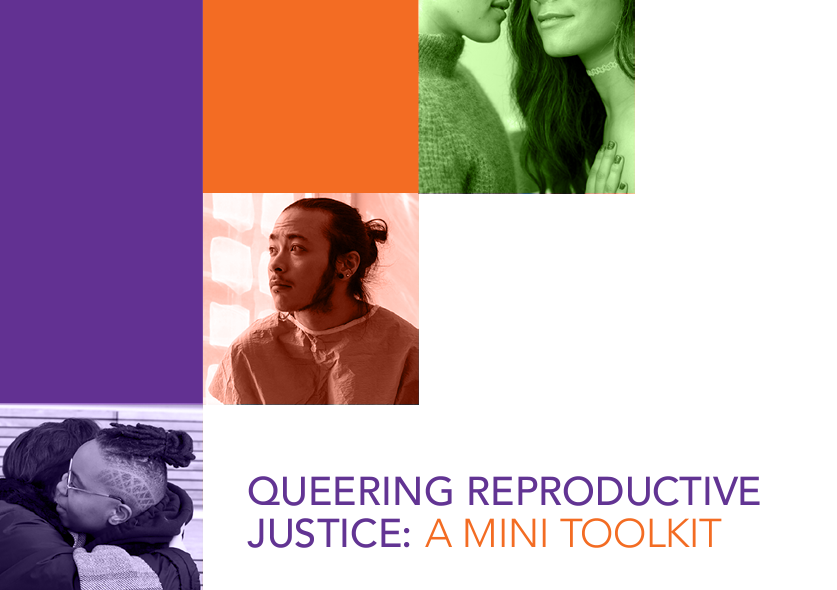
Another dimension that enriches the reproductive justice paradigm is the inclusion of queer and trans perspectives, long excluded from mainstream reproductive discussions. Gender expansive identities challenge the heteronormative assumptions tethered to reproductive policies. The insistence on binary gender roles oversimplifies a spectrum of reproductive desires and dilemmas faced by LGBTQ+ individuals.
Queering reproductive justice means deconstructing cisnormative narratives that marginalize trans individuals’ experiences with pregnancy, parenting, and reproductive healthcare. It demands the creation of affirming spaces and policies that recognize diverse family structures and reproductive journeys. This expansion not only fosters inclusivity but uncovers the deeper societal fixations on controlling bodies deemed outside normative frameworks.
Reproductive Justice as Community Empowerment
At its core, reproductive justice is about communal liberation. It rejects atomized approaches centered solely on individual choice. Instead, it emphasizes collective agency and resources, affirming that reproductive freedom necessitates robust social supports: accessible healthcare, education, childcare, economic stability, and safe communities. Without these foundations, reproductive decisions become acts of resistance but also burdened with profound constraints.
Communities have an intimate understanding of their own needs and challenges. By centering grassroots leadership, the reproductive justice framework cultivates a movement that arises from lived experience and resolutely resists top-down mandates. This decentralization is essential because policies that disregard intersectionality and local nuances risk perpetuating harm.
The Political Stakes and the Spiritual Urgency
Reproductive justice jolts society by connecting individual rights with collective wellbeing and socio-political accountability. It is a confrontation with the forces that seek to control and commodify bodies—whether through restrictive laws, surveillance, economic austerity, or cultural stigmatization. It is a call to radical imagination and unyielding action.
There is a spiritual urgency embedded in this framework, a profound yearning for bodily sovereignty that points toward a world where all can thrive without fear or coercion. The conversation shifts from one of scarcity and protectionism to abundance and radical possibility. The reproductive justice framework does not just shift paradigms; it beckons us to dismantle the gates of injustice and rebuild anew.
The Path Forward: From Awareness to Transformation
Understanding reproductive justice is only the beginning. The imperative is to translate this awareness into sustained advocacy, policy reform, and cultural transformation. It demands solidarity across movements—from racial justice to climate justice to economic justice—because reproductive freedom is a thread that weaves through every facet of human rights.
Ultimately, embracing this framework means embracing complexity, contradictions, and uncomfortable truths. It requires confronting privilege, unlearning ingrained biases, and amplifying marginalized voices. This fertile disruption opens the path to an embodied freedom where reproductive justice ceases to be an aspiration and becomes a lived reality for all.







Leave a Comment