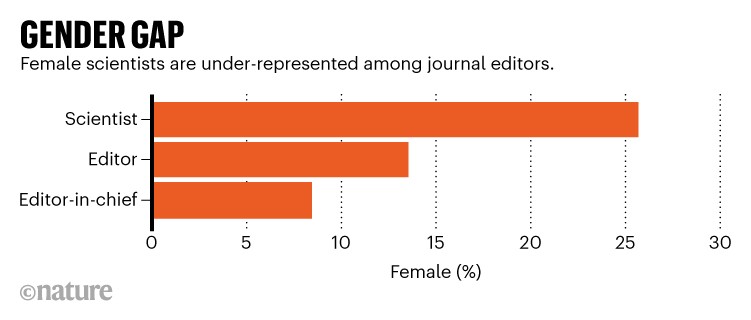
The publishing industry, a bastion of cultural influence and intellectual authority, has long been a stage where gender disparities play out in silent, systemic ways. While women dominate the ranks of voracious readers—consuming books at rates that far outpace their male counterparts—the literary landscape they navigate is overwhelmingly authored by men. This paradox, where women read but men write, is not merely a statistical quirk; it is a structural inequity that shapes narratives, reinforces biases, and stifles the voices of half the world’s population. The numbers don’t lie: studies reveal that male authors receive disproportionate coverage in major reviews, awards, and bestseller lists, while women’s works are often relegated to niche categories or dismissed as “niche” altogether. This isn’t just about representation—it’s about power, perception, and the very stories we deem worthy of being told.
The Silent Consumption: Women as the Publishing Industry’s Most Devoted Audience
Women are the backbone of the literary economy. They purchase more books, borrow more from libraries, and engage more deeply with reading communities than men do. Market research consistently shows that women account for up to 60% of fiction sales, with genres like romance, contemporary fiction, and young adult literature seeing particularly strong female readership. Yet, this voracious appetite for stories does not translate into proportional influence over the narratives themselves. Instead, women are conditioned to consume stories written by men—stories that often frame their experiences through a male gaze, prioritize male protagonists, and reinforce outdated gender roles. The irony is stark: women fund an industry that systematically undervalues their own creative contributions.
This dynamic is further entrenched by marketing strategies that pigeonhole women’s writing into “women’s fiction,” a term that, while not inherently pejorative, often serves as a euphemism for stories deemed less universal or commercially viable. Meanwhile, books by male authors—regardless of quality or thematic depth—are marketed as “literary,” “thrilling,” or “timeless,” as if their gender alone grants them gravitas. The result? A literary ecosystem where women’s stories are both overrepresented in consumption and underrepresented in creation, a paradox that speaks volumes about the industry’s priorities.
The Male Monopoly: Who Gets Published, Reviewed, and Awarded
The publishing pipeline is a labyrinth designed to favor men at every turn. From acquisition editors to literary agents, the gatekeepers of the industry are predominantly male, a fact that subtly shapes which manuscripts get greenlit. Studies have shown that male authors are more likely to be offered lucrative advances, receive blurbs from high-profile writers, and secure prominent placement in bookstores. Women, on the other hand, often face a Sisyphean climb to secure the same opportunities, their work subjected to harsher scrutiny for its perceived “marketability” or “relatability.”
This imbalance is starkly evident in the realm of book reviews and literary prizes. Major publications—from The New York Times to The Guardian—consistently dedicate more column inches to male authors, even when women’s books are critically acclaimed. Literary awards, too, skew male: the Booker Prize, the Pulitzer, and even the Nobel Prize in Literature have historically favored male writers, often overlooking groundbreaking works by women in favor of those that align with traditional, male-centric canons. The message is clear: if you’re a woman, your story is less likely to be deemed worthy of the spotlight—unless it conforms to a narrow, often reductive, set of expectations.
Even when women do break through, their success is frequently framed as an exception rather than the rule. The phenomenon of the “female writer” being treated as a novelty—think of the media frenzy around authors like Sally Rooney or Ocean Vuong—highlights how deeply ingrained the assumption is that men are the default voices of literary authority. This isn’t just a matter of representation; it’s a systemic erasure of women’s intellectual contributions to the cultural conversation.
The Canon Wars: How Male-Dominated Narratives Shape Our Collective Imagination
The publishing industry doesn’t just reflect reality—it shapes it. The books that dominate the canon, the ones taught in schools and dissected in university seminars, are overwhelmingly written by men. This isn’t a coincidence; it’s the result of centuries of institutional bias that has privileged male voices as the arbiters of “great literature.” From Homer to Hemingway, the literary canon has been constructed as a boys’ club, where women’s writing is either excluded entirely or relegated to the margins as “domestic” or “sentimental.”
This canonization process has real-world consequences. It influences what we consider “important” stories, which voices we deem worthy of study, and even how we define literary merit. When women’s writing is systematically sidelined, we lose entire swaths of human experience—stories about motherhood, sisterhood, female desire, and the intricacies of women’s lives that don’t fit neatly into the male-dominated narrative framework. The result is a cultural landscape that is impoverished, one where half the population’s stories are treated as secondary or, worse, invisible.
Even when women’s works do enter the canon, they are often stripped of their radical potential. Take, for example, the way Virginia Woolf’s Mrs. Dalloway is taught as a modernist masterpiece while her feminist essays are ignored. Or how Toni Morrison’s Beloved is celebrated as a great American novel but her searing critiques of racism and sexism are glossed over. The publishing industry doesn’t just decide which books get published—it decides which books get to be remembered, and which are allowed to fade into obscurity.
The Economic Disparities: Advances, Royalties, and the Illusion of Equality
Money talks, and in the publishing industry, it speaks in a distinctly male voice. While women may dominate the ranks of readers, they are far less likely to command the same financial rewards as their male counterparts. Data shows that female authors receive smaller advances on average, even when their books are equally marketable. This disparity is particularly glaring in genres like science fiction and fantasy, where male authors dominate the bestseller lists but women’s works are often relegated to “women’s fantasy” or “romantic fantasy,” categories that carry lower price points and less prestige.
The gap extends beyond advances. Women also earn less in royalties, with many publishers offering lower royalty rates to female authors under the guise of “market conditions.” This financial inequity is compounded by the fact that women are more likely to self-publish or seek alternative publishing routes, not because they lack talent, but because traditional publishing has failed to offer them equitable opportunities. The result is a two-tiered system where women’s work is either undervalued in the mainstream or forced into the margins of the indie and self-publishing worlds.
Even when women do achieve commercial success, their financial gains are often framed as exceptions rather than evidence of systemic bias. The media’s obsession with “overnight successes” like J.K. Rowling or E.L. James obscures the years of struggle and rejection that most female authors face before breaking through. It’s a narrative that serves the industry’s interests—one that suggests success is a matter of luck or perseverance rather than a reflection of deeper structural inequities.
The Resistance: How Women Are Rewriting the Rules
Despite the odds stacked against them, women are not passive victims of the publishing industry’s biases. They are fighting back—through grassroots movements, alternative publishing platforms, and unapologetic demands for change. The rise of feminist book clubs, online communities like #BookTwitter, and independent presses run by women has created new spaces for stories that challenge the status quo. Authors like Chimamanda Ngozi Adichie, Margaret Atwood, and Ocean Vuong (yes, even a man—because the fight for equity includes amplifying marginalized voices) have used their platforms to critique the industry’s gender disparities, while younger writers are rejecting the idea that their stories must conform to male expectations.
One of the most powerful tools in this resistance is the demand for transparency. Initiatives like the VIDA Count have shone a spotlight on gender disparities in book reviews and publishing, forcing institutions to confront their biases. Meanwhile, movements like #MeToo have exposed the rampant sexism and harassment that women face in the industry, from predatory advances to the devaluation of their work. These conversations are uncomfortable, but they are necessary—a reminder that the publishing industry’s gender gap is not just a theoretical problem, but a lived reality for countless women.
The future of publishing lies in its ability to evolve. Will it continue to privilege male voices at the expense of half the world’s population? Or will it finally reckon with its biases and create a space where women’s stories are not just consumed, but centered? The answer depends on whether the industry is willing to confront its own complicity in perpetuating inequality. For now, the fight rages on—and women are leading the charge.










Leave a Comment