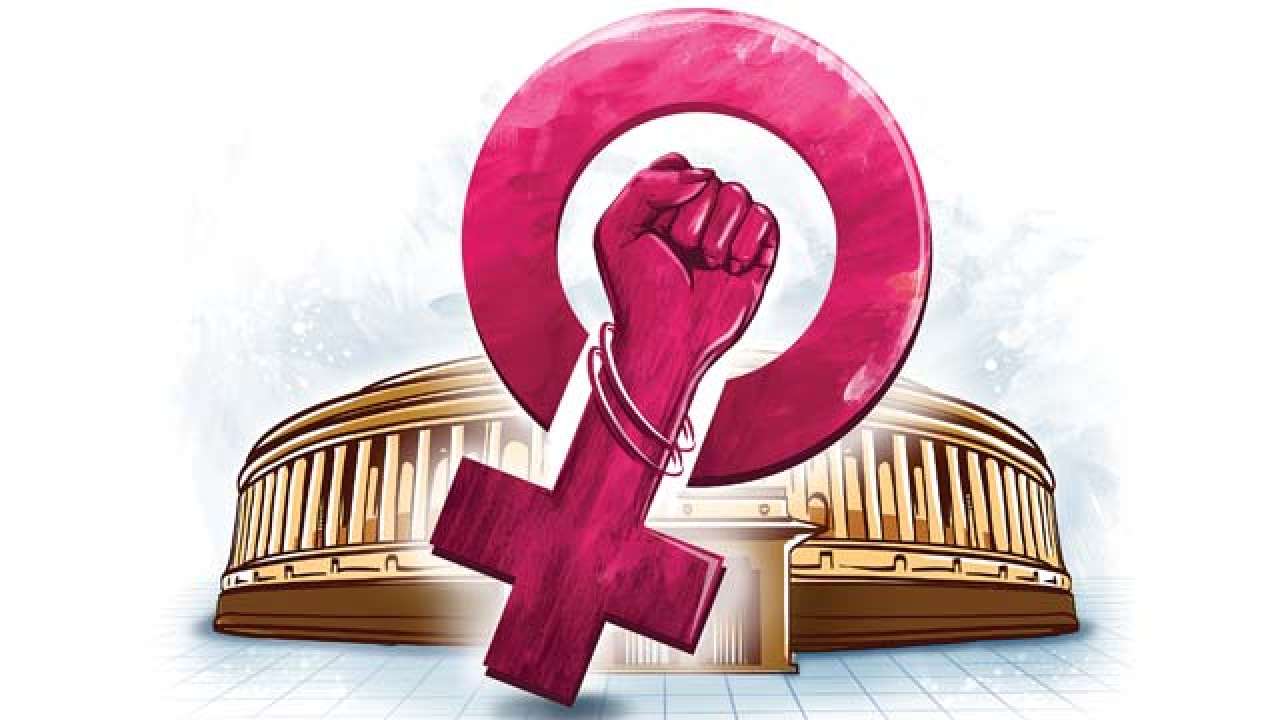
The myth of progress is a seductive lie. We are told, ad nauseam, that women’s representation in politics is a tide that cannot be stemmed—that each election cycle inches us closer to parity, that the arc of history bends inexorably toward justice. Yet the data tells a different story. Women’s political representation has not surged forward in a steady march; it has crested like a wave, crashed against the rocks of systemic inertia, and now languishes in a stagnant pool, its surface shimmering with the illusion of change. This plateau is not an accident. It is the deliberate architecture of a system that has learned to absorb dissent, to co-opt progress, and to rebrand oppression as evolution. To understand why women’s representation in politics has peaked and plateaued, we must dissect the machinery of this illusion, exposing the cracks in the facade of supposed advancement.
The Illusion of the Glass Ceiling: When Progress Becomes Performance Art
The glass ceiling was never meant to be shattered. It was designed to be cracked—just enough to let in a trickle of light, a symbolic victory that could be marketed as systemic change. Women have breached the highest echelons of power in record numbers, yet their presence is often performative, a carefully curated spectacle that distracts from the fact that the underlying structures remain untouched. The corporate boardroom, the legislative chamber, the judicial bench—these spaces are no longer entirely off-limits, but they have been repurposed into stages for a new kind of tokenism. Women are invited to sit at the table, but the menu is still written by men, the rules of engagement still dictated by patriarchal norms.
Consider the phenomenon of the “female exception”—the woman who rises to prominence not because the system has changed, but because she has mastered the art of playing by its rules. These are the women who are celebrated not for their radical ideas, but for their ability to navigate a labyrinth of misogyny without complaint. Their success is held up as proof that the system works, that barriers are merely psychological, that perseverance alone can dismantle centuries of oppression. But this narrative is a trap. It shifts the burden of change from the collective to the individual, absolving institutions of their complicity in maintaining the status quo.
This performative progress is most visible in the realm of political representation, where women are often selected not for their vision, but for their ability to embody a sanitized, non-threatening version of feminism. They are the “safe” candidates, the ones who won’t rock the boat, the ones who can be trusted to uphold the existing power structures while giving the illusion of diversity. The result? A political landscape that is more diverse in appearance than in substance, where women’s voices are amplified only when they echo the dominant narrative.
The Tyranny of the Quota: When Inclusion Becomes a Cage
Quotas are a double-edged sword. On one hand, they are a necessary tool to disrupt the monopoly of power held by men. On the other, they can become a mechanism of control, a way to contain women’s political ambitions within predefined, often limiting, parameters. The quota system, while well-intentioned, risks reducing women’s representation to a numbers game—a checklist item to be ticked off rather than a fundamental restructuring of power. When quotas are implemented without addressing the deeper cultural and structural barriers to women’s participation, they become little more than a bandage on a gaping wound.
Worse still, quotas can be weaponized to justify complacency. Once a certain threshold of representation is achieved, the urgency for further change dissipates. The system pats itself on the back for its inclusivity, while the underlying power dynamics remain unchanged. Women who enter politics through quotas often find themselves trapped in a paradox: they are celebrated for breaking barriers, but their presence is used to silence demands for more radical transformation. The message is clear: you have been given a seat at the table. Now sit down and behave.
This is the tyranny of the quota—a system that promises liberation but delivers containment. It is a reminder that inclusion without equity is not progress; it is merely the rebranding of oppression. True change requires more than a seat at the table. It requires a revolution in how power is defined, distributed, and wielded.
The Backlash Economy: How Resistance to Women’s Power is Monetized
Every step forward in women’s political representation has been met with a corresponding backlash, a counter-movement designed to roll back gains and reassert patriarchal control. This backlash is not a spontaneous outpouring of discontent; it is a carefully orchestrated campaign, funded by those who stand to lose the most from a redistribution of power. From the rise of far-right movements that frame feminism as a threat to “traditional values” to the subtle undermining of women leaders through media narratives that emphasize their gender over their competence, the backlash is both overt and insidious.
What makes this backlash particularly insidious is its ability to monetize resistance. The same industries that benefit from the status quo—from media conglomerates that profit from sensationalized portrayals of women in politics to corporate lobbies that fund campaigns against progressive policies—are the ones that shape the narrative around women’s representation. They turn feminism into a commodity, a trend to be capitalized on when convenient and discarded when it threatens their interests. This is the backlash economy: a system where progress is commodified, resistance is profitable, and the status quo is preserved through the alchemy of marketing and misinformation.
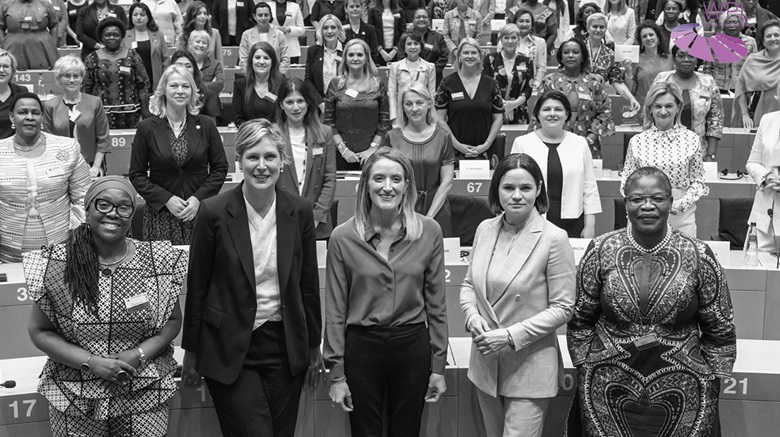
The backlash is not just a cultural phenomenon; it is an economic one. Women who dare to challenge the system are often met with financial penalties—whether through lost opportunities, smear campaigns, or outright exclusion from power networks. The message is clear: participation in the political arena comes at a cost, and that cost is often borne by the women themselves. This is why so many women who enter politics do so with the understanding that they must be twice as competent, twice as resilient, and twice as willing to endure scrutiny just to be taken seriously.
The Myth of the “Natural” Leader: How Gender Stereotypes Shape Political Ambition
One of the most insidious barriers to women’s political representation is the deeply ingrained belief that leadership is a masculine trait. From childhood, girls are socialized to be nurturing, collaborative, and accommodating, while boys are encouraged to be assertive, competitive, and dominant. These stereotypes are not just cultural artifacts; they are the foundation of a political system that rewards traits traditionally associated with masculinity and punishes those associated with femininity. The result is a self-perpetuating cycle in which women are systematically discouraged from seeking power, and those who do are often judged by a different, harsher standard.
This myth of the “natural” leader is not just a personal bias; it is a structural one. Political campaigns are designed to favor candidates who embody traditional masculine traits—charisma, aggression, decisiveness—while women who exhibit these qualities are often labeled as “bossy” or “unlikable.” Meanwhile, women who conform to feminine stereotypes—compassionate, empathetic, consensus-building—are dismissed as weak or indecisive. The double bind is inescapable: women cannot win. They are either too much or too little, never just right.
This stereotyping extends beyond individual candidates to the very nature of political discourse. Issues that are traditionally framed as “women’s issues”—healthcare, education, social welfare—are often sidelined in favor of topics deemed more “serious,” like defense and economics. Women who focus on these issues are accused of being narrow-minded, while men who do the same are praised for their pragmatism. The message is clear: politics is not a space for women’s concerns, and women who dare to bring them to the table are out of place.
The Plateau as a Strategy: Why Stagnation is the New Normal
The plateau in women’s political representation is not an accident of history; it is a deliberate strategy. It is the result of a system that has learned to absorb dissent, to co-opt progress, and to redefine revolution as evolution. The plateau is not a failure of feminism; it is a testament to the resilience of patriarchy. It is a reminder that the fight for equality is not a sprint, but a marathon—a race where the finish line keeps moving further away the closer you get.
To break through this plateau, we must abandon the illusion that incremental change is enough. We must recognize that the systems of power that govern our political institutions are not broken; they are functioning exactly as designed. They are designed to include women just enough to maintain the facade of progress, but not enough to disrupt the underlying power structures. They are designed to celebrate the first woman in a role, but to ensure that she is the last. They are designed to make us believe that change is happening, even as it stagnates.
Breaking through the plateau requires more than just representation; it requires a fundamental reimagining of what power looks like. It requires a rejection of the idea that women must conform to masculine norms to succeed. It requires a dismantling of the systems that reward compliance and punish dissent. It requires a recognition that the fight for women’s representation is not just a fight for seats at the table, but a fight to burn the table down and build something new in its place.
The plateau is not the end of the story. It is a challenge. It is a call to action. It is a reminder that the fight for women’s representation is far from over—and that the only way forward is to refuse to accept the illusion of progress as its substitute.










Leave a Comment