The word “hysterical” slithers through medical and cultural discourse like a serpent, coiling around women’s bodies, minds, and emotions for centuries. It is not merely a word—it is a weapon, a cage, a diagnosis. From the ancient Greeks to the modern psychology industry, the label has been wielded to silence, pathologize, and control. But why does this myth persist with such tenacious grip? What deeper currents of fear, power, and misogyny fuel its endurance?
The Ancient Roots: Where the Myth of the “Hysterical Woman” Began
The term “hysteria” originates from the Greek *hystera*, meaning “womb.” The ancients believed that a wandering uterus was the root of all feminine chaos—emotional outbursts, irrationality, even physical ailments. Hippocrates, the father of medicine, prescribed marriage as the cure, assuming that a woman’s sole purpose was to anchor her errant womb through procreation. This wasn’t just bad science; it was a moral judgment disguised as physiology. The uterus, in this framework, was not an organ but a ticking time bomb of instability, requiring constant supervision.
Centuries later, Freud took the baton, rebranding hysteria as a psychological rather than uterine affliction—but the verdict remained unchanged. His female patients, mostly wealthy women seeking escape from suffocating domestic lives, were told their suffering was a product of repressed sexuality, a failure to conform to Victorian ideals. The diagnosis was a double-edged sword: it acknowledged women’s distress while pathologizing their very existence. The message was clear: if you feel too much, you are broken. If you demand too much, you are sick.
The Medicalization of Rebellion: How “Hysteria” Became a Tool of Control
By the 19th and early 20th centuries, hysteria had evolved into a catch-all diagnosis for any woman who dared to defy expectations. Suffragettes were labeled hysterical. Female artists who painted nude self-portraits were hysterical. Women who spoke too loudly in public were hysterical. The diagnosis was a social anesthetic, numbing the collective outrage of women who refused to be silent.
Even today, remnants of this legacy linger. Women who report chronic pain are often dismissed as “dramatic.” Survivors of trauma are told they’re “overreacting.” The word “hysterical” has been replaced by “emotional,” “sensitive,” or “unstable,” but the underlying mechanism is the same: discredit the woman to avoid confronting the truth. The psychology industry, once a bastion of patriarchal authority, now cloaks its biases in the language of science. Studies show that women’s pain is taken less seriously than men’s, and their mental health struggles are more likely to be attributed to “hormones” than actual distress.
This isn’t coincidence—it’s a pattern. When women’s bodies and minds are treated as inherently suspect, their autonomy is eroded. The hysteria myth wasn’t just a historical footnote; it was a blueprint for control.
The Modern Facade: How “Hysteria” Wears a New Mask
In the 21st century, the word “hysterical” has been largely retired from medical textbooks, but its spirit lives on in subtler forms. The rise of “female hysteria” as a meme—where women are mocked for expressing anger, grief, or joy—reveals how deeply ingrained the stereotype remains. Social media amplifies this, with women’s emotions dissected, mocked, and weaponized in real time. A viral video of a woman crying? “She’s so hysterical.” A passionate speech about injustice? “She’s unhinged.”
The psychology industry has not escaped this bias. Research shows that women are more likely to be prescribed sedatives for anxiety, while men are given antidepressants. Women’s mental health struggles are more likely to be dismissed as “stress” or “PMS,” while men’s are treated as legitimate medical concerns. The language may have changed, but the message is the same: your emotions are a problem to be managed, not a response to an unjust world.
Even the concept of “high-functioning anxiety” in women operates on the same logic. It frames their distress as a personal failing rather than a systemic one. The implication? If you’re struggling, it’s because you’re not trying hard enough—not because the world is rigged against you.
The Deeper Fear: Why the Myth Persists
The hysteria myth endures because it serves a purpose. It is not just about controlling women—it is about protecting the status quo. A woman who is allowed to feel deeply, to demand justice, to refuse to be small, threatens the foundations of patriarchal power. Her emotions are not just inconvenient; they are dangerous.
Consider the backlash against female politicians, CEOs, or activists. Their competence is questioned, their emotions are policed, their very presence is framed as a disruption. The hysteria myth is a preemptive strike against women who refuse to be passive. It is a way to say: *Stay in your lane. Keep your voice down. And for God’s sake, don’t make us feel uncomfortable.*
There is also a psychological component at play. The fear of the “hysterical woman” is, in part, a fear of the unknowable. Women’s bodies and minds have historically been treated as mysteries to be solved, problems to be fixed. The hysteria myth offers the illusion of control in a world where women’s autonomy is terrifying. If a woman’s emotions are a disease, then her suffering can be managed, her rebellion can be pathologized, and her power can be neutralized.
The Way Forward: Dismantling the Myth
Breaking the cycle requires more than just calling out sexist language—it demands a fundamental rethinking of how we approach women’s mental and emotional health. The first step is to recognize that “hysteria” was never a real diagnosis. It was a construct, a tool of oppression, and a lie. Women’s emotions are not a pathology; they are a response to a world that has historically treated them as less than human.
This means listening to women when they speak about their pain, without immediately reaching for a label. It means treating women’s mental health struggles with the same seriousness as men’s. It means challenging the idea that a woman’s emotions are inherently suspect. And it means refusing to let the word “hysterical” be used as a shorthand for “too much.”
The hysteria myth is a relic of a darker time, but its shadows still stretch into the present. To dismantle it, we must confront not just the language of the past, but the systems that continue to uphold it. The goal is not just to stop calling women hysterical—it is to stop treating them as if they are.
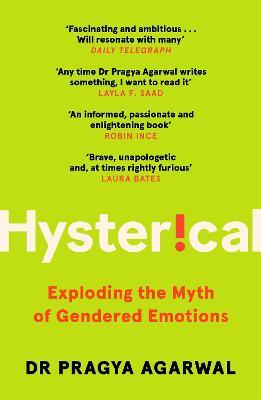
Women have been gaslit by the term “hysterical” for centuries. It’s time to stop believing the lie.









Leave a Comment