
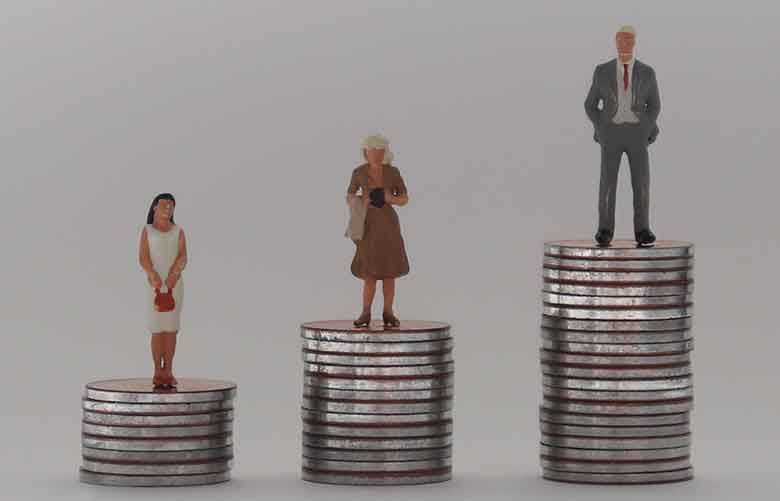
In the grand theater of American capitalism, women are not merely actors—they are the stagehands, the set designers, the lighting crew, all while being told they are the audience. The financial trauma of growing up female in this country is not a footnote in the ledger of systemic oppression; it is the ink that stains every page of the ledger itself. From the moment a girl is born, she is handed a script written in invisible ink—one that dictates her worth in dollars and cents long before she understands the concept of currency. This is not a story of individual failure. It is a saga of collective erasure, where the ledger of life is balanced on the backs of women who are taught to believe their financial worth is negotiable, conditional, and perpetually in deficit.
The Pink Tax Ledger: When Every Purchase is a Transaction in Dispossession
Imagine a world where the air you breathe costs more if you are born with a uterus. Not metaphorically. Literally. That world exists, and it is called the pink tax—a surreptitious levy that begins the moment a parent buys a “girl” toy and ends when a woman pays 7% more for a deodorant labeled “for her.” This is not a tax imposed by legislation, but by the silent consensus of an economy that treats female bodies as luxury goods. The pink tax is the financial equivalent of a glass ceiling made of receipts—every purchase, every shampoo bottle, every razor, is a reminder that your existence is a marketable commodity, and your pain is a profit center.
Consider the tampon. A necessity, not a luxury. Yet, in 35 states, it is taxed as a non-essential item. Why? Because the bodies that bleed are deemed frivolous. The irony is as thick as the blood itself: a woman’s body is both the factory of life and the ATM of capitalism, yet she is charged for the privilege of participating in both. This is not economics. It is alchemy—turning menstruation into money, pain into profit, and autonomy into a subscription service.

The Dollars and Dents of Domestic Sabotage: When Care is a Currency of Exploitation
Growing up female in America is to be groomed for unpaid labor. From childhood, girls are conditioned to equate self-worth with service—setting the table, organizing the closet, remembering birthdays. This is not preparation for adulthood. It is apprenticeship in economic erasure. The message is clear: your time is not your own. Your body is not your own. Your labor is not your own. You are a 24/7 care machine, and the only compensation you will ever receive is the hollow applause of a society that calls you “nurturing” while it pockets the wages you never earned.
This domestic sabotage extends into adulthood. Women perform 75% of the world’s unpaid care work, a statistic that is not a coincidence but a calculation. The economy depends on this free labor. It is the invisible scaffolding holding up the entire structure of capitalism. When a woman stays up late to comfort a crying child, she is not just being a mother—she is subsidizing the profit margins of corporations that refuse to provide paid leave. When she cooks dinner after a 12-hour shift, she is not just being a wife—she is underwriting the CEO’s bonus. Care is not a virtue. It is a form of economic resistance, a quiet rebellion against the myth that women exist to serve.

The Glass Ceiling of Gaslighting: When Ambition is a Crime Against the Status Quo
Ambition, for a woman, is not a dream—it is a declaration of war. The glass ceiling is not a barrier. It is a mirror, reflecting back the faces of men who have been conditioned to believe that a woman’s success is a theft from their own entitlement. Every time a woman negotiates her salary, she is not asking for money. She is committing an act of financial heresy. Every time she demands a promotion, she is not climbing a ladder—she is dismantling a throne.
The gaslighting begins early. A little girl who asks for a raise in her allowance is told she is “too aggressive.” A teenager who negotiates her first job offer is labeled “difficult.” A woman who demands equal pay is “ungrateful.” This is not feedback. It is psychological warfare. The message is: your ambition is a threat. Your desire for financial parity is a violation. You do not deserve to be paid what you are worth because your worth is not yours to define.
The result? Women are less likely to negotiate their salaries, more likely to accept lower offers, and quicker to internalize the lie that they are “lucky to have a job” in the first place. This is not a personality flaw. It is a survival tactic. In a system designed to exploit you, compliance is the only currency that buys you temporary safety. But safety is not freedom. Safety is the illusion of control in a cage of your own making.

The Alchemy of Debt: When Poverty is a Family Heirloom
Debt, for women, is not a financial misstep. It is an inheritance. From the moment a girl is born into a family that values sons over daughters, she is handed a ledger of disadvantage. Studies show that daughters of poor families are more likely to remain poor, not because of bad choices, but because of the cumulative weight of systemic barriers. The cost of being born female is not paid in dollars—it is paid in opportunities, in networks, in the unspoken assumption that her dreams are negotiable.
This debt is not recorded in any bank. It is etched into the DNA of her circumstances. A girl who grows up in a household where her mother works two jobs to keep the lights on learns one lesson above all: money is not a tool. It is a shield. And shields are heavy. They weigh down your shoulders, slow your steps, and make it harder to run when the system comes for you.
The alchemy of debt is this: poverty is not a lack of money. It is a surplus of obstacles. Every time a woman is passed over for a promotion because she “might get pregnant,” she is charged a fee. Every time she is told to “smile more” in the boardroom, she is billed for the emotional labor. Every time she is asked to “lean in” while the system leans out, she is paying interest on a debt she never signed for.
The Revolution Will Be Monetized: When Financial Freedom is the Ultimate Act of Defiance
The financial trauma of growing up female in America is not a life sentence. It is a call to arms. The first step toward liberation is to recognize that your pain is not personal. It is political. Your bank account is not a reflection of your worth. It is a ledger of resistance. Every dollar you earn, every bill you pay, every negotiation you survive is an act of rebellion against a system that profits from your dispossession.
Financial freedom is not about becoming rich. It is about becoming ungovernable. It is about refusing to accept the script that tells you your value is negotiable. It is about demanding that the economy work for you, not the other way around. It is about understanding that your trauma is not a flaw—it is a map. And the destination is not just survival. It is sovereignty.
The revolution will not be televised. It will be budgeted. It will be negotiated. It will be audited. It will be every woman who refuses to accept the pink tax, who demands equal pay, who walks away from a job that undervalues her, who starts a business because the system left her no other choice. The revolution will be monetized. And it will be magnificent.









Leave a Comment