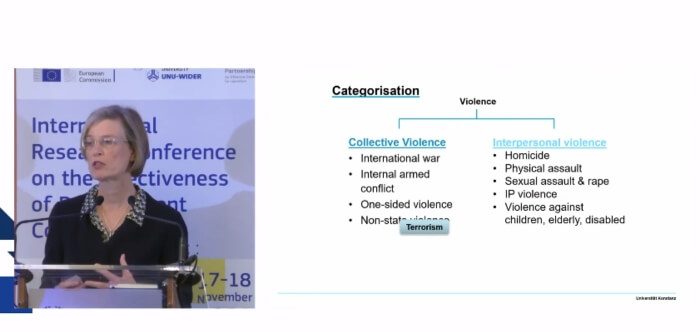
There is a peculiar ritual embedded in the sterile fluorescent-lit halls of academia—a ritual as predictable as the rise of the sun, yet as infuriating as the relentlessness of a mosquito’s buzz. It usually begins just as you, the meticulously prepared researcher, courageously step forward to present your hard-won insights: a conference question, posed with the thinly veiled air of mentorship but dripping with the patronizing essence of mansplaining. This is no ordinary inquiry. It is a linguistic parasite, a conference question that mansplains your own research, undermining your authority and perpetuating an old hierarchy masked in polite curiosity.
The Conference Question as an Intellectual Landmine
Imagine your research as a gleaming vessel, crafted painstakingly to navigate the turbulent seas of knowledge. Each hypothesis a plank, each data set a sail, all steered by a compass of rigorous methodology and passion. Then comes the question, a carefully disguised torpedo that detonates beneath the hull—engaging you in a battle you never asked for. This question is cloaked in an academic dialect, but its impact is venomous: it trivializes your intellectual labor by assuming ignorance or incompetence. It’s not a request for clarity; it’s a declaration of intellectual superiority.
These interventions often masquerade as generosity, yet they act as gatekeepers, policing boundaries that gatekeep whose knowledge is deemed legitimate. Their uniqueness lies in their ability to simultaneously invalidate and infantilize, dissolving your research into a simplicistic puzzle they “kindly” intend to solve on your behalf. A bizarre ownership of your ideas emerges—not with the constructive intent of enhancing dialogue, but with the destructive aim of reclaiming authority.

When Curiosity Becomes Condescension: The Subtle Weaponry of Tone
The difference between a genuine academic inquiry and a mansplaining question often rests in tone—a vector so subtle it’s almost invisible. The question arrives as a velvet glove, but inside is a gauntlet of condescension. The inquirer’s voice carries a cadence reminiscent of a lecturer addressing a novice, an assumed inferiority embedded not in the content of the question, but in the very way it’s delivered.
This isn’t accidental. It’s a deliberate performative act where the questioner sets the stage as an omniscient guide, while the presenter is cast in the role of the unseasoned apprentice. Every inflection, every extended pause, and every sigh serves as punctuation marks in this silent script of intellectual dominance. The metaphoric dagger is twisted elegantly, often framed as “helpful advice” or “just ensuring understanding.” The underlying message is clear: your work needs my correction.
The Gendered Anatomy of the Mansplaining Question
To understand the thorny bramble that is the mansplaining conference question, one must confront the gendered roots embedded within academic culture. Research spaces, traditionally bastions of masculine authority, are frequently littered with invisible traps for those who disrupt normative expectations—often women and non-binary scholars.
It’s no coincidence that this question so often comes from male colleagues, wielding an unwarranted sense of entitlement. They carve out space by silencing or undermining research that conflicts with their worldview or challenges existing paradigms. This cycle perpetuates a scholarly echo chamber, stifling diverse perspectives under a veneer of scholarly rigor.
Consider the image of a gate: thick, ornate, and ironclad. While the gates of academia are always formidable, mansplaining questions act as bolt locks that specifically bar marginalized voices, sabotaging progressive discourse with every patronizing articulation.

The Silent Weapon: Gaslighting and Epistemic Violence
Beyond patronizing tones lies a more insidious effect—gaslighting. The mansplaining question casts doubt not only on your research but on your intellectual capacity to comprehend or communicate it. It is a form of epistemic violence, violently destabilizing your confidence and self-worth in real-time.
As the audience nods or remains silent, you are left grappling with an internal struggle: do you defend every nuance of your work, risking being seen as defensive or combative? Or do you silently absorb the diminution of your expertise? Both options inflict harm.
This moment exposes the cataclysmic fault line between who gets to produce knowledge and who is forced to perpetually validate their right to do so. The mansplaining question is a sly assassin of credibility disguised in the tunic of academic decorum.
Reclaiming the Dialogue: Strategies Against the Mansplaining Question
So, how does one navigate this treacherous minefield without losing intellectual ground or personal dignity? The first step is recognition—naming the behavior strips away its camouflage of civility. Understanding that this dynamic is a structural issue rather than isolated sarcasm empowers one to refuse complicity in its perpetuation.
Responding with measured assertiveness is not just a survival tactic; it is reclamation. Redirect the query with pointed precision: “I appreciate your interest, but my methodology already addresses that aspect in detail—perhaps we can discuss your interpretation later?” Such responses assert ownership without diminishing legitimate academic exchange.
Forming solidarity networks amplifies collective resilience. Sharing experiences and mentoring across disciplines constructs counter-narratives that challenge entrenched power hierarchies. Equipping emerging scholars with rhetorical and strategic tools decimates the gatekeeping erected by mansplaining.
The Transformative Potential of Confronting the Mansplaining Question
Conferences, if stripped of these performative power plays, hold immense potential as sites of revolutionary knowledge exchange. Imagine a space where questions illuminate rather than dominate, where critique is offered with respect not entitlement, and where interrogation is an invitation—not an usurpation.
Transforming these moments from sites of intellectual emasculation into opportunities for genuine dialogue can reshape the very fabric of academia. It invites the inclusion of marginalized epistemologies, disrupts stagnant paradigms, and fosters vibrant, pluralistic scholarship.
The mansplaining conference question is a crucible; from its fiery discourse, a new kind of academic courage can emerge—one that refuses to shrink, that calls out the old guard, and that insists on being heard authentically and unapologetically.








Leave a Comment