
The audacity of a single feminist economist to redefine the contours of economic justice—it’s the kind of disruption that sends shockwaves through the ivory towers of academia and the sterile corridors of policy-making. When she proposed weaving care credits into the fabric of Universal Basic Income (UBI), she didn’t just nudge the conversation forward; she yanked it into the 21st century with a force that economists could no longer ignore. This wasn’t a polite request for acknowledgment; it was a demand for recognition of the unpaid labor that fuels societies, a demand dressed in the language of numbers and systems. And, against all odds, they listened.
The Radical Proposition: Care Credits as Economic Currency
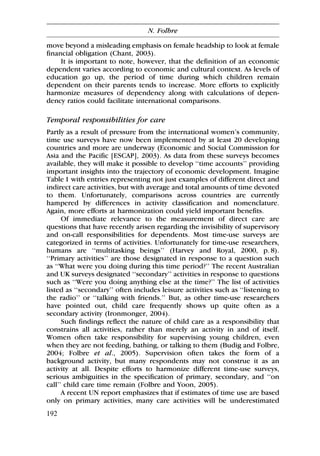
Imagine, if you will, a world where the hours spent soothing a feverish child, the relentless cycle of laundry and meals, the silent labor of emotional support—all of it, quantified. Not as a moral obligation, but as a tangible contribution to the GDP, a line item in the national ledger. This is the essence of care credits: a radical reimagining of value, where the invisible becomes visible, where the unpaid becomes a claim on resources. It’s not just about redistribution; it’s about redefining what we consider productive labor in the first place.
The brilliance of this proposal lies in its subversion. Economists, those gatekeepers of cold, hard logic, were forced to confront the glaring omission in their models: the care economy. For decades, the labor of women, particularly women of color and marginalized communities, has been dismissed as “natural” or “instinctive,” a labor so deeply embedded in the fabric of society that it was rendered invisible. Care credits disrupt this narrative by demanding that care work be treated as a public good, deserving of compensation and recognition. It’s a feminist manifesto disguised as fiscal policy—a Trojan horse of equity smuggled into the halls of power.
The resistance to this idea was, predictably, fierce. Critics argued that quantifying care would commodify human relationships, reducing the sacred to a transaction. But this critique misses the point: care is already commodified—just not in ways that benefit those who perform it. The current system extracts value from care work while denying its providers agency or compensation. Care credits don’t create a market for love; they expose the market that already exists, one that profits from exploitation. By formalizing care as labor, we don’t devalue it—we force the world to confront its dependence on it.
UBI Meets Care Credits: A Symbiosis of Liberation
Universal Basic Income has long been hailed as a tool for economic liberation, a way to untether survival from the whims of capital. But UBI, in its traditional form, risks replicating the same old hierarchies it seeks to dismantle. Without addressing the gendered and racialized dimensions of labor, UBI could become just another bandage on a gaping wound—a temporary relief that leaves the underlying structures of oppression intact. Enter care credits: the missing link that transforms UBI from a palliative measure into a transformative one.
Consider the lived realities of women, especially those in precarious economic positions. A UBI alone might cover rent or groceries, but it doesn’t account for the disproportionate burden of care work that falls on their shoulders. Care credits, however, would acknowledge this labor, providing a financial cushion that recognizes the societal value of their unpaid work. It’s a double helix of justice: UBI ensures material security, while care credits ensure that the labor underpinning that security is seen, valued, and compensated. Together, they form a bulwark against the neoliberal fantasy of the “self-sufficient” individual—a fantasy that has never accounted for the dependencies and interdependencies that make life possible.

The synergy between UBI and care credits also offers a blueprint for a post-growth economy. In a world obsessed with productivity metrics, care work has been systematically devalued because it doesn’t fit neatly into the GDP’s narrow definition of “output.” But what if we measured success differently? What if we recognized that the most “productive” societies are those that prioritize care, that invest in the well-being of their people? Care credits, when integrated into UBI, force a reckoning with these questions. They don’t just redistribute wealth; they redistribute power, shifting the locus of economic decision-making away from the market and toward the communities that sustain it.
The Backlash: Why the Status Quo Fights Back
Of course, no radical proposal escapes unscathed. The backlash to care credits within UBI frameworks was swift and predictable, a chorus of voices decrying it as utopian, impractical, or worse—dangerous. The most common refrain? “It’s too expensive.” But this argument is a red herring, a smokescreen for the deeper discomfort that care credits provoke. The real cost isn’t financial; it’s existential. To acknowledge care work is to confront the rot at the heart of capitalism: its reliance on unpaid labor to function. And that’s a confrontation many are ill-prepared to have.
Then there are the cultural objections. “Care should come from love, not money,” the critics argue, as if love and compensation are mutually exclusive. This is the language of those who have never had to choose between feeding their children and keeping a roof over their heads. It’s the language of privilege, masquerading as moral high ground. The truth is, care is already entangled with money—just not in ways that benefit care workers. The nannies, the nurses, the domestic workers, the mothers—all of them are paid, in some form or another, for their labor. The difference is that some are paid in wages, while others are paid in societal approval, a currency that doesn’t cover rent or groceries.
The most insidious objection, however, is the one that frames care credits as a “handout” to women. This is the patriarchal trap in its most naked form: the idea that women’s labor is a gift, not a right. It’s the same logic that justifies paying women less for the same work, or expecting them to perform emotional labor for free. Care credits flip this script. They don’t give women anything they haven’t already earned through their labor; they simply demand that the world acknowledge the debt it owes them.
Real-World Ripples: Where Care Credits Are Already Taking Root
Despite the resistance, care credits are no longer a fringe idea confined to the pages of feminist manifestos. They’re being tested in pilot programs, debated in legislative chambers, and whispered about in the corridors of power. In some Nordic countries, for instance, there’s growing momentum to integrate care work into social security systems, recognizing that the welfare state’s success hinges on the labor of caregivers. Closer to home, cities in the U.S. are experimenting with stipends for family caregivers, a small but significant step toward formalizing the value of care work.
But the most exciting developments are happening in the Global South, where care work has long been the backbone of economies, even if it’s been systematically undervalued. In India, for example, grassroots movements are pushing for the inclusion of care work in national income calculations, arguing that the GDP’s failure to account for it has led to chronic underdevelopment. These aren’t just academic debates; they’re the groundwork for a new economic paradigm, one that centers care as a cornerstone of prosperity.
Even in the corporate world, there’s a grudging acknowledgment that care work is the invisible engine of productivity. Tech companies, in their infinite wisdom, have begun offering “caregiver stipends” to employees—a paltry acknowledgment of the fact that their workforce’s ability to function depends on the unpaid labor of caregivers. It’s a cynical move, but it’s also a sign that the idea is gaining traction. The question now is whether we’ll let it remain a corporate PR stunt or whether we’ll demand something far more radical: a system that values care not as a perk, but as a right.
The journey of care credits from radical proposal to policy possibility is a testament to the power of feminist economics. It’s a reminder that change doesn’t always come from the top down; sometimes, it bubbles up from the margins, from the voices that have been ignored for too long. And yet, the fight is far from over. The integration of care credits into UBI is just the first step. The real work lies in dismantling the systems that have allowed care work to be exploited in the first place—a task that will require nothing short of a revolution.
The Future We’re Fighting For
What does a world with care credits look like? It’s a world where a mother raising a child isn’t penalized for stepping away from the workforce, where a daughter caring for an aging parent isn’t forced into poverty, where the emotional labor of friendship and community isn’t dismissed as “not real work.” It’s a world where the economy isn’t a cold, calculating machine, but a living, breathing organism that recognizes its dependence on the people who keep it alive.
This future isn’t guaranteed. It will require relentless pressure, strategic alliances, and a willingness to confront the deep-seated biases that have shaped our economic systems. But the fact that economists are even entertaining the idea of care credits is a victory in itself. It’s proof that the status quo is not immutable, that the invisible can be made visible, and that the labor of love can—and must—be repaid in kind.
So let’s raise a glass to the feminist economist who dared to propose care credits. Let’s raise a fist to the critics who tried to silence her. And let’s roll up our sleeves, because the work of building this future has only just begun.







Leave a Comment