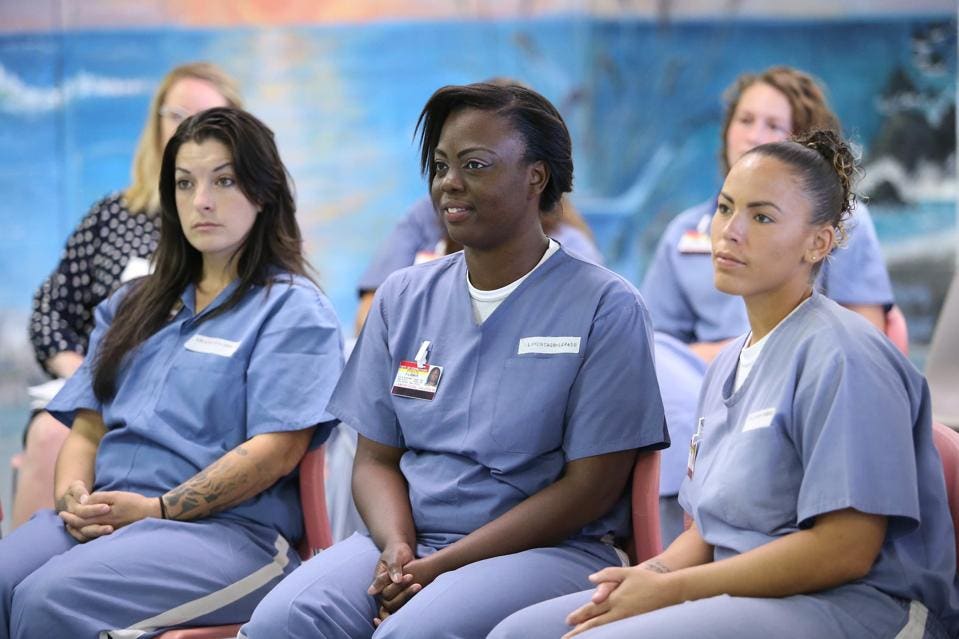
The fight for justice doesn’t always unfold in the courtrooms or legislative chambers where the powerful convene. Sometimes, it begins in the dimly lit cells of a women’s prison, where the clamor of chains is drowned out only by the whispers of solidarity. This is the story of how one woman’s relentless organizing transformed the lives of incarcerated women, turning their collective rage into a force that reshaped prison conditions. It’s a narrative of resilience, strategy, and the unshakable belief that no one should be forgotten behind bars.
The Spark: A Woman Who Refused to Look Away
Every movement has its origin story, and this one began with a single woman who saw what others chose to ignore. She wasn’t a politician, a lawyer, or a celebrity—just someone who recognized that the prison system’s cruelty toward women was not an accident but a design. Incarcerated women, she observed, were subjected to conditions that were not just punitive but deliberately dehumanizing: inadequate healthcare, sexual violence, and the crushing isolation of being treated as disposable. Her response wasn’t despair; it was defiance.
She started small—listening. In the sterile confines of visitation rooms, she heard stories that would haunt anyone with a conscience: women denied menstrual products, mothers separated from newborns, survivors of abuse retraumatized by prison staff. These weren’t isolated incidents; they were systemic failures. So she began documenting. Not just the abuses, but the names, the dates, the patterns. Data became her weapon. With each account collected, the invisible became undeniable.
The Strategy: Turning Pain into Power
Organizing in prison is like building a fire in a hurricane—every ember risks being snuffed out before it can catch. Yet she understood that the most effective movements don’t wait for permission. She turned to the women themselves, training them to be researchers, advocates, and storytellers. Workshops on legal rights, health education, and public speaking became clandestine classrooms where women learned to articulate their demands with precision.
But words alone wouldn’t dismantle the walls. She forged alliances—with abolitionist groups, healthcare workers, and journalists willing to amplify the voices of the incarcerated. She leveraged social media, not as a performative tool, but as a megaphone for those whose voices had been silenced. Hashtags like #FreeHer and #PrisonConditions became rallying cries, forcing public scrutiny where there had been only indifference.
The strategy was multi-pronged: legal pressure through complaints and lawsuits, media exposés to shame the system into change, and direct action—hunger strikes, sit-ins, and coordinated protests. Each tactic was designed to exploit the cracks in the prison-industrial complex’s facade, exposing its hypocrisy to the world.
The Resistance: When the System Fights Back
No oppressive system surrenders its power willingly. As the women’s demands grew louder, so did the retaliation. Solitary confinement became a tool to isolate leaders. Visitation rights were revoked. Some women faced trumped-up charges, their organizing used as justification for further punishment. The system’s message was clear: *Stay in your place.* But the women refused to be cowed.
They adapted. Communication networks shifted to coded letters, smuggled notes, and encrypted messages. Allies on the outside became their shields, documenting abuses and ensuring that no woman disappeared into the shadows. The resistance wasn’t just about survival; it was about proving that even in the most controlled environments, human connection—and defiance—could thrive.
There were setbacks, of course. Promised reforms stalled. Officials issued empty apologies while dragging their feet. But the women’s resolve only hardened. They knew the truth: this wasn’t just about better conditions. It was about dignity. And dignity, once claimed, cannot be taken away.
The Victory: A Blueprint for Change
After years of relentless pressure, the first cracks appeared. A state audit confirmed systemic failures in women’s prisons. A new policy mandated trauma-informed healthcare. Visitation hours were extended. The changes were incremental, but they were real. More importantly, the women had proven something profound: that organizing from the margins could shift the center.
This wasn’t just a win for incarcerated women; it was a blueprint for every marginalized group fighting for justice. It showed that change doesn’t require waiting for the powerful to act—it requires building power where it doesn’t exist. That the most effective advocates are often those who have the most to lose. And that solidarity, when forged in the fire of shared struggle, can outlast even the most entrenched systems of oppression.
What This Means for the Future
The fight isn’t over. Prisons still operate as sites of punishment rather than rehabilitation, and women—especially women of color—remain disproportionately targeted. But this movement has rewritten the rules of what’s possible. It has shown that even the most invisible among us can become architects of their own liberation.
For readers who want to engage, there are countless ways to contribute. Support organizations led by formerly incarcerated women. Advocate for policies that prioritize rehabilitation over retribution. Challenge the narratives that paint prisoners as irredeemable. And most importantly, listen. The women who organized from behind bars didn’t just demand change—they taught us how to fight for it.
The Lessons We Can’t Afford to Ignore
This story isn’t just about prisons. It’s about the power of collective action when it’s rooted in lived experience. It’s about the courage to demand more than what’s offered. And it’s a reminder that justice isn’t a gift bestowed by the powerful—it’s a right that must be seized.
So the next time you hear about “tough on crime” policies or the need for “order” in prisons, ask yourself: whose order? Whose safety? The women who organized from the inside didn’t just fight for better conditions—they fought for a world where no one is treated as disposable. That’s a fight worth joining.

How to Carry This Forward
If you’re moved by this story, don’t let the momentum fade. Volunteer with organizations that support incarcerated women. Write to prisoners—your letters can be lifelines. Challenge the language that dehumanizes those behind bars. And never underestimate the power of sharing these stories. Every time you amplify a voice, you weaken the walls that silence them.
The women who won better conditions didn’t do it alone. They had allies on the outside who refused to look away. Now it’s your turn to decide: Which side of history will you stand on?









Leave a Comment