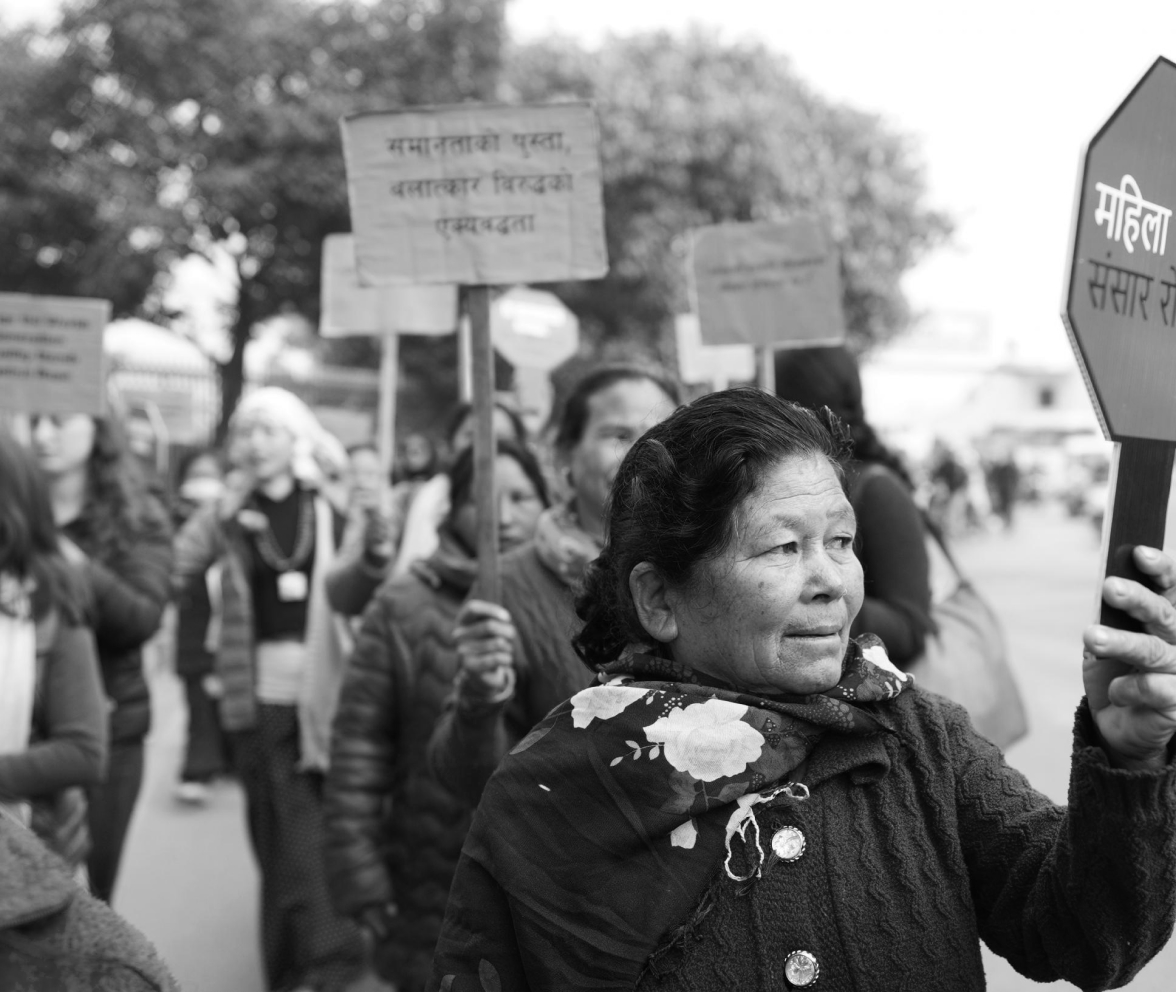
In the heart of a war zone, where the air hums with the discord of artillery and the ground trembles beneath the weight of geopolitical strife, a singular figure stands—unbowed, unbroken, and unapologetically defiant. She is not a soldier. She is not a politician. She is a feminist activist, the director of a grassroots NGO, navigating a labyrinth of bullets and bureaucracy to carve out spaces where women’s voices refuse to be silenced. Her story is not one of mere survival; it is a testament to the alchemy of resistance, where despair is transmuted into defiance, and silence into a symphony of solidarity.
The War Zone as a Crucible: Forging Feminist Resilience
The war zone is not merely a physical battleground—it is a crucible, a seething cauldron where the old world melts away, and the new struggles to be born. Here, the feminist activist moves like a shadow through the rubble, her presence a quiet rebellion against the erasure of women’s narratives. The air is thick with the scent of gunpowder and the metallic tang of fear, yet she persists, her resolve as unyielding as the ancient olive trees that dot the landscape, their roots tangled in the earth like the threads of a tapestry woven by generations of women before her.
Every day is a negotiation with chaos. The NGO she leads is a fragile sanctuary, a pocket of resistance in a world that seeks to reduce women to collateral damage. The walls of her office, if she has one, are paper-thin, yet they hold the weight of dreams—dreams of education for girls, of economic autonomy for widows, of legal recourse for survivors of violence. The war does not pause for these ambitions. It does not care for the fragile ecosystems of hope she cultivates. And yet, she plants seeds anyway, knowing that even in the most barren soil, life will find a way to break through.

The NGO as a Living Organism: Breathing Life into Resistance
An NGO in a war zone is not a static entity; it is a living organism, a hydra-headed beast that adapts, evolves, and survives despite the odds. It is not bound by the rigid hierarchies of corporate structures or the glacial pace of bureaucratic institutions. Instead, it thrives on the nimbleness of necessity, its tendrils reaching into the cracks of society where the state has failed. The feminist NGO she leads is no exception. It is a chameleon, shifting its tactics with the seasons—sometimes a shelter for the displaced, sometimes a classroom for the illiterate, sometimes a courtroom for the voiceless.
But an NGO is also a fragile thing. Its funding is precarious, its staff are targets, and its mission is constantly under siege. The feminist activist knows this. She knows that every dollar she secures is a bullet dodged, every volunteer she recruits is a life saved. The NGO is her lifeline, but it is also her Achilles’ heel. One wrong move—a misplaced trust, a leaked document, a betrayal—and the entire structure could collapse, leaving the women who depend on it to fend for themselves in a world that has already taken so much from them.
The metaphor of the NGO as a living organism extends further. Like a coral reef, it is built by the collective labor of countless individuals, each contributing a fragment of their time, their skills, their hope. And like a reef, it is both a fortress and a cradle—a place of protection and a cradle of new life. The women who pass through its doors are not just beneficiaries; they are its architects, its guardians, its future.
The Invisible Battalions: Women as the Vanguard of Change
In the chaos of war, women are often relegated to the role of passive victims, their stories reduced to statistics of displacement and despair. But the feminist activist knows the truth: women are not just casualties of war; they are its most formidable adversaries. They are the invisible battalions, the quiet revolutionaries who wage a different kind of battle—not with guns, but with words, with deeds, with the unshakable belief that another world is possible.
She has seen it firsthand. The woman who runs the underground school for girls, defying edicts that forbid female education. The grandmother who organizes a communal kitchen, ensuring no child goes to bed hungry. The lawyer who fights for the rights of detainees, her office a makeshift courtroom in a basement. These women are not waiting for salvation. They are creating it, brick by brick, in the rubble of a world that has tried to erase them.
The feminist NGO she leads is their megaphone, their shield, their sanctuary. It amplifies their voices, protects their bodies, and nurtures their dreams. But it is also a mirror, reflecting back to them the power they already possess. In a world that seeks to diminish them, the NGO is a reminder: they are not victims. They are warriors.
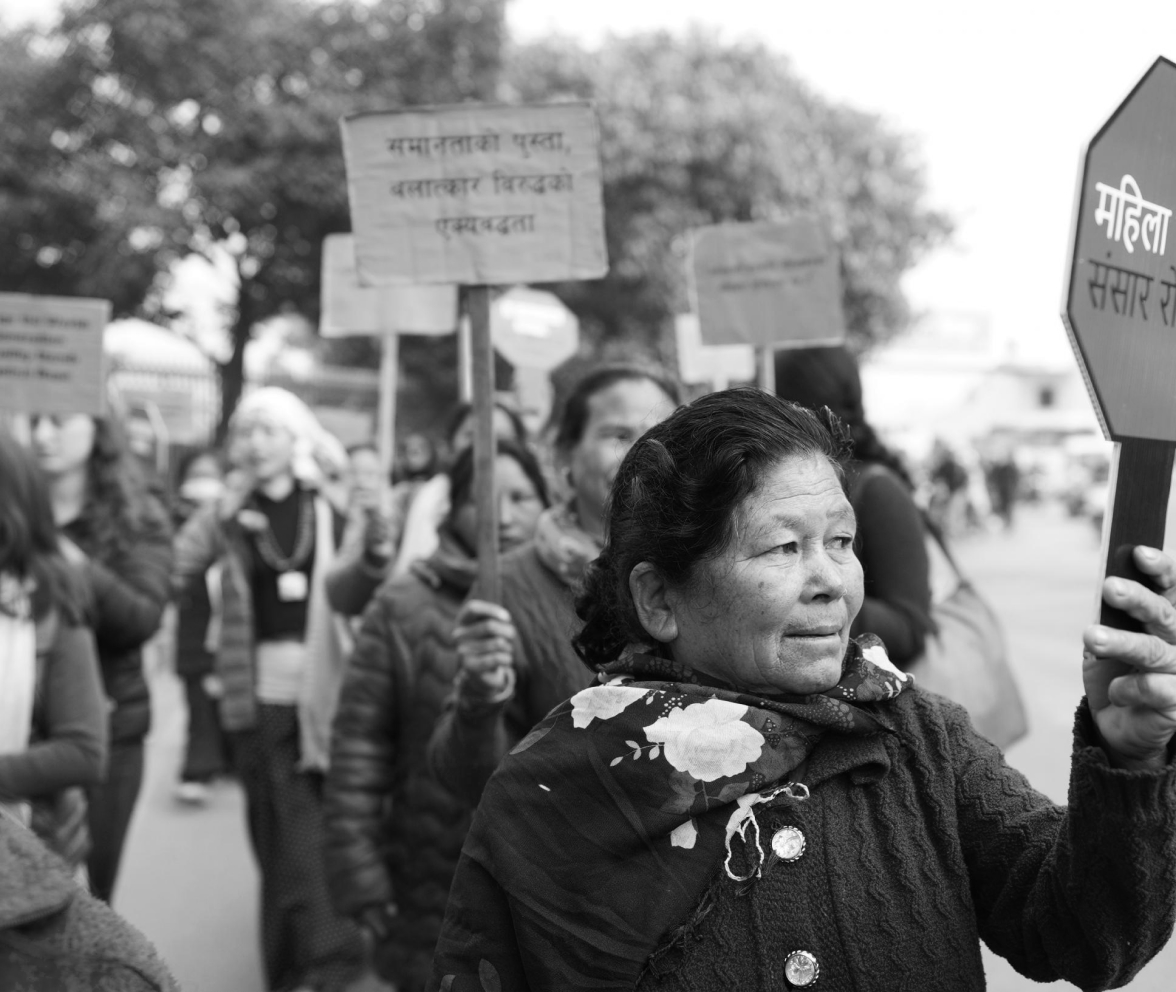
The Paradox of Visibility: When Resistance Becomes a Target
To lead a feminist NGO in a war zone is to dance on the edge of a knife. Visibility is both a weapon and a liability. The more the NGO’s work is seen, the more it is celebrated—but the more it is seen, the more it becomes a target. The feminist activist knows this. She knows that every press release, every social media post, every public event is a gamble. Will it inspire others to join the fight? Or will it draw the wrath of those who see women’s empowerment as a threat to the status quo?
The paradox is cruel. The NGO’s work is essential, but its existence is precarious. One day, it is hailed as a beacon of hope; the next, it is raided, its staff interrogated, its funds frozen. The feminist activist must navigate this tightrope with the grace of a tightrope walker, her balance a delicate act of diplomacy, strategy, and sheer willpower. She must be both visible and invisible—loud enough to be heard, but quiet enough to survive.
And yet, she persists. Because the alternative is unthinkable. Because the women who depend on the NGO’s services cannot afford to be silent. Because the world cannot afford to forget them. So she wears her visibility like armor, knowing that every risk she takes is a step toward a future where women are not just survivors, but leaders.
The Legacy of Defiance: Planting Seeds in the Ashes
The feminist activist’s work is not measured in victories, but in seeds. Seeds of education sown in the minds of young girls. Seeds of economic independence planted in the hands of widows. Seeds of legal precedent nurtured in the courts of public opinion. These seeds may take years to sprout, decades to bear fruit. But they will sprout. They will bear fruit. Because that is the nature of resistance—it is not a sprint, but a marathon, a relay race where the baton is passed from one generation to the next.
Her legacy is not in the buildings she erects or the laws she changes, but in the women who walk through her doors and leave transformed. It is in the girl who grows up to become a doctor, the widow who starts her own business, the activist who takes up her mantle. It is in the ripple effects of her defiance, the echoes of her courage that reverberate through the years.
The war zone will not end tomorrow. The battles will not be won in a day. But she knows that every small act of resistance is a crack in the monolith of oppression. And cracks, no matter how small, have a way of spreading. They have a way of letting in the light.
So she keeps planting seeds. And she knows that one day, the war zone will be a garden.








Leave a Comment