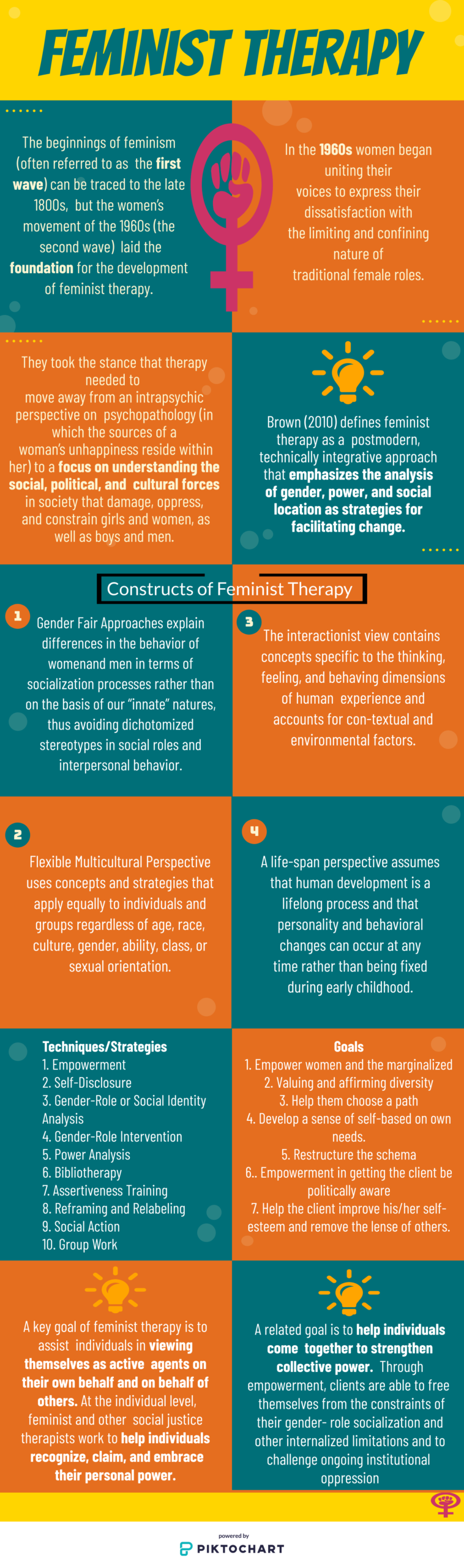
In a world where the echoes of patriarchal conditioning still reverberate through the corridors of mental health, a quiet revolution is unfolding. Feminist therapy, a model born from the crucible of activism and psychological insight, is no longer a whisper in the margins—it is a clarion call reshaping how we understand healing. The architects of this paradigm are not just theorists; they are practitioners, educators, and survivors who have turned their pain into pedagogy. Now, as training programs proliferate, the promise of this model is not merely theoretical—it is tangible, transformative, and urgently necessary.
The Genesis of a Radical Healing Framework
Feminist therapy did not emerge from the sterile confines of academia. It was forged in the fires of lived experience, where women—long dismissed as “hysterical” or “overemotional”—demanded to be seen as whole beings, not fractured reflections of male-centric norms. The model’s foundational premise is deceptively simple: the personal is political. What this means in practice is that the therapist does not treat symptoms in isolation but interrogates the societal structures that shape them. A woman’s anxiety is not just a biochemical imbalance; it is a response to a world that tells her to shrink, to apologize, to prioritize others above herself. This is not psychology as usual—it is psychology as resistance.
The pioneers of feminist therapy—figures like Jean Baker Miller, Carolyn Zerbe Enns, and Laura Brown—challenged the very foundations of traditional therapy. They argued that neutrality in the therapist’s chair was a myth, that objectivity was often a guise for complicity. Instead, they advocated for an approach that centers the client’s lived reality, validates their rage, and refuses to pathologize their justified reactions to oppression. This was not therapy as we knew it; it was therapy as liberation.
The Mechanics of a Paradigm Shift
So how does feminist therapy actually work? At its core, it is a collaborative endeavor. The therapist is not a detached authority but a co-conspirator in the client’s journey toward self-actualization. Power imbalances are not ignored; they are named, dissected, and dismantled. The client is encouraged to question the narratives that have been imposed upon them—whether it’s the myth of female selflessness, the stigma of ambition, or the expectation to perform emotional labor without reciprocity. This is not about “fixing” the individual; it is about equipping them with the tools to dismantle the systems that harm them.
Techniques like consciousness-raising—where women share their experiences to reveal shared struggles—are not relics of the 1970s. They are alive and well in modern feminist therapy, adapted to address the unique pressures of the digital age. Social media may have given us new platforms for connection, but it has also amplified the pressure to curate perfection, to perform femininity, to endure online harassment with a smile. Feminist therapy meets these modern wounds with ancient wisdom: your pain is not a personal failing; it is a collective wound that demands collective healing.

The Training Grounds: Where Theory Meets Praxis
The proliferation of feminist therapy training programs is not a coincidence—it is a response to a demand that has simmered beneath the surface for decades. Clinicians are no longer content to treat symptoms without addressing their roots. They are seeking out models that honor the intersectionality of identity, that recognize how race, class, and sexuality compound oppression. The training is rigorous, not because it demands rote memorization, but because it requires practitioners to confront their own biases, to unlearn the conditioning that tells them to pathologize marginalized voices.
These programs are not just about learning techniques; they are about cultivating a feminist consciousness. Trainees are encouraged to ask: Whose voices are centered in this room? Whose pain is being ignored? How can I create a space where a Black woman’s anger is not dismissed as “aggression” but validated as a righteous response to systemic violence? The answers are not found in textbooks; they are forged in the crucible of lived experience, in the messy, beautiful, often painful process of unlearning and relearning.
The Ripple Effect: Beyond the Therapy Room
The impact of feminist therapy extends far beyond the four walls of a consulting room. It is reshaping how we think about mental health care itself. The model’s emphasis on empowerment has given rise to peer-led support groups, where survivors of trauma find solace in shared stories rather than clinical detachment. It has influenced workplace wellness programs, pushing corporations to acknowledge the mental health toll of gendered microaggressions. Even in education, feminist therapy principles are being integrated into curricula, teaching the next generation that healing is not a solitary endeavor but a collective rebellion.
Consider the woman who enters therapy believing her depression is a personal flaw, only to leave with the understanding that her exhaustion is not a sign of weakness but a testament to her resilience in a world that demands she do more with less. Or the non-binary person who is told their dysphoria is “just a phase,” only to find a therapist who affirms their identity and helps them navigate a society that refuses to see them. These are not minor victories; they are seismic shifts in how we understand what it means to heal.

The Challenges and the Unfinished Work
Of course, the path forward is not without obstacles. Feminist therapy is still fighting for legitimacy in a field dominated by pharmaceutical solutions and behaviorist approaches. Insurance companies bristle at the idea of paying for therapy that doesn’t fit neatly into a 50-minute session. Skeptics dismiss it as “political” rather than clinical, as if the personal and the political can ever be disentangled. And yet, the demand persists. Why? Because the old models have failed too many people. Because the statistics on women’s mental health—higher rates of anxiety, depression, and PTSD—cannot be ignored. Because the world is burning, and we need tools that don’t just soothe the symptoms but ignite the revolution.
The unfinished work is vast. Feminist therapy must continue to evolve, to center the voices of those who have been historically excluded—trans women, disabled women, women of color, sex workers. It must grapple with the ways capitalism co-opts even our most radical ideas, turning self-care into a commodity and healing into a privilege. And it must confront its own limitations, acknowledging that therapy alone cannot dismantle oppressive systems—only collective action can do that.
A Call to Arms (and to the Couch)
The rise of feminist therapy training programs is more than a professional trend; it is a cultural reckoning. It is a declaration that healing is not apolitical, that the mind cannot thrive when the body is shackled by systemic injustice. For those who have been told their pain is insignificant, for those who have been gaslit into silence, this model offers something radical: the truth. Your suffering matters. Your anger is justified. Your liberation is not a luxury—it is a necessity.
So to the clinicians: Will you answer the call? To the survivors: Will you claim your right to be heard? To everyone who has ever felt alone in their struggle: The revolution is not just coming—it is being built, one session at a time, in rooms where the walls themselves are learning to listen.







Leave a Comment